

Start With a Simple Kindergarten Readiness Checklist
A kindergarten readiness checklist is a simple guide to help you see whether your child has the everyday skills to join a kindergarten classroom with growing confidence. It is not a test to pass. It looks beyond letters and numbers to include independence, communication, movement, and the ability to learn and play alongside other children.
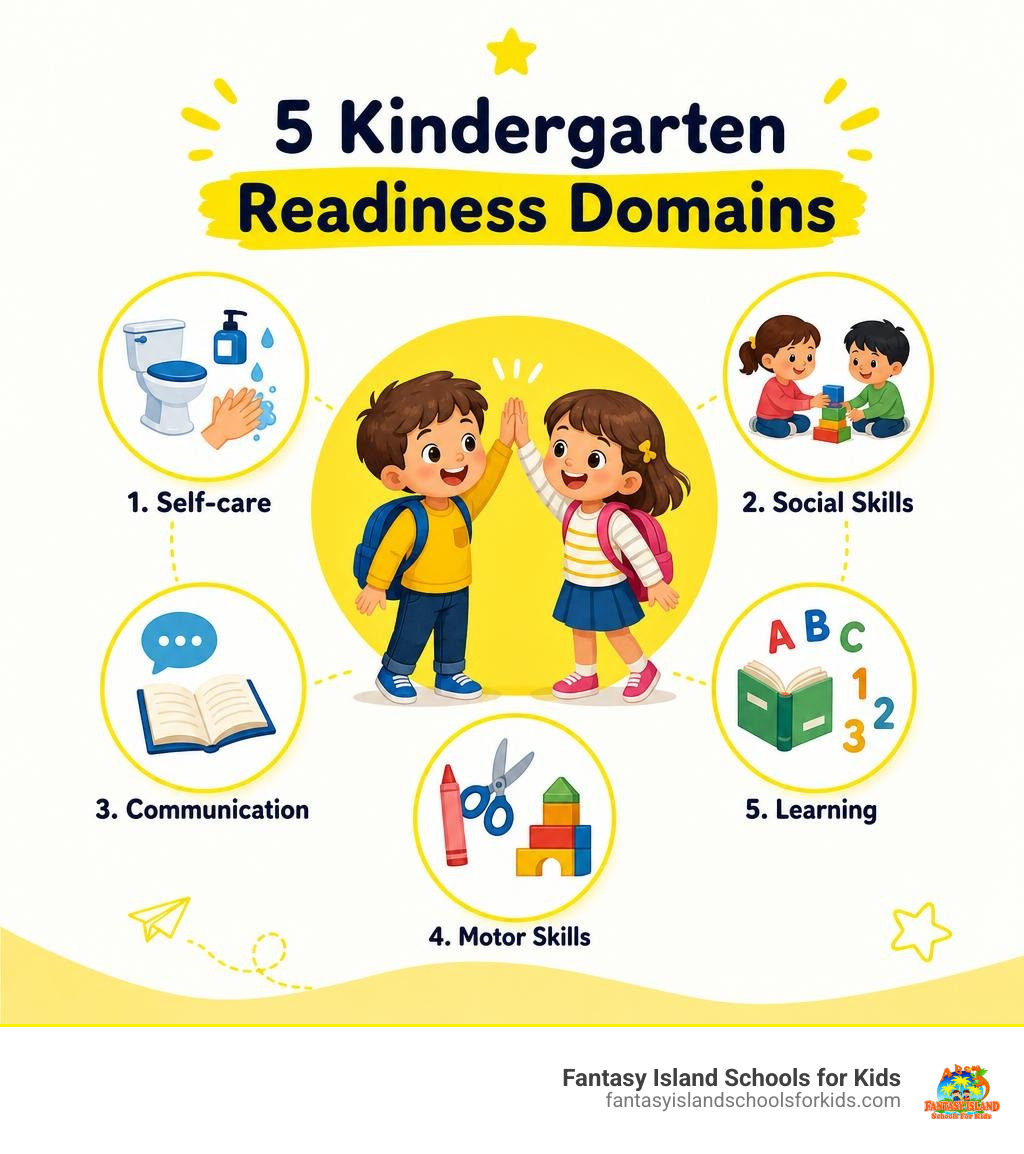
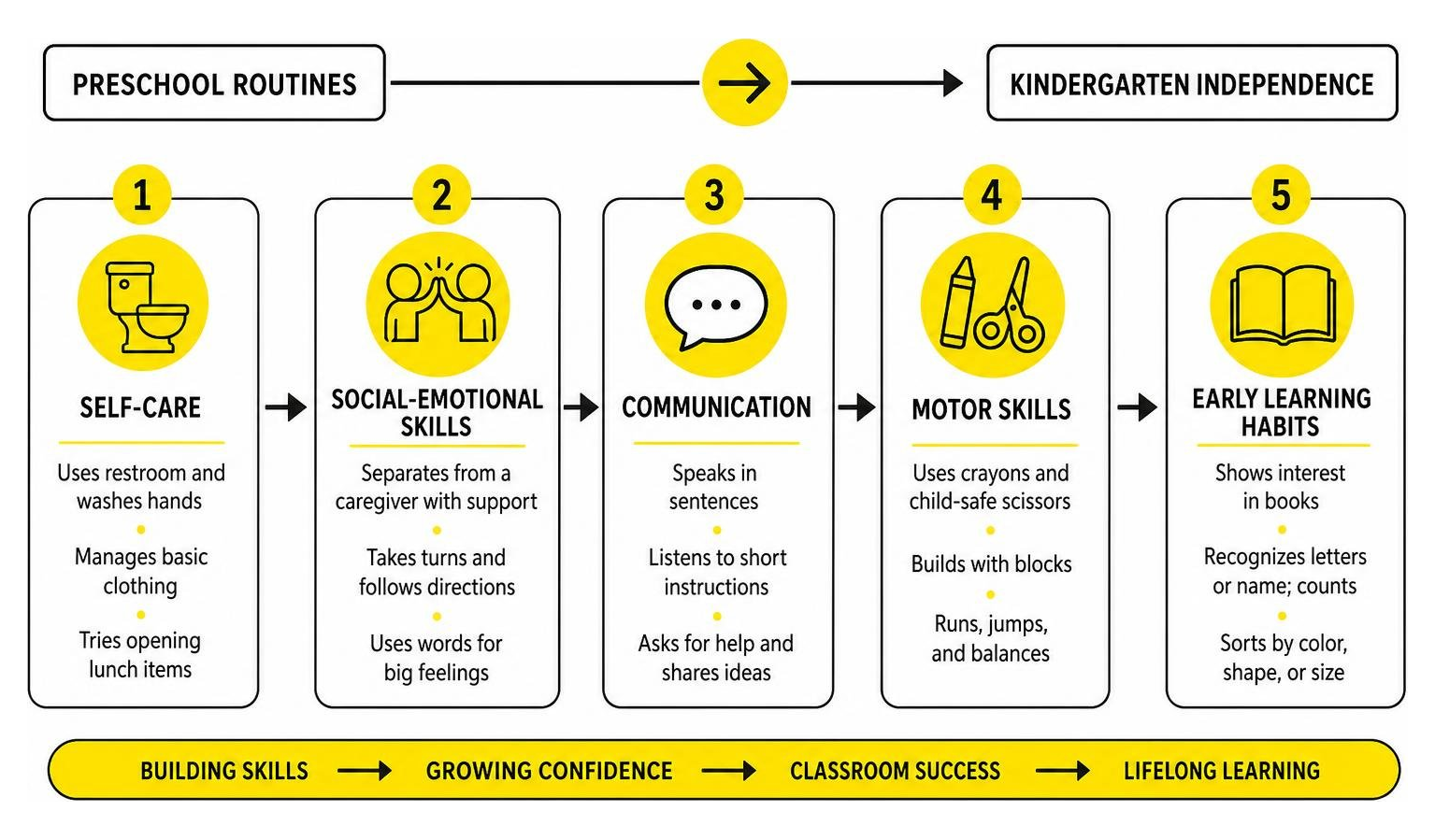
For a quick check, look for these five signs:
- Self-care: Your child can use the restroom, wash hands, manage basic clothing, and try opening lunch items.
- Social-emotional skills: They can separate from a caregiver with support, take turns, follow simple directions, and use words for big feelings.
- Communication: They speak in sentences, listen to short instructions, ask for help, and share ideas.
- Motor skills: They can use crayons and child-safe scissors, build with blocks, run, jump, and balance.
- Early learning habits: They show interest in books, recognize some letters or their name, count small groups of objects, and sort by color, shape, or size.
Social and emotional readiness matters as much as early academics. A child who can join a group activity, cope with frustration, and ask an adult for help is often better prepared to participate in classroom learning than a child who has memorized more letters or numbers.
I am Beata Bielic, Executive Director of Fantasy Island Schools for Kids and an early-childhood educator with more than 17 years of experience supporting young children through this transition. In this kindergarten readiness checklist, I will help you focus on the signs that matter most without turning your child’s next step into a source of pressure.
The 5 Essential Signs Your Child Is Ready for Kindergarten
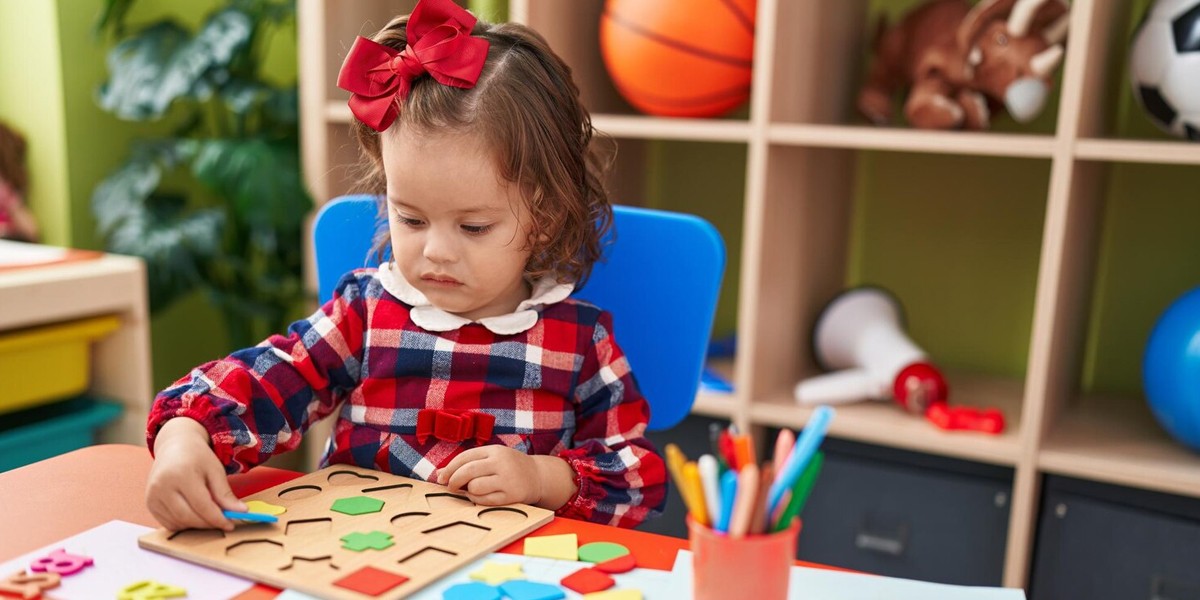
When parents think about kindergarten preparation, minds often jump straight to flashcards, sight words, and counting to one hundred. However, early childhood educators consistently observe that children who struggle during their first year rarely struggle because they do not know enough letters. Instead, difficulties usually arise when a child finds it hard to sit through a five-minute group story, follow basic adult instructions, or manage the emotional overwhelm of a full school day away from home.
Holistic child development embraces the understanding that brain growth, physical coordination, self-care, and social interaction are deeply interconnected. Research repeatedly indicates that social-emotional competence and self-regulation are among the strongest predictors of long-term elementary school success.
To give your child a smooth transition, we look for key functional indicators across five primary domains. Here is a breakdown of what these signs look like in everyday life:
- Independent Self-Care: Handling personal body needs and belongings without needing constant one-on-one adult assistance.
- Social-Emotional Competence: Managing daily frustrations, sharing space with peers, and coping with short periods of separation.
- Expressive and Receptive Language: Communicating clear thoughts, listening to multi-step instructions, and voicing needs.
- Fine and Gross Motor Control: Using fingers to manipulate pencils, scissors, and fasteners, alongside gross physical balance.
- Foundational Cognitive Concepts: Understanding basic math concepts, letter curiosity, spatial awareness, and print concepts.
Let’s explore each of these five signs in detail so you can evaluate where your child stands today.
1. Independent Self-Care and Daily Life Skills
In a kindergarten classroom with up to twenty or more children and one lead teacher, personal independence becomes essential on day one. Teachers simply cannot zip twenty jackets or open twenty individual juice pouches simultaneously when the recess bell rings or lunch begins.
A crucial indicator on any kindergarten readiness checklist is your child’s ability to navigate everyday physical needs. This includes complete restroom independence—wiping, flushing, and thorough handwashing without direct prompts. It also means managing outerwear like pulling on boots, putting on a winter coat, and attempting to pull up a zipper or button pants.
Lunchtime independence is another practical skill that directly impacts a child’s confidence. At home, practice having your child open their own lunchbox, un-peel banana stems, unscrew thermos lids, and pop open baggie seals. Shoe tying is wonderful if mastered, but slipping on Velcro or elastic shoes independently is completely sufficient for starting school.
For additional benchmarks on self-sufficiency and life routines, you can review the Official School Readiness Checklist Guide.
2. Social-Emotional Regulation and Peer Cooperation
Social-emotional maturity forms the true bedrock of classroom learning. Children who can process big feelings, take turns, and handle minor disappointments are free to focus their cognitive energy on new lessons rather than remaining in a state of stress.
Separation anxiety is normal during the first month of kindergarten. However, a child demonstrating readiness is generally able to settle down within ten to fifteen minutes after drop-off with gentle teacher reassurance. In class, readiness looks like:
- Sustained Attention: Ability to focus on an adult-directed group task (like circle time or a read-aloud) for at least 5 to 10 minutes.
- Turn-Taking: Patience when waiting a short period for a turn with popular toys or classroom equipment.
- Following Directions: Capacity to listen to and follow two-step verbal directions (e.g., “Put your jacket on your cubby hook, then come sit on the rug”).
- Constructive Play: Moving from playing beside other children (parallel play) to playing with them (cooperative play), including sharing building blocks or playing simple turn-based games.
- Emotional Expression: Using verbal phrases (“I was using that blue crayon”) instead of physical reactions when upset.
3. Language Expressiveness and Communication Skills
Clear language development allows children to make friends, follow routines, and ask for assistance when confused or uncomfortable. Teachers do not expect complex vocabulary, but they do look for functional, expressive communication skills.
By age four or five, a child who is ready for kindergarten typically speaks in complete sentences containing five to six words. They can retell a simple story or share details about their weekend in a logical sequence.
When needs arise, ready children can express themselves clearly to non-family adults—asking where the bathroom is, letting a teacher know their stomach hurts, or requesting a turn with a craft supply. They also understand positional vocabulary such as above, under, next to, and behind, which are used constantly during classroom activity transitions.
4. Fine Motor Strength and Physical Coordination
Before a child can write sentences or draw precise figures, they must build muscle stamina in their hands, wrists, and fingers. Fine motor readiness ensures that early writing activities remain engaging rather than physically exhausting.
Key fine motor skills include using a three-point finger grip (tripod grip) rather than a full fist on pencils and crayons, cutting straight lines across paper with safety scissors, and manipulating small play items like Legos, playdough, and beads.
Gross motor skills are equally vital for playground safety, spatial awareness, and classroom movement. A kindergarten-ready child can usually balance on one foot for a few seconds, hop on one foot, skip, climb playground stairs safely, and attempt catching or bouncing a larger ball. Physical play during outdoor recess builds the core strength necessary for comfortable posture during desk and carpet instruction.
5. Foundational Numeracy and Print Awareness
Notice that academic skills come fifth on our priority list! While foundational concepts are important, they build naturally once self-care, emotional control, communication, and motor control are established.
When reviewing academic readiness on a kindergarten readiness checklist, look for foundational concept awareness rather than rigid memorization:
- Number Concepts: Counting 1 to 10 (or up to 20) in correct order, accompanied by one-to-one correspondence—meaning the child points to and counts objects one by one (e.g., counting 5 crackers on a plate) rather than just reciting numbers by heart.
- Name Recognition: Recognizing their own written first name in print on a cubby tag, lunchbox, or sign-in sheet, and making an attempt to write it.
- Basic Visual Sorting: Identifying primary shapes (circle, square, triangle, rectangle) and basic colors, along with sorting small items by color or size.
- Print Awareness: Knowing how to handle a physical book—holding it right-side up, turning pages from front to back, and recognizing that text moves from left to right.
To see how state guidelines categorize these foundational early learning milestones, explore the State Kindergarten Readiness Indicators.
How to Use a Kindergarten Readiness Checklist at Home

A kindergarten readiness checklist works best as an informal tracking tool to guide play and daily household routines. It should never feel like a high-stakes exam or cause anxiety for your child.
Rather than sitting down for rigid drills or endless worksheets, embed skill practice directly into moments you already share together. Snack time is a natural time to practice one-to-one counting (“Can you give three pretzel sticks to your sister and three to yourself?”). Laundry folding becomes a sorting game by pairing socks or grouping shirts by color.
If you are exploring local early childhood programs across the city to build these foundational skills before fall, read our guide on Navigating Full-Day Preschool Options Across Chicago Neighborhoods for helpful insights on structuring your child’s weekly routine.
Tracking Progress with a Kindergarten Readiness Checklist
Young children acquire skills in sudden spurts rather than a straight line. A skill that your child struggles with one week—like zipping a coat or recognizing the letter ‘B’—might suddenly click two weeks later through steady, gentle practice.
When reviewing a checklist over several months, pay attention to general growth trends rather than perfection. Celebrate small victories, such as trying a tricky zipper twice before asking for help or using words during a sibling toy disagreement. Patience, cheerful encouragement, and low-pressure games are infinitely more effective than forced instruction.
How a Kindergarten Readiness Checklist Differs from Formal Assessments
It is essential to understand that an informal parent checklist is fundamentally different from a formal developmental screening or diagnostic evaluation:
| Feature | Informal Readiness Checklist | Formal Developmental Screening / Assessment |
|---|---|---|
| Primary Goal | Provides caregivers with an observational snapshot of daily life skills | Standardized evaluation to identify potential delays or giftings |
| Who Conducts It | Parents, guardians, or preschool teachers through daily observation | Licensed pediatricians, specialists, or certified school evaluators |
| Format | Flexible, play-based observation during home or preschool routines | Structured tasks, standardized questions, and clinical scoring |
| Outcome | Guides fun daily home activities and routine preparation | Determines formal eligibility for early intervention or support plans |
Pediatricians evaluate developmental milestones during standard 4-year well-child visits using clinical screening tools. If your informal checklist highlights areas of persistent difficulty, you can bring your observations to your child’s pediatrician for professional context.
Addressing Misconceptions and Developmental Red Flags
One common misconception among parents is that a child must enter kindergarten knowing how to read fluently, complete math equations, and write full sentences. In reality, kindergarten teachers are trained to teach those exact academic subjects! What teachers cannot easily teach on day one to twenty individual children simultaneously is basic impulse control, turn-taking, and self-care.
Another common myth is that holding a child back a year (redshirting) is always necessary if they have a late summer birthday. While extra time can benefit some children who show significant emotional delays, many younger children thrive surrounded by peers in a structured, nurturing setting.
When evaluating your four- or five-year-old, it helps to distinguish between normal developmental variation and potential red flags. Because children grow at wildly different speeds, educators look at behavioral patterns over a 2-to-4-week window before suggesting formal developmental reviews.
However, you should consult your pediatrician or early childhood specialist if you observe any of the following persistent signs:
- Unclear speech or difficulty forming 3-to-4-word phrases by age four.
- Extreme inability to follow simple 1-step directions in daily routines.
- Severe separation distress that shows zero improvement after weeks of consistent drop-off routines.
- Inability to hold a utensil or crayon or extreme distress during fine motor tasks.
- Lack of interest in interacting with peers or complete absence of pretend play.
Frequently Asked Questions About Kindergarten Readiness
Does my child need to know how to read before starting kindergarten?
No, your child does not need to know how to read books before starting kindergarten. Teachers are fully prepared to instruct early literacy from the ground up.
What is helpful is print awareness and phonemic awareness. This means your child recognizes that printed words carry meaning, enjoys being read to, recognizes environmental print (like identifying a ‘STOP’ sign or cereal brand logo), can identify some uppercase letters (especially those in their own name), and enjoys rhyming songs or sound games.
What should I do if my child struggles with separation anxiety?
Separation anxiety is the single most common challenge young children experience during the first few weeks of school. You can build confidence before school starts by creating predictable drop-off rituals.
Practice short separations by scheduling regular playdates or enrolling in structured pre-K or daycare activities. On school days, maintain a warm, confident, and quick drop-off goodbye. Prolonging drop-off or showing parental hesitation can signal to your child that the school environment might not be safe. Calm consistency and a predictable afternoon pickup routine help children settle smoothly over time.
When should parents consult a pediatrician about school readiness?
Parents should consult their pediatrician during the 4-year or 5-year well-child visit, or whenever persistent concerns arise regarding vision, hearing, speech clarity, or social-emotional regulation.
If your child shows significant difficulty understanding basic communication, exhibits severe aggression, struggles continuously with motor coordination, or loses previously mastered self-care skills, schedule a dedicated medical evaluation. Pediatricians can connect families with local early intervention services, speech therapists, or occupational specialists to provide targeted support before kindergarten begins.
For broader community coalition guides on tracking developmental milestones, review this comprehensive Early Learning Guidance.
Conclusion: Supporting Your Child’s Transition in Chicago
Preparing for kindergarten is an exciting developmental milestone filled with growth, self-discovery, and new adventures. By focusing on holistic independence, social-emotional maturity, fine motor stamina, and curious communication alongside basic math and letter concepts, you give your child the tools they need to step into their new classroom with enthusiasm and confidence.
At Fantasy Island Schools for Kids, our curriculum is designed to help young learners build these exact real-world readiness skills in a warm, loving, and intellectually rich setting. Founded in 2009 by Beata Bielic, our school is located at 6100 N Milwaukee Ave, Chicago, IL 60646. We proudly serve children ages 2 to 6 across Chicago’s Northwest Side and nearby suburbs – including Norwood Park, Edison Park, Gladstone Park, Jefferson Park, Sauganash, Edgebrook, Portage Park, Niles, Park Ridge, Skokie, Norridge, and Harwood Heights.
Our full-time and part-time programs (Mon-Fri 7 AM – 6 PM) feature certified Early Childhood Education teachers, a Gifted Enrichment Program, a multilingual environment with Polish and English language support, a Polish-language kindergarten track, weekly music classes, a multi-sensory play space, and freshly cooked daily meals at no extra charge. Tuition runs approximately $300-$400/week, and we accept CCAP (Illinois Child Care Assistance Program) and Illinois Action for Children; families can contact our school or Illinois Action for Children for details about available assistance.
Many of our graduates transition successfully into gifted public programs and neighborhood elementary schools throughout the region. If you have questions about your child’s developmental milestones or want to explore our Pre-K and Polish-language kindergarten options, we invite you to visit Fantasy Island Schools for Kids today!
