

Find the Right Bilingual Daycare in Chicago, IL
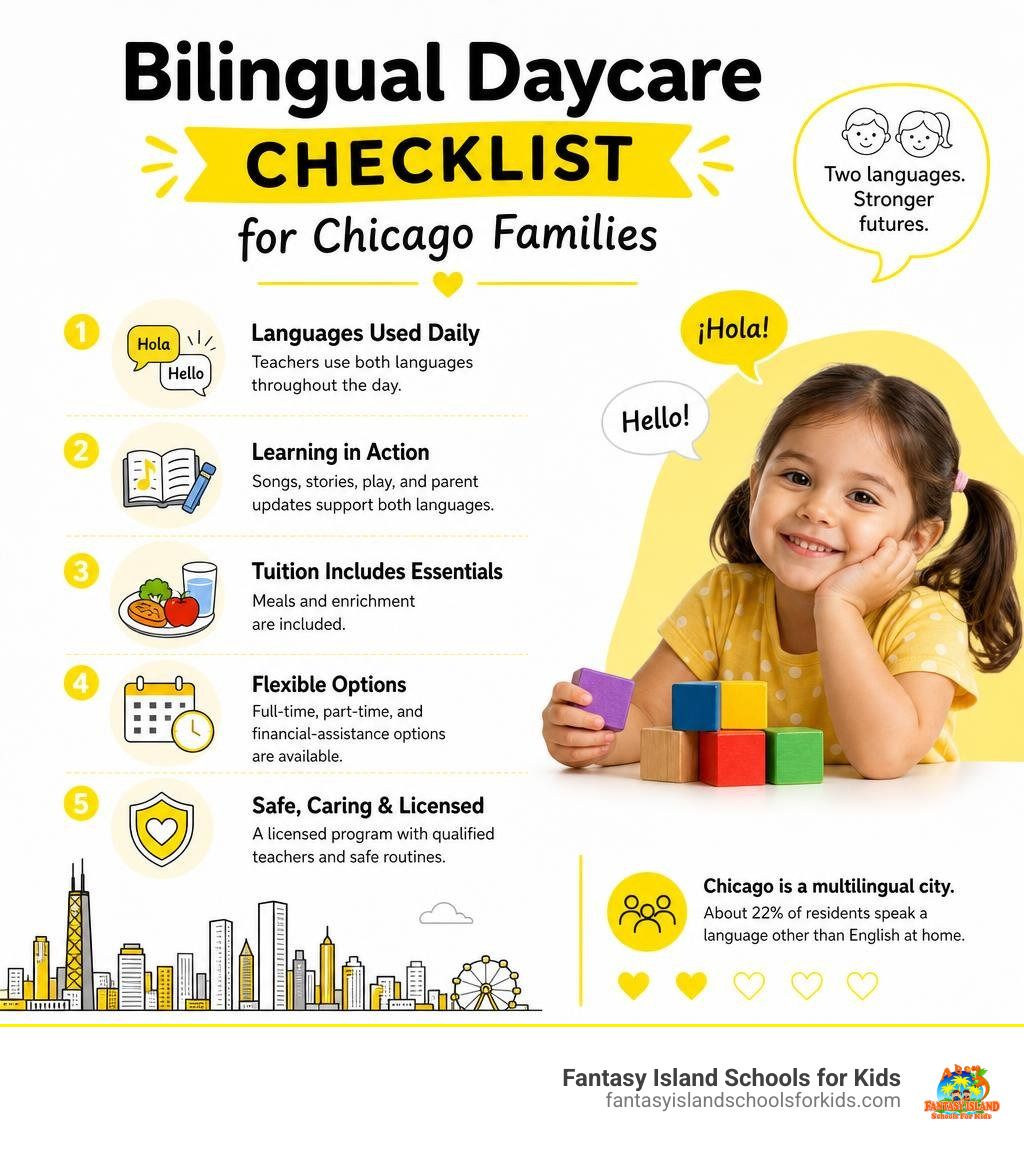
A bilingual daycare in Chicago, IL can help your child build early communication skills while learning to feel comfortable with more than one language and culture. As you compare programs, look for a licensed setting with qualified early-childhood teachers, a clear language approach, safe routines, and honest tuition information – not just a bilingual label.
For families on Chicago’s Northwest Side and nearby suburbs, it also helps to ask:
- Which languages do teachers use throughout the day?
- How are songs, stories, play, and parent updates used to support both languages?
- Does tuition include essentials such as meals and enrichment?
- Are full-time, part-time, and financial-assistance options available?
Chicago is a multilingual city: about 22% of residents speak a language other than English at home. Spanish-English programs are common, while Polish and Mandarin options continue to grow. A thoughtful program should welcome children from English-speaking and non-English-speaking homes alike, using visuals, repetition, play, and caring teacher guidance rather than pressuring children to perform.
At Fantasy Island Schools for Kids, founded in 2009 by Beata Bielic, families can find multilingual care for children ages 2-6 at 6100 N Milwaukee Ave, Chicago, IL 60646. We offer full-time and part-time care Monday through Friday, 7 AM to 6 PM, with tuition generally around $300-$400 per week including meals, music, and gifted programming; CCAP and Illinois Action for Children assistance are accepted.
I am Beata Bielic, Executive Director of Fantasy Island Schools for Kids, and I have worked in early childhood education here since joining the school as a teacher in 2009. With a Master’s degree in Psychology and more than 17 years of experience, I help families evaluate what quality bilingual daycare Chicago IL should look like for their child.
Bilingual daycare Chicago IL further reading:
1. Accelerated Cognitive Development and Dual-Language Mastery
Cognitive and Language Benefits in Bilingual Daycare Chicago IL Classrooms
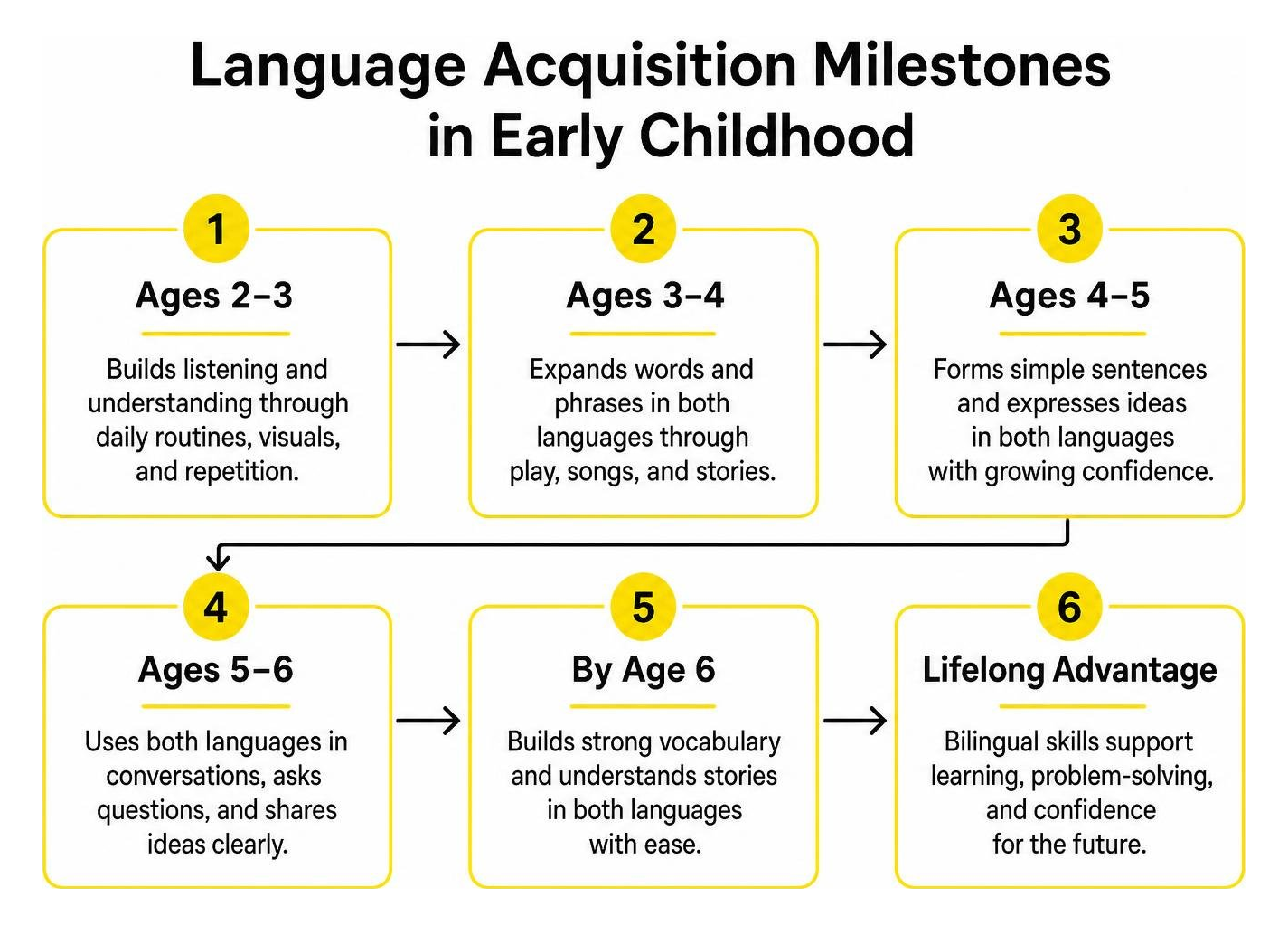
Enrolling your child in early dual-language immersion provides profound developmental advantages that extend well beyond vocabulary. Early childhood is a unique window of heightened neuroplasticity, allowing young brains to absorb phonemes, syntax, and intonations naturally without formal memorization.
Research indicates that children enrolled in bilingual early learning environments in Illinois demonstrate a 15–20% improvement in cognitive flexibility and problem-solving skills compared to their monolingual peers. By switching between languages, young children build robust executive functioning skills, including working memory, mental agility, and inhibitory control. Exploring The Complete Guide to Multilingual Education Benefits shows how these foundational cognitive frameworks prepare children for critical thinking throughout their academic journeys.
Spanish, Polish, and Mandarin Immersion Models
Across Chicago, dual-language programs are expanding rapidly to reflect the city’s rich demographic tapestry. Over 60% of local parents consider bilingual education a top priority when choosing a care center, contributing to a 30% increase in dual-language early childhood facilities across the region.
Spanish-English dual-immersion programs serve roughly 40% of the city’s dual-language learners. At the same time, Polish-English dual-language classrooms and Mandarin immersion options have experienced significant growth. While families exploring Spanish instruction often review The 5 Best Spanish Immersion Preschools Near Me Compared, our Northwest Side community has an exceptionally strong heritage connection to Polish-language learning.
Multilingual instruction scaffolds learning by pairing expressive hand gestures, visual cues, and contextual routines with spoken language, ensuring that dual-language learners and monolingual speakers progress confidently side by side.
2. Robust Cultural Education and Structured Early Curriculum
True bilingual education weaves language together with authentic cultural discovery and intentional academic preparation. Rather than treating language as an isolated subject, high-quality programs embed dual languages across daily play, sensory exploration, science, math, and expressive arts.
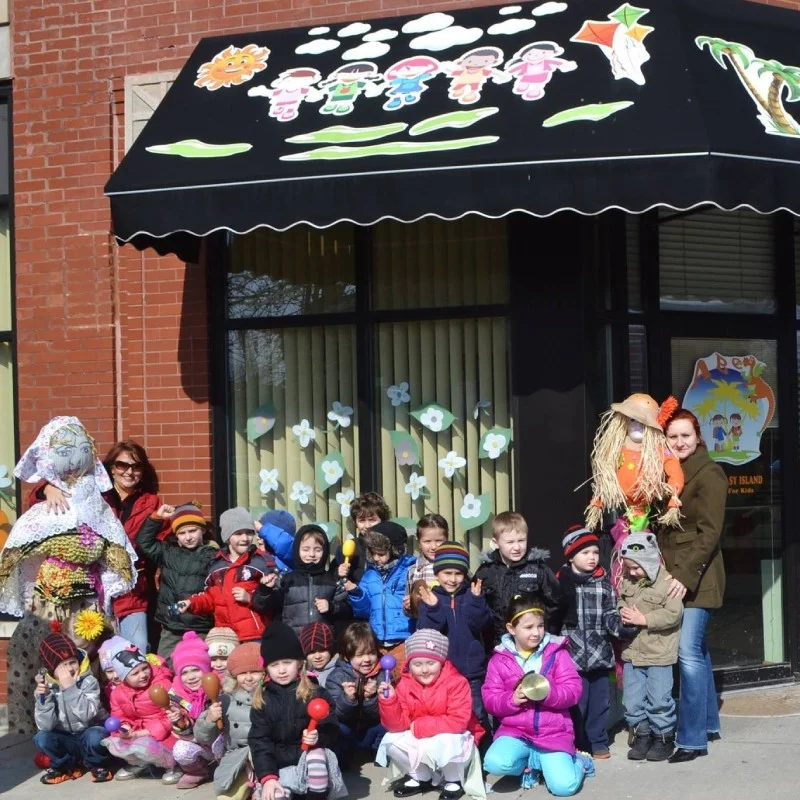
Cultural awareness expands children’s worldviews and nurtures empathy. In our classrooms, children discover seasonal traditions, traditional folklore, global music, and diverse culinary customs. This multi-sensory environment reinforces vocabulary through hands-on activities, such as baking, storytelling, and interactive movement.
A structured daily rhythm ensures that foundational literacy, numeracy, and social-emotional growth are thoroughly nurtured. Implementing A Practical Guide to Daycare With Curriculum allows educators to balance experiential learning with kindergarten readiness milestones, ensuring children build self-regulation and school readiness within an enriching multilingual framework.
3. High Quality Standards and Neighborhood Accessibility Across Chicago
Evaluating Chicago Neighborhood Daycare Options
Selecting early childcare requires balancing program philosophy with practical logistics, especially for working parents balancing commutes across Chicago’s diverse neighborhoods.
Families on the Northwest Side of Chicago—including Norwood Park, Edison Park, Gladstone Park, Jefferson Park, Sauganash, Edgebrook, and Portage Park—as well as nearby suburbs such as Niles, Park Ridge, Skokie, Norridge, and Harwood Heights, benefit from choosing a program close to home routines. When evaluating your schedule, Navigating Full-Day Preschool Options Across Chicago Neighborhoods provides a helpful overview for aligning extended working hours with comprehensive early childhood care.
For families seeking supplemental at-home support, resources like Find Available Bilingual Babysitters in Niles, IL can provide additional language exposure outside school hours.
Assessing Teacher Credentials and Safety
Safety and instructional quality depend on the expertise and dedication of the teaching staff. When touring classrooms, parents should prioritize programs where educators hold specialized credentials in Early Childhood Education (ECE), maintain current First Aid and CPR certifications, and receive ongoing training in trauma-informed care.
| Immersion Model | Instructional Structure | Primary Developmental Benefit | Language Outcome Target |
|---|---|---|---|
| 50/50 Dual Immersion | Equal time divided between English and the target language | Balanced cognitive flexibility and biliteracy | Full bilingualism and biliteracy |
| Full Immersion | 90–100% target language during early years, transitioning gradually | Rapid conversational fluency and authentic accent | High conversational mastery |
| Enrichment Multilingual | Core instruction integrated with dedicated multilingual enrichment | Cognitive agility and cross-cultural awareness | Strong receptive and expressive foundation |
Using a structured Step-by-Step Guide to Choosing the Right Preschool Options helps families verify low child-to-teacher ratios, clear emergency protocols, and safe indoor and outdoor multi-sensory play spaces.
4. Affordability and State Assistance for Bilingual Daycare Chicago IL
Typical Tuition and Subsidies for Bilingual Daycare Chicago IL Families
Childcare represents a significant household investment for parents aged 25–45. In the Chicago metropolitan area, weekly full-time tuition for quality early education typically ranges between $300 and $400 per week.
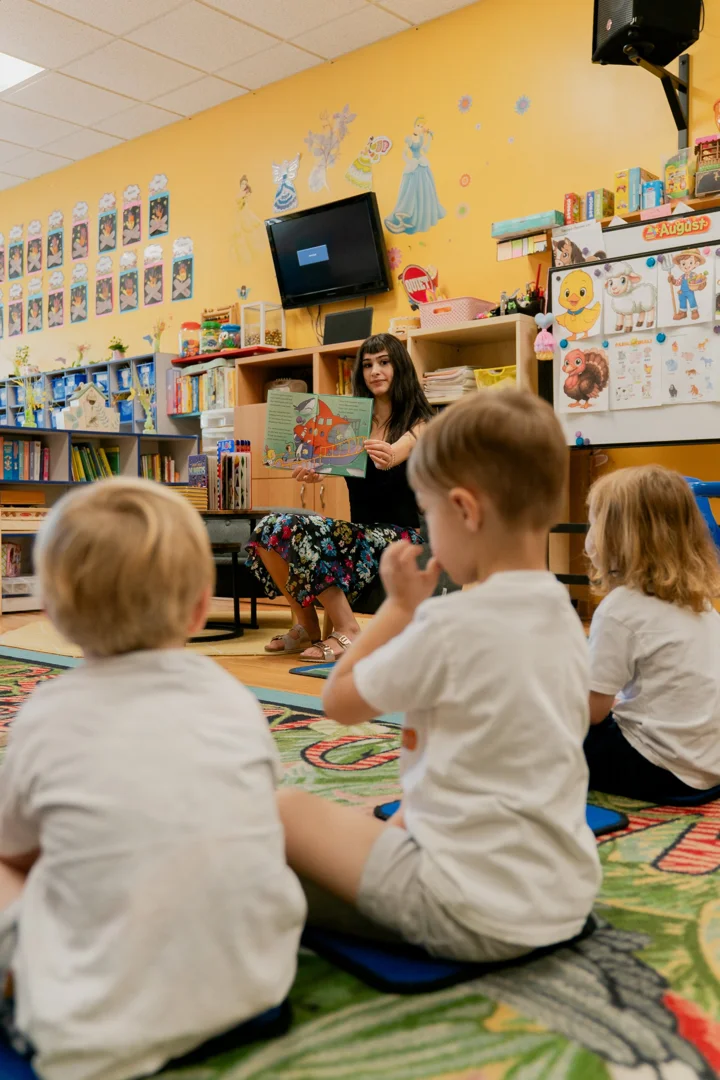
When reviewing programs, consider what is included in the base rate. Inclusive programs incorporate on-site, freshly cooked meals, specialized weekly music instruction, and gifted enrichment curricula without charging hidden ancillary fees.
To keep high-quality care accessible, programs throughout Illinois participate in state subsidy initiatives. The Illinois Child Care Assistance Program (CCAP) and Illinois Action for Children help qualifying working families offset tuition expenses. Families should consult program administrators or contact Illinois Action for Children directly for specific guidance regarding application procedures and eligibility requirements. For a detailed breakdown of costs and programmatic comparisons across the city, consult our Cheat Sheet to Choosing the Right Preschool Compare Chicago Options.
Frequently Asked Questions About Bilingual Childcare in Chicago
Will attending a bilingual daycare delay my child’s English proficiency?
No. Research in early childhood development shows that dual-language exposure does not cause speech delays. Children may occasionally engage in “code-switching” (blending words from both languages in a single sentence), which is a normal, healthy indicator of cognitive processing. Over time, children separate the linguistic systems naturally, developing rich vocabularies in both languages.
How do bilingual daycares support monolingual English-speaking families?
Quality dual-language programs welcome children from monolingual English households by utilizing immersive routines, visual schedules, physical gestures, and supportive peer interactions. Teachers provide daily parent communication in English so families remain fully engaged with classroom progress, theme developments, and developmental milestones.
What long-term academic outcomes do bilingual daycare graduates achieve?
Graduates of structured multilingual programs often demonstrate heightened problem-solving skills, strong verbal reasoning, and robust social adaptation. Many graduates transition smoothly into elementary classrooms and selective enrollment or gifted programs, benefiting from the self-regulation and executive functioning developed during early immersion.
Conclusion
Finding the right early learning environment sets the stage for your child’s lifelong curiosity, cognitive confidence, and cultural empathy. Fantasy Island Schools for Kids was founded in 2009 by Beata Bielic and is located at 6100 N Milwaukee Ave, Chicago, IL 60646. We proudly serve families across Chicago’s Northwest Side and nearby suburbs, including Norwood Park, Edison Park, Gladstone Park, Jefferson Park, Sauganash, Edgebrook, Portage Park, Niles, Park Ridge, Skokie, Norridge, and Harwood Heights.
Our school serves children ages 2–6 with full-time and part-time options, operating Monday through Friday from 7 AM to 6 PM. Tuition is approximately $300–$400 per week and includes freshly prepared meals, weekly music classes, and our specialized Gifted Enrichment Program. We accept CCAP and Illinois Action for Children to ensure enriching education remains accessible to all families.
Our curriculum is designed to help children develop critical thinking and communication skills, and parents frequently tell us how confident their children feel entering elementary school. To learn more about our classroom offerings, explore our top-rated preschool programs and schedule a tour with our caring educators today.
