

Understanding the Value of a Daycare with Curriculum
A daycare with curriculum combines nurturing, reliable childcare with intentional, research-based educational frameworks designed to support cognitive, social-emotional, linguistic, and physical development. Rather than offering passive supervision or unstructured playtime alone, a curriculum-guided daycare embeds purposeful learning experiences into daily routines, circle time, sensory exploration, and peer interactions. This structured yet flexible approach ensures young children acquire essential foundational skills naturally during their most critical formative years.
During the first five years of life, the human brain forms neural connections faster than at any subsequent developmental stage. Because approximately 90% of brain architecture is established before kindergarten, early childhood environments fundamentally shape how children think, communicate, self-regulate, and navigate challenges.
A high-quality early childhood curriculum transforms standard childcare hours into rich developmental opportunities. Rather than relying on rigid rote memorization, experienced educators use intentional teaching strategies. Every classroom interaction—from building with unit blocks to collaborative storytelling—is planned with a clear developmental goal in mind.
Through predictable daily rhythms and supportive teacher interactions, children develop crucial executive function skills, including working memory, cognitive flexibility, and emotional self-control. A balanced curriculum also stimulates linguistic growth, early problem-solving, and natural curiosity, creating confident learners who feel secure exploring new concepts and engaging with the world around them.
Key Hallmarks of High-Quality Childcare Curriculum Frameworks
Not all early learning frameworks offer the same depth or pedagogical rigor. When evaluating programs, parents should look for several core indicators that define high-quality early education and holistic child development:
Foundational Pre-Skills Taught in a Daycare with Curriculum
An effective curriculum addresses the whole child rather than focusing exclusively on academic preparation. The core developmental domains include:
- Language and Early Literacy: Developing phonological awareness, expressive and receptive vocabulary, narrative comprehension, print concepts, and conversational turn-taking through daily interactive read-alouds and guided discussions.
- Early Mathematics and Logic: Fostering pattern recognition, spatial awareness, one-to-one counting correspondence, sorting by multiple attributes, and geometric shape identification through tangible manipulatives.
- Scientific Inquiry and Discovery: Encouraging cause-and-effect experiments, sensory investigation, observation of living things and nature, asking questions, and simple hypothesis building.
- Social-Emotional Competence: Nurturing healthy social-emotional development in toddlers helps children build empathy, manage big feelings, resolve peer conflicts constructively, and cooperate during small-group and whole-group activities.
- Physical and Motor Skills: Enhancing gross motor capabilities (balance, running, hopping, climbing, and coordination) alongside fine motor control (pincer grasp, scissor skills, clay molding, and utensil grip).
Evidence-Based Frameworks and State Standards Alignment
High-quality curricula are rooted in validated child development research and align with established state early learning standards. Educators use structured scope and sequence guidelines to introduce concepts progressively, ensuring that activities build naturally on prior knowledge while supporting individual developmental timelines. By adhering to guidelines from recognized organizations such as the National Association for the Education of Young Children, certified teachers ensure that every activity meets rigorous safety, pedagogical, and developmental benchmarks.
Ongoing Observation, Milestone Tracking, and Assessment
Standardized testing is never appropriate for toddlers and preschoolers. Instead, high-quality programs rely on authentic, formative assessment methodologies. Teachers regularly document milestone progress through observational notes, photo portfolios, work samples, and developmental screening tools. This continuous tracking allows educators to adapt lesson plans to individual learning styles, identify areas needing extra support or enrichment, and share clear, actionable insights with parents during regular conferences.
Developmentally Appropriate Practice and Cultural Responsiveness
Developmentally Appropriate Practice (DAP) ensures learning experiences match children’s developmental stages, personal strengths, and cultural backgrounds. In diverse classrooms, DAP also embraces home languages. Supporting a child’s home language, such as Polish or Ukrainian, alongside English builds cognitive flexibility, strengthens memory retention, and broadens cultural appreciation from an early age.
Comparing Daycare Curriculum Models: Emergent vs. Traditional
Families often encounter two distinct pedagogical approaches when exploring early learning options:
| Feature | Traditional Curriculum | Emergent Curriculum |
|---|---|---|
| Primary Driver | Teacher-planned calendar themes (e.g., seasons, letter-of-the-week) | Child-led inquiries and natural classroom interests |
| Pacing | Fixed schedule across predetermined weekly units | Flexible timelines shaped by student curiosity and questions |
| Learning Environment | Teacher-directed stations and uniform worksheets | Multi-sensory discovery zones acting as an active “third teacher” |
| Skill Acquisition | Focus on direct instruction and structured drills | Skills woven organically into hands-on projects and exploration |
| Assessment Method | Product-focused milestones and checklist completion | Portfolio documentation, observation notes, and process reflection |
Implementing Emergent Learning in a Daycare with Curriculum
Emergent learning draws inspiration from educational philosophies like Reggio Emilia, where teachers view the classroom environment itself as a powerful teaching partner. When children show fascination with a topic—such as building bridges with blocks, observing autumn leaves, or watching insects in the garden—educators expand that interest into multi-week investigative projects that naturally integrate math, science, art, and storytelling.
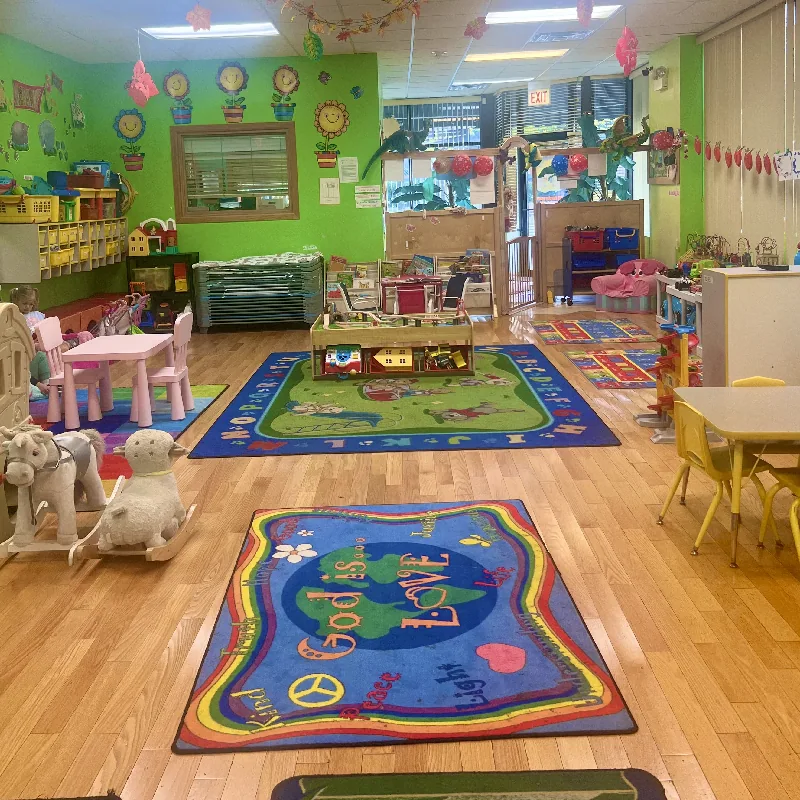
This responsive model allows children to take ownership of their learning journey. Rather than sitting passively, children manipulate materials, test hypotheses, collaborate with peers, and express their discoveries through multiple creative media, building deep cognitive connections and enthusiasm for school.
Center-Based vs. Home-Based Curriculum Adaptations
Both center-based facilities and home-based providers can deliver enriching curricula, though their structures and resources differ:
- Center-Based Programs: Offer dedicated age-segmented classrooms, expansive indoor/outdoor gross motor spaces, specialized enrichment staff (such as dedicated music and language instructors), and comprehensive peer collaboration within same-age peer groups.
- Home-Based Settings: Often feature mixed-age groups where learning is integrated into daily domestic routines, like measuring ingredients during snack preparation and peer-to-peer modeling between older and younger children.
Families weighing these models can benefit from navigating full-day preschool options across Chicago neighborhoods to determine which structure best aligns with their family’s daily routine, educational priorities, and learning preferences.
How Structured Curricula Foster Long-Term School Readiness
A well-rounded curriculum provides children with the cognitive, social, and emotional foundation needed to step confidently into kindergarten and elementary school. By practicing daily classroom routines, working collaboratively in small groups, and engaging in multi-sensory problem-solving, children learn to navigate complex social and academic environments with ease.
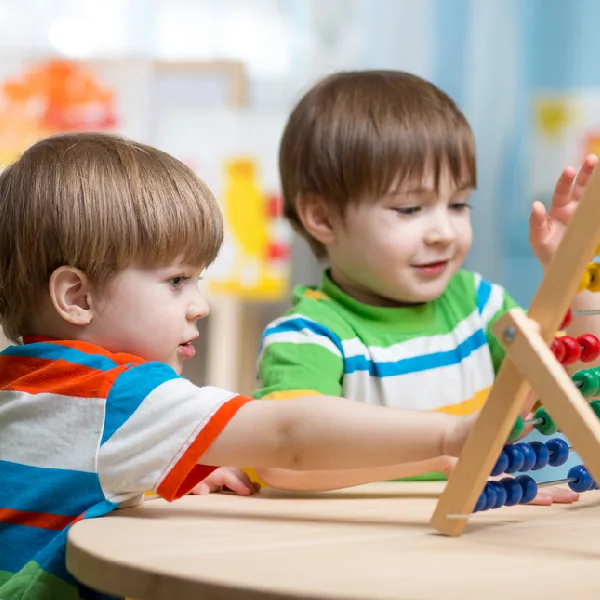
School readiness encompasses much more than recognizing letters and numbers; it involves self-regulation, sustained attention, curiosity, and the ability to express needs clearly. Children who participate in a curriculum-based program learn how to listen actively, take turns, transition smoothly between activities, and persist when faced with challenging tasks.
Knowing the signs that your child is ready for kindergarten—such as following multi-step directions, expressing ideas clearly, cooperating with peers, and demonstrating pencil grip control—helps parents see how intentional daily play translates directly into long-term academic readiness and lifelong enthusiasm for learning.
Frequently Asked Questions About Daycare Curriculum
What is the difference between emergent curriculum and traditional curriculum?
A traditional curriculum relies on teacher-selected themes planned well in advance (such as a fixed letter-of-the-week schedule), whereas an emergent curriculum develops collaboratively out of children’s spontaneous interests, questions, and daily discoveries. Emergent curricula allow teachers to weave academic and developmental concepts directly into deep-dive projects that actively engage children’s curiosity.
How does a daycare curriculum support mixed-age groups?
Educators design tiered activities with open-ended materials that provide multiple entry points for varying ability levels. For example, during a block-building challenge, younger toddlers practice balance, spatial awareness, and fine motor stacking, while older preschoolers map out complex structures, count unit blocks, and practice collaborative negotiation and problem-solving.
How do educators communicate curriculum milestones to parents?
High-quality programs share ongoing progress through digital portfolios, daily activity updates, parent-teacher conferences, and developmental milestone summary reports. This ongoing communication ensures families stay closely connected to their child’s educational journey and understand the specific developmental milestones being nurtured each day.
Conclusion
Choosing the right early childhood program is one of the most important decisions you will make for your child’s early development. At Fantasy Island Schools for Kids, founded in 2009 by Beata Bielic and located at 6100 N Milwaukee Ave, Chicago, IL 60646, we serve children ages 2-6 across Chicago’s Northwest Side and surrounding communities, including Norwood Park, Edison Park, Gladstone Park, Jefferson Park, Sauganash, Edgebrook, Portage Park, Niles, Park Ridge, Skokie, Norridge, and Harwood Heights.
Our full-time and part-time programs (open Monday through Friday, 7:00 AM to 6:00 PM) blend gifted enrichment, English-language instruction with Polish and Ukrainian support, weekly music classes, and freshly cooked on-site meals. Tuition is approximately $300-$400 per week and includes all meals, music instruction, and enrichment activities. To keep quality care accessible, we accept CCAP (Illinois Child Care Assistance Program) and Illinois Action for Children; please contact our administrative team or Illinois Action for Children to explore your family’s eligibility.
For Northwest Chicago parents comparing daycare with curriculum options, it can be helpful to tour classrooms, ask how teachers document progress, and look for daily routines that balance structure with joyful exploration. Our curriculum is designed to help children build confidence, independence, communication skills, and early problem-solving habits in a warm, welcoming setting. Parents frequently tell us they value seeing how meals, music, language, movement, and project-based activities work together throughout the day.
Discover how our comprehensive preschool program can support your child’s natural love for learning.