

A Simple Plan for Toddler Classroom Activities
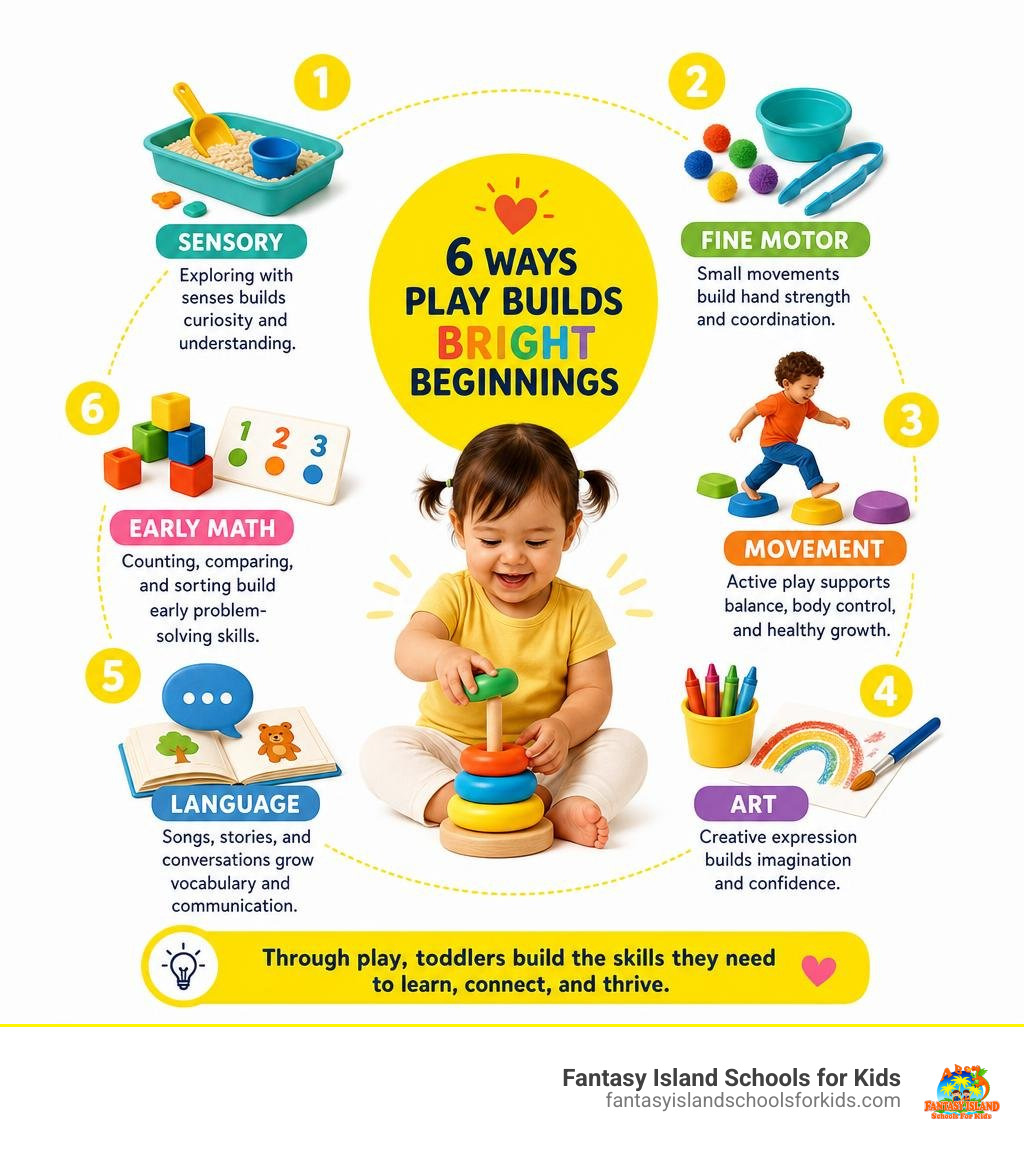
The best toddler classroom activities are short, hands-on, and easy to revisit. Set up a few simple stations, give a quick demonstration, and let children explore at their own pace:
- Offer one sensory invitation, such as water, textured materials, or play dough.
- Add a fine motor task, such as sorting, transferring, sticking, or threading.
- Include movement, music, or a simple obstacle path.
- Rotate materials instead of planning a new activity for every part of the day.
This approach respects toddlers’ short attention spans while supporting curiosity, language, coordination, early math, and social learning. The 10 ideas ahead show how to use low-cost materials, shared art spaces, stories, color play, and movement to create meaningful learning without overcomplicating your classroom.
I’m Beata Bielic, founder of Fantasy Island Schools for Kids in 2009 and an early-childhood educator with more than 17 years of experience designing toddler classroom activities; I hold a Master’s degree in Psychology from Jagiellonian University. Our multilingual school at 6100 N Milwaukee Ave, Chicago, IL 60646 serves children ages 2-6 with full-time and part-time care Monday through Friday, 7 AM-6 PM, with tuition around $300-$400 per week including meals, music, and gifted programming; we accept CCAP and Illinois Action for Children and welcome families from Chicago’s Northwest Side and nearby suburbs, including Norwood Park, Edison Park, Gladstone Park, Jefferson Park, Sauganash, Edgebrook, Portage Park, Niles, Park Ridge, Skokie, Norridge, and Harwood Heights at 773-206-4627.
Handy toddler classroom activities terms:
10 Proven Approaches to Toddler Classroom Activities
Planning for two- and three-year-olds requires balance. Toddlers possess an innate drive to investigate their surroundings, but their working memory and emotional regulation are still forming. Designing responsive learning spaces means choosing between low-prep open sensory stations and guided, structured centers.
| Activity Type | Setup Time | Core Developmental Target | Teacher Role | Typical Engagement Window |
|---|---|---|---|---|
| Low-Prep Sensory Stations | 2–5 minutes | Sensory processing, tactile exploration, self-regulation | Facilitator; observes, introduces descriptive words | 10–25 minutes (child-led repetition) |
| Structured Learning Centers | 5–10 minutes | Fine motor precision, early math, receptive language | Guide; models technique, prompts problem-solving | 5–10 minutes (focused attention) |
| Collaborative Group Art | 5 minutes | Social bonding, spatial awareness, expressive arts | Co-creator; manages space, encourages sharing | 10–15 minutes |
| Gross Motor Pathways | 5 minutes | Vestibular balance, bilateral coordination, core strength | Safety monitor; leads movement rhythms | 10–20 minutes |
Setting up these stations with high-contrast, accessible containers allows children to transition smoothly between active movement and quiet focus throughout the morning.
1. Multi-Sensory Play and Low-Prep Exploration Stations
Sensory play is the cornerstone of early neurological growth. When toddlers touch, pour, scoop, and manipulate varied textures, they build complex neural pathways that support language, spatial awareness, and emotional regulation.
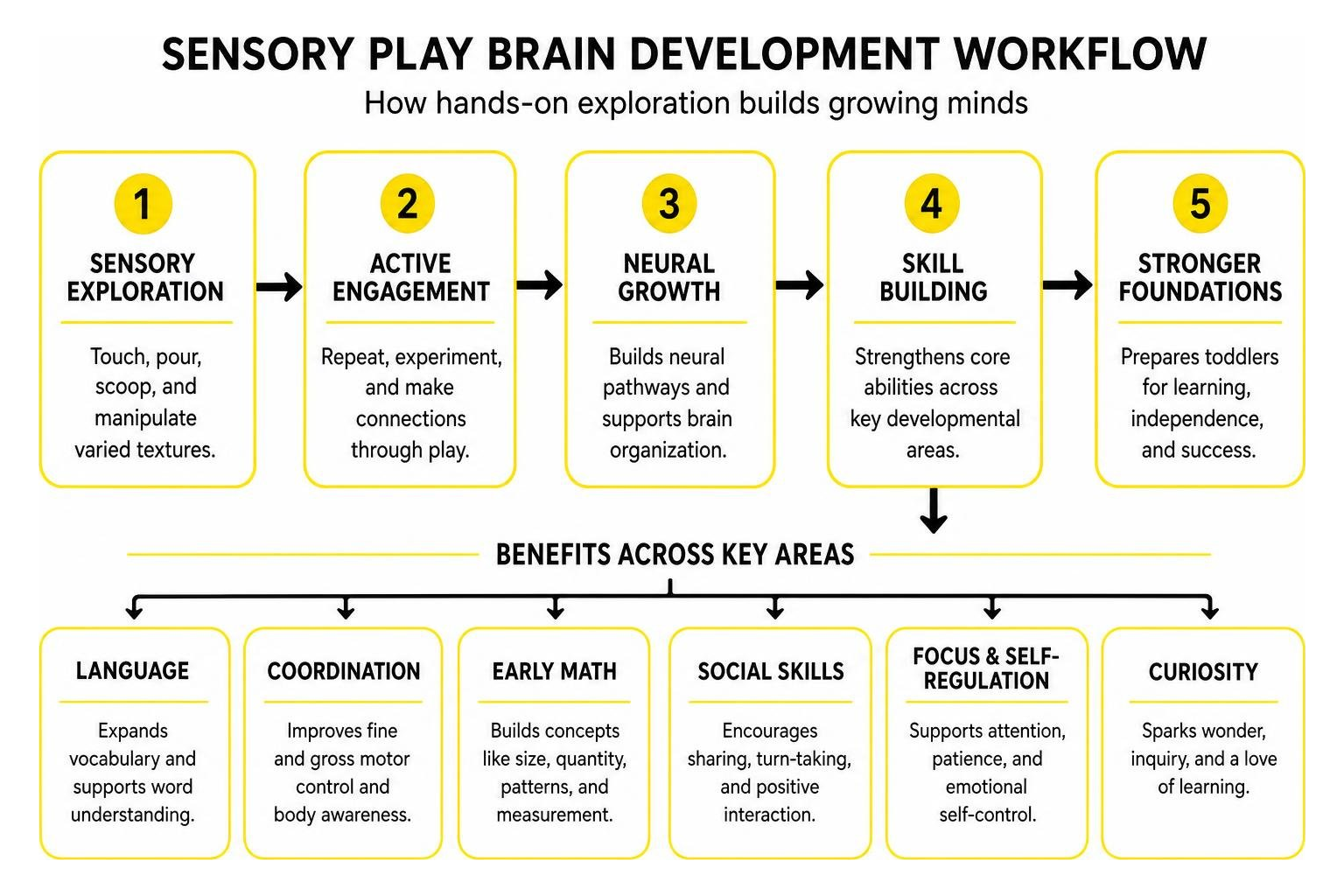
Low-prep sensory bins provide rich learning opportunities using basic kitchen supplies:
- Oobleck Kitchen Lab: Combine two parts cornstarch with one part water in low plastic bins. Toddlers explore a non-Newtonian fluid that acts as a solid when squeezed and a liquid when released. This provides early physics exposure while expanding descriptive vocabulary (slimy, solid, melt, drip).
- Warm and Cool Water Basins: Fill a water table with warm water and mild dish soap bubbles, then provide bowls of colored ice cubes for an ice-transfer activity using slotted spoons.
- Textured Bean & Pasta Troughs: Fill shallow trays with dried colored kidney beans or penne pasta alongside measuring cups, funnel tubes, and silicone muffin cups.
In our bilingual classroom environment, we pair sensory play with vocabulary across multiple languages (such as introducing Polish terms like ciepły for warm and zimny for cold). Understanding the amazing ways preschool expands children’s brains highlights why tactile exploration is far more effective than passive learning at this age.
2. Fine Motor Stations Using Recycled Everyday Materials
Before young children can master pencil grasp or control safety scissors, they must develop the intrinsic muscles of their fingers and hands. You do not need expensive commercial toys to build dexterity; everyday recyclable items provide excellent fine motor challenges.
Simple, high-impact fine motor stations include:
- Milk Cap Color Drop: Collect clean plastic milk caps and pair them with matching colored pom-poms and child-safe tongs. Children pick up pom-poms and place them into color-coded caps, building pincer strength and hand-eye coordination.
- Cardboard Tube Posting: Tape paper towel tubes vertically to the wall at toddler eye level. Provide wooden pegs, felt balls, or large dried pasta for children to drop through the chutes into small catch baskets.
- Egg Carton Golf Tee Hammering: Turn cardboard egg cartons upside down. Toddlers push large wooden or plastic golf tees into the dimples using lightweight play hammers or the palms of their hands.
Teachers can look at resources like this color sorting activity for toddlers to see how recycled materials build functional hand strength. Integrating structured motor challenges into your daily routine creates a strong foundation, as detailed in a practical guide to daycare with curriculum.
3. Storybook and Nursery Rhyme Multi-Skill Units
Nursery rhymes and repetitive storybooks offer predictable cadence, rhythm, and rich narrative patterns. Because toddlers naturally memorize repetitive refrains, classic tales make ideal springboards for multi-step learning centers that weave together literacy, sequencing, and sensory play.
Take the classic rhyme Three Little Kittens, for example:
- Scavenger Hunt & Positional Clues: Hide pairs of baby socks or felt mittens around the classroom. Direct toddlers using spatial language (“Look under the wooden chair” or “Search next to the blue basket”).
- Sensory Washing Station: Place the recovered mittens into shallow tubs filled with bubbly water. Toddlers scrub the fabric clean, learning cause-and-effect while practicing practical life skills.
- Clothespin Fine Motor Drying: String a low clothesline between chair legs. Children use wooden clothespins or plastic clips to hang their washed mittens, strengthening their pinch grip.
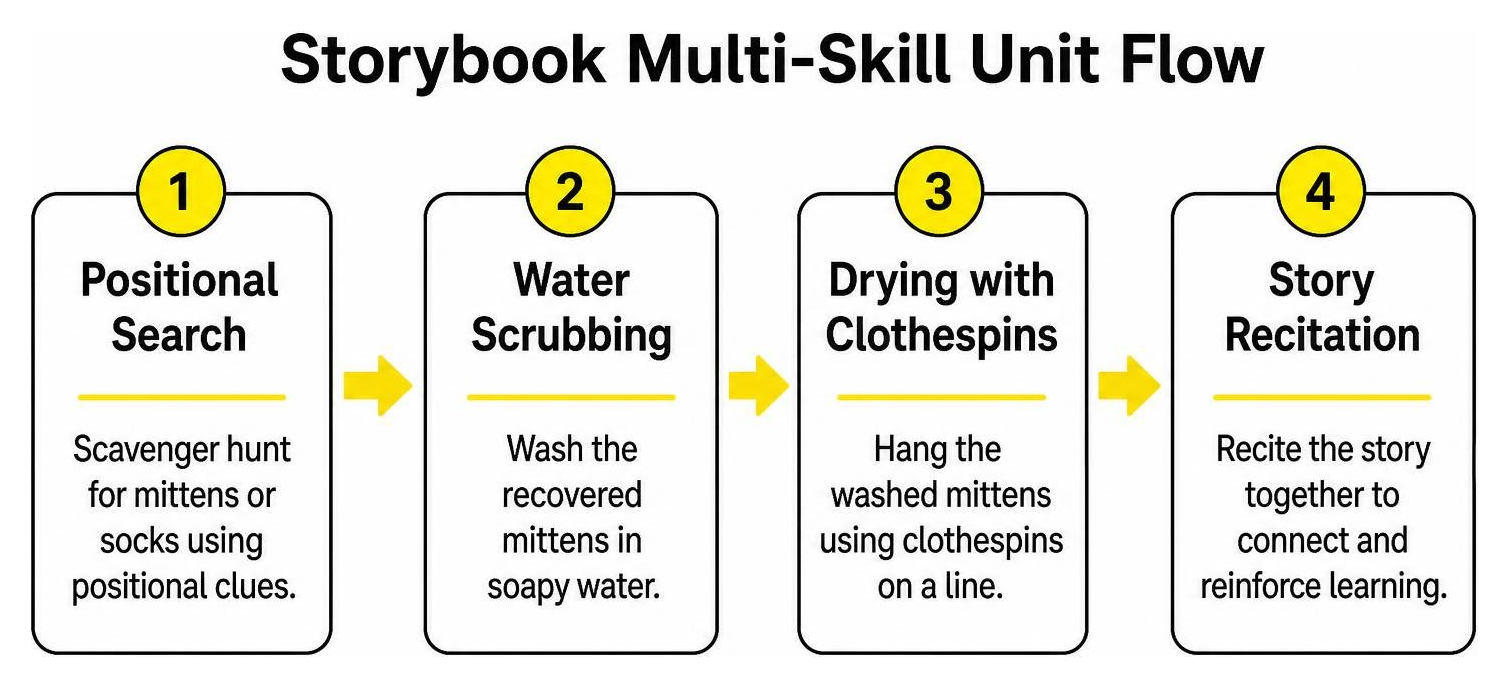
This multi-sensory approach transforms simple stories into full-body learning experiences, as demonstrated in this Three Little Kittens preschool activity: hands-on learning fun. Integrating rich auditory rhymes also offers a practical way for educators and parents to monitor developmental progress; when children have difficulty mirroring repetitive sounds, resources like 5 smart ways to identify toddler speech delay signs provide valuable guidance.
4. Process-Focused Group Art Toddler Classroom Activities
At age two and three, art should center on sensory discovery, mark-making, and physical movement rather than producing identical finished crafts. Group art experiences also serve as a gentle introduction to sharing physical space.
To run an engaging, easel-free collaborative painting session:
- Cover a low classroom table or a taped floor area with a long roll of white butcher paper.
- Pour washable, non-toxic tempera paint into shallow cafeteria trays or paper plates.
- Give children traffic cones, silicone cups, or textured sponge rollers instead of standard paintbrushes.
Toddlers love pressing cones into paint and stamping geometric circles across the paper, or dragging them along the surface to create wide tracks. Removing chairs encourages children to stand, balance, and move freely alongside their peers. Ideas like this easy toddler painting with cones highlight how open-ended creative projects support early social development, reinforcing the concepts explored in all about social-emotional development in toddlers: key milestones.
5. Primary Color Recognition and Basic Art Exploration
Teaching primary colors (red, yellow, and blue) provides children with a foundation for visual observation, categorization, and color theory. Toddlers learn colors best when identification is paired with movement and playful character creation.
Try setting up a “Primary Color Monster” art project:
- Active Color Sorting: Place three large bins (red, yellow, blue) in the center of the rug. Encourage children to run, find classroom toys that match each hue, and sort them into the corresponding bins.
- Low-Stress Monster Drawing: Give each toddler large paper sheets and chunky crayons or dot markers. Guide them through drawing basic geometric shapes—large circles for heads, tall ovals for bodies, and expressive wavy lines for arms.
- Targeted Primary Coloring: Encourage children to fill their monsters with bold red, yellow, and blue strokes. Adding movement cues (“Wiggle your blue crayon high, now stamp three blue dots!”) keeps the room engaged.
Techniques from this primary colors art lesson for Pre-K and Kindergarten demonstrate how removing expectations of realistic drawing builds creative confidence in early learners.
6. Mess-Free Shape Matching and Early Math
Early math understanding begins with pattern identification, geometric recognition, and one-to-one correspondence. You do not need messy glues or intricate cutouts to teach early math foundations.
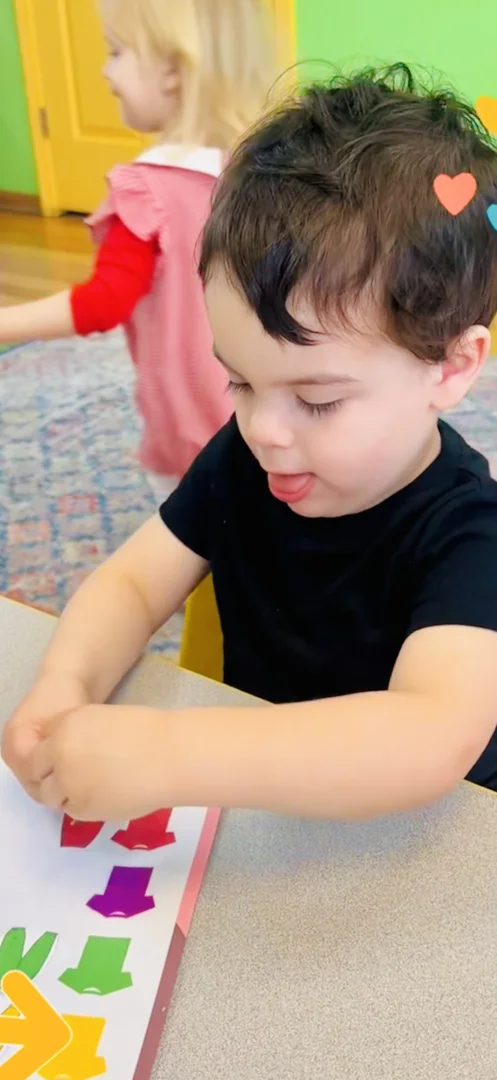
A low-mess sticker shape station offers focused, quiet engagement:
- Print or draw bold, high-contrast outlines of basic geometric shapes (circle, square, triangle, rectangle) on sturdy cardstock.
- Provide sheets of colorful circular dot stickers.
- Show toddlers how to peel the stickers independently (peeling the white background border off the sticker sheet first makes it easy for little fingers to grab each dot).
- Encourage children to place dots along the perimeter lines of the printed shapes.
This activity develops spatial awareness, hand-eye coordination, and finger isolation. For an easy seasonal version, try this no mess fall toddler activity: sticker shapes, which keeps children focused while building early geometry concepts.
7. Seasonal and Nature-Based Recycled Crafts
Seasonal changes offer natural opportunities to explore the physical world. Recycled materials paired with seasonal palettes let children explore science, weather patterns, and nature without requiring expensive supplies.
A favorite autumn transition project uses recycled cardboard tubes:
- Trunk Preparation: Take recycled toilet paper tubes, make two small 1-inch vertical cuts at the top rim, and bend the tabs outward to create branches that stand upright on tables.
- Q-Tip Leaf Dotting: Provide toddlers with bundles of cotton swabs (Q-tips) held together with an elastic band, along with washable tempera paint in autumn shades: forest green, golden yellow, burnt orange, and crimson.
- Stamping Foliage: Toddlers dip the Q-tip bundles into paint and press them against cardboard tubes or paper plates to create dense foliage patterns.
Classroom crafts like these goodbye summer, hello autumn toilet paper roll trees can easily be adapted across the year—using soft pinks and greens for spring blossoms, or cool blues and whites for winter snowscapes.
8. Gross Motor Movement and Spatial Awareness Tracks
Toddlers learn through whole-body movement. Developing gross motor control—navigating balance, spatial boundaries, and core stability—directly supports classroom focus and executive functioning.
When cold Chicago winters keep play indoors, you can turn your classroom floor into an active movement track:
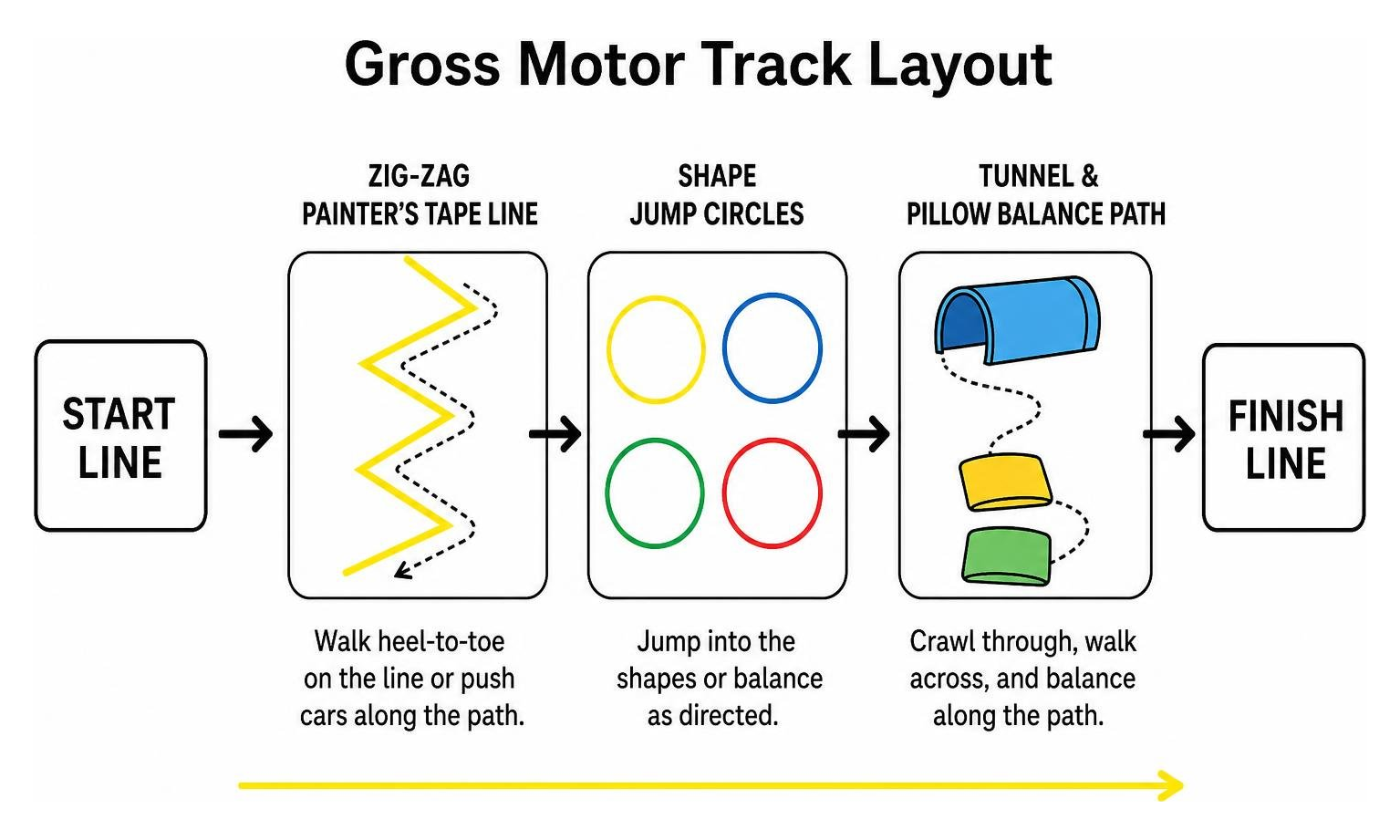
- Painter’s Tape City Roads: Lay brightly colored painter’s tape across the floor in zig-zags, straight balance beams, and intersecting roadways. Toddlers can walk heel-to-toe along the lines or push wooden cars along the paths.
- Gross Motor Shape Jumps: Tape large geometric shapes across the floor. Call out simple commands (“Jump into the yellow circle!” or “Balance on one foot in the big blue square!”).
- Tunnel & Pillow Balance Paths: Arrange soft foam floor mats, crawl-through fabric tunnels, and firm balance pillows to challenge vestibular and proprioceptive systems.
These active physical stations keep children engaged during indoor winter months. Structured physical play also forms an essential part of quality preschool programs in Chicago, supporting gross motor development in every season.
9. Music, Rhythm, and Movement Circles
Music combines auditory processing, rhythmic motor planning, and early language acquisition. In a structured classroom, daily music circles help toddlers transition between high-energy play and focused group activities.
Key elements of an engaging toddler music circle include:
- Rhythm Stick Exploration: Distribute smooth, child-safe wooden rhythm sticks. Encourage toddlers to tap out syllables to simple songs or click sticks together high in the air, low on the floor, and behind their backs to build spatial awareness.
- Interactive Story Rhymes: Use call-and-response songs where children supply animal noises, motor actions (such as stomping like an elephant or fluttering like a butterfly), or fill in missing rhyming words.
- Freeze Dance for Self-Regulation: Play lively music and pause it unexpectedly. Toddlers freeze in place when the sound stops, practicing inhibitory control and active listening.
Our curriculum includes dedicated weekly music classes with a qualified music teacher, reinforcing bilingual language development through rhythm and song. Advanced music and rhythmic games also provide wonderful enrichment, as shared in 10 creative enrichment activities for gifted preschoolers.
10. Differentiated Mixed-Age Toddler Classroom Activities
Toddler classrooms often include children spanning different developmental stages—from young two-year-olds building basic vocabulary to older three-year-olds mastering early conversation and complex construction.
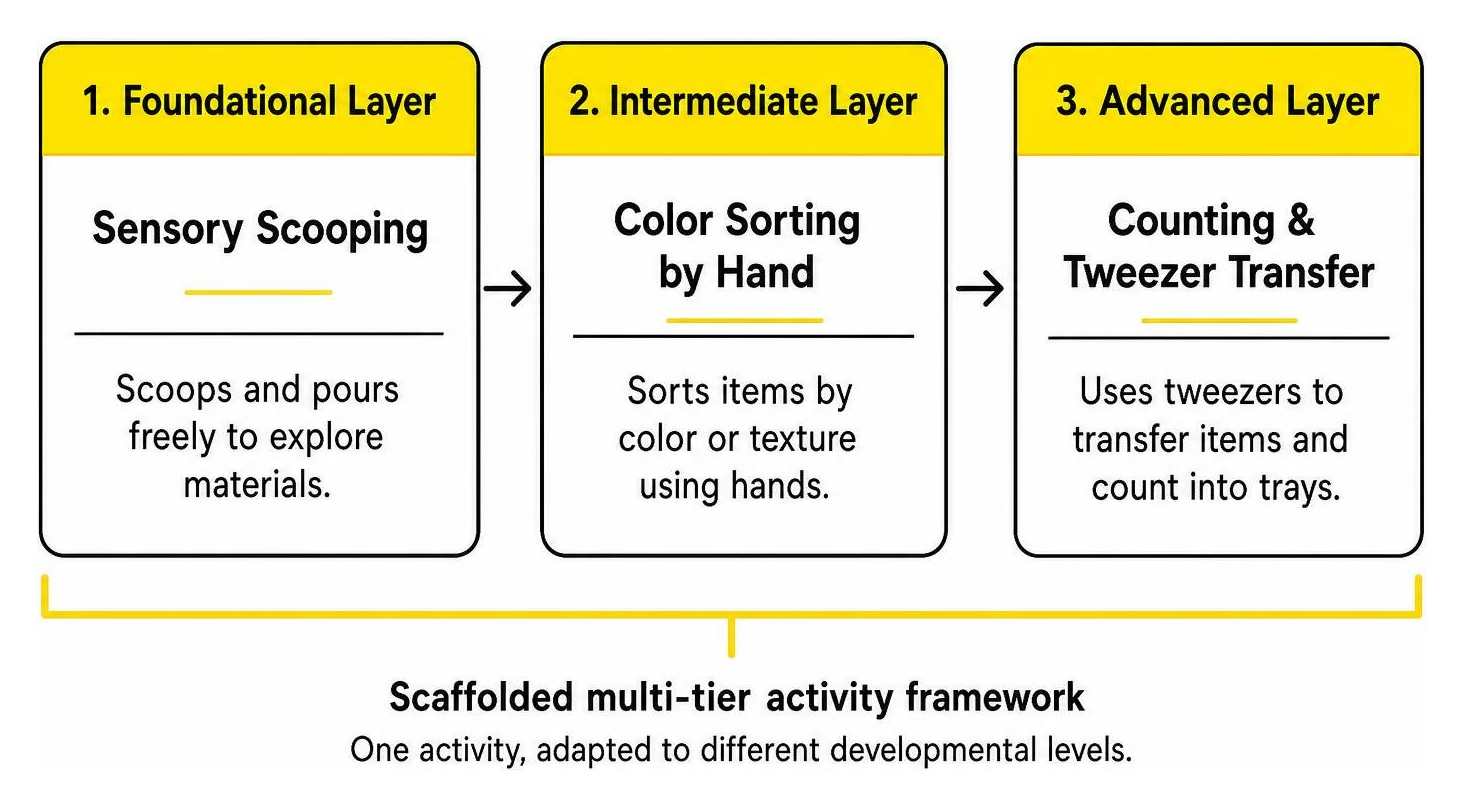
To adapt an activity for mixed developmental levels:
- Provide Open-Ended Base Tasks: Set out a sensory bin of colored pom-poms, river rocks, and plastic scoops. Younger toddlers can simply scoop and pour freely.
- Add a Sorting Layer: Place labeled bowls nearby so emerging learners can sort items by color or texture.
- Offer Fine Motor Challenges: Introduce child-safe tweezers and numbered cards for older toddlers ready to count items into trays.
Individualized, small-group environments ensure every child feels both supported and appropriately challenged. You can see how our classroom design nurtures individual growth in our small class preschool Norwood Park: better learning guide. Teachers can also draw outdoor inspiration from community hubs like Norwood Park and Portage Park – Chicago Park District for nature walks and outdoor games.
Managing Shared Spaces and Group Dynamics in the Classroom
Managing twelve energetic toddlers in one room requires intentional space design. Clear room organization helps minimize frustration, reduces behavioral challenges, and encourages purposeful play.
- Define Station Boundaries: Use low storage shelves, colorful rugs, and table tape to create clear borders for each learning area. When children understand where an activity begins and ends, they engage more deeply.
- Limit Materials per Station: Rather than setting out hundreds of loose blocks, place 10 to 15 items in shallow, labeled baskets. Less clutter reduces sensory overload and makes cleanup manageable for little hands.
- Establish Predictable Visual Cues: Use clean-up chimes and picture cards to signal daily transitions, helping toddlers move confidently between activities without feeling rushed.
Adapting Daily Play for Mixed Developmental Milestones
Children develop along their own unique timelines. While one child may run confidently across balance beams, another may still be refining their hand stability or receptive speech.
Effective ways to support varying developmental needs include:
- Adjusting Grip Tools: Offer multiple grasping options—such as wide-grip silicone tongs, spring-loaded plastic tweezers, or simple open hands—so every child can join in transferring games.
- Layering Language Prompts: Use simple single words for young toddlers (“Drop!” “Splash!”), while introducing descriptive multi-word phrases for older peers (“Look at the orange pom-pom floating on top of the bubbly water!”).
- Respecting Independent Pacing: Allow children to leave an activity when their focus wanes and revisit it later. Independent choices build positive associations with classroom learning.
Frequently Asked Questions About Toddler Learning
How long should structured toddler classroom activities last?
Structured, teacher-directed activities for toddlers should typically last between 5 to 10 minutes. Toddlers have brief attention spans for rigid tasks, though they may explore open-ended sensory bins or art materials for 15 to 25 minutes when allowed to lead their own play.
How do educators manage clean-up during messy sensory play?
Educators manage mess by placing large vinyl drop cloths or waterproof shower curtains under sensory tables, keeping damp washcloths nearby, and making cleanup part of the activity. Inviting children to wipe tables with small sponges turns tidying into an engaging practical life skill.
What everyday household items work best for toddler learning centers?
Cardboard paper towel tubes, plastic milk bottle caps, empty egg cartons, salad spinners, silicone baking cups, and painter’s tape make fantastic classroom materials. They are inexpensive, recyclable, and support open-ended exploration without prescriptive rules.
Conclusion: Fostering Lifelong Curiosity Through Toddler Exploration
Engaging toddler classrooms are built on curiosity, joyful movement, and hands-on discovery. By offering thoughtful sensory bins, simple recycled fine motor stations, and process-focused creative projects, teachers and parents create spaces where toddlers build confidence and develop essential early skills naturally.
Fantasy Island Schools for Kids was founded in 2009 by Beata Bielic and is located at 6100 N Milwaukee Ave, Chicago, IL 60646. Our center serves families across Chicago’s Northwest Side and nearby suburbs, including Norwood Park, Edison Park, Gladstone Park, Jefferson Park, Sauganash, Edgebrook, Portage Park, Niles, Park Ridge, Skokie, Norridge, and Harwood Heights. We offer full-time and part-time programs for children ages 2 to 6, operating Monday through Friday from 7 AM to 6 PM. Our tuition is approximately $300 to $400 per week, which includes freshly cooked on-site meals, weekly music instruction with a certified teacher, Polish-language bilingual programming, and our Gifted Enrichment Program. We are proud to accept CCAP (Illinois Child Care Assistance Program) and Illinois Action for Children.
To learn more about how we support each developmental stage, explore The Definitive Guide to Toddler Cognitive Development Milestones and schedule a visit to experience our interactive classrooms in person!
