

Why Toddler Psychosocial Development Milestones Matter
Toddler psychosocial development milestones are the social and emotional skills your child builds between ages 1 and 3. Understanding social-emotional development in toddlers involves looking for growing independence, strong but brief emotions, comfort with trusted adults, early empathy, pretend play, and gradual progress from playing beside other children to interacting with them. These skills do not appear all at once, and a wide range of development can be typical.
A simple way to support your child is to stay calm during big feelings, name what you see (“You are mad that playtime ended”), keep routines predictable, and create daily chances for play and connection. If your child loses skills, rarely responds to people, or has ongoing behaviors that worry you, share those observations with their pediatrician and ask about developmental screening or early-intervention support.
For Chicago families, these milestones matter both at home and in a group setting. Alongside toddler cognitive development, responsive adults, familiar routines, imaginative play, and gentle coaching with peers help toddlers practice self-regulation, empathy, communication, and confidence as they work toward key 3-year-old milestones.
I am Beata Bielic, owner of Fantasy Island Schools for Kids and an early-childhood educator with more than 17 years of experience supporting toddler psychosocial development milestones in multilingual learning environments. In the sections ahead, I will help you understand what to watch for and how everyday interactions can support your child’s social-emotional growth.
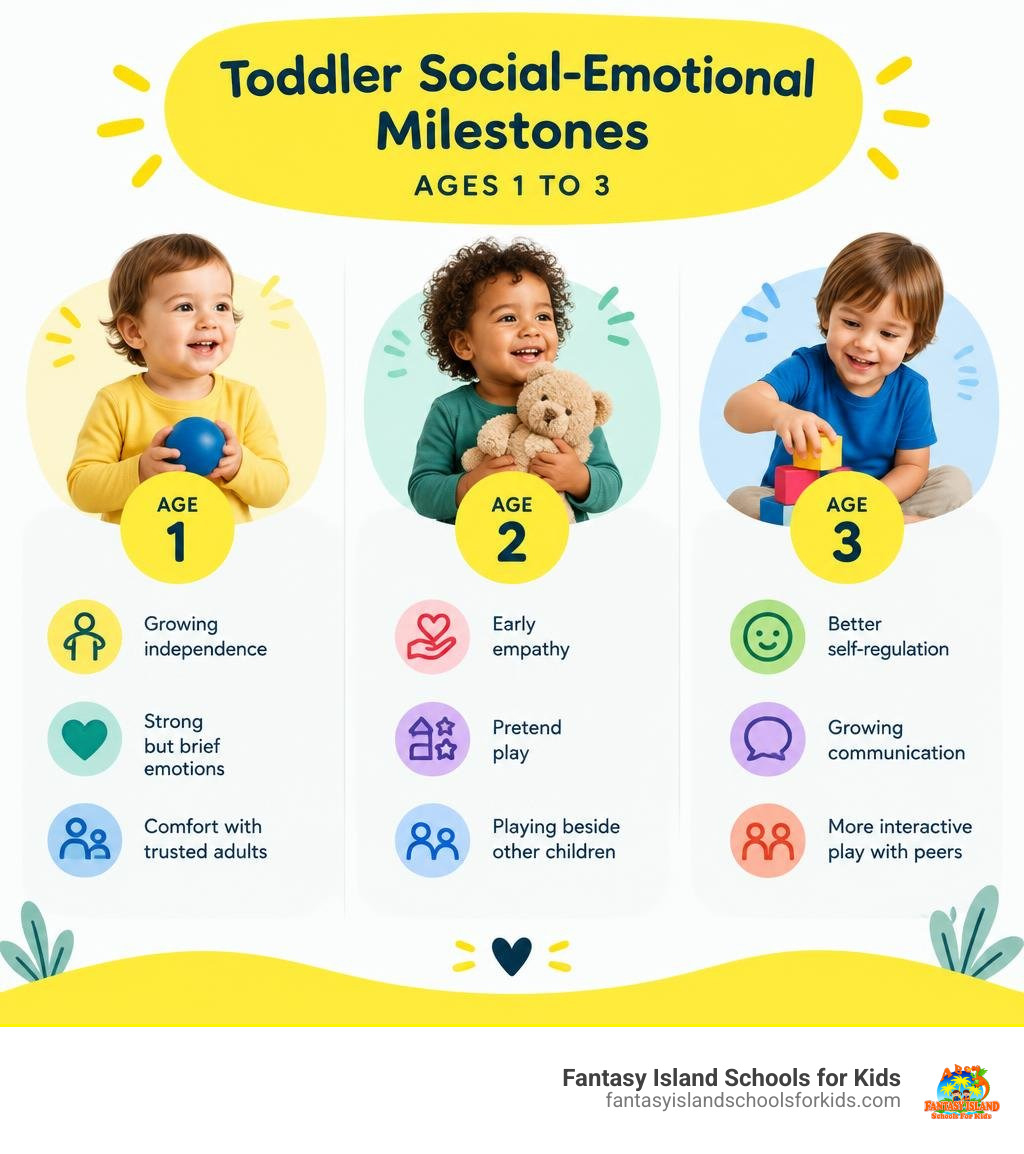
Understanding Toddler Psychosocial Development Milestones by Age
Children grow rapidly across physical, cognitive, and social-emotional domains during the early years (NBK557518). Psychosocial development focuses on how children form emotional attachments, build a sense of self, and interact with the world around them.
According to public health tracking frameworks, about 3 in 4 children meet standard milestone benchmarks by a given age window. In clinical settings, developmental surveillance is an ongoing process where parents and educators observe social readiness, temperament fit, and emotional regulation (NBK534819). Temperament describes how a child naturally approaches situations—whether they are easygoing, active, or slow to warm up. When caregivers align their daily expectations with a child’s natural temperament, they create a healthy “goodness of fit” that supports secure attachment.
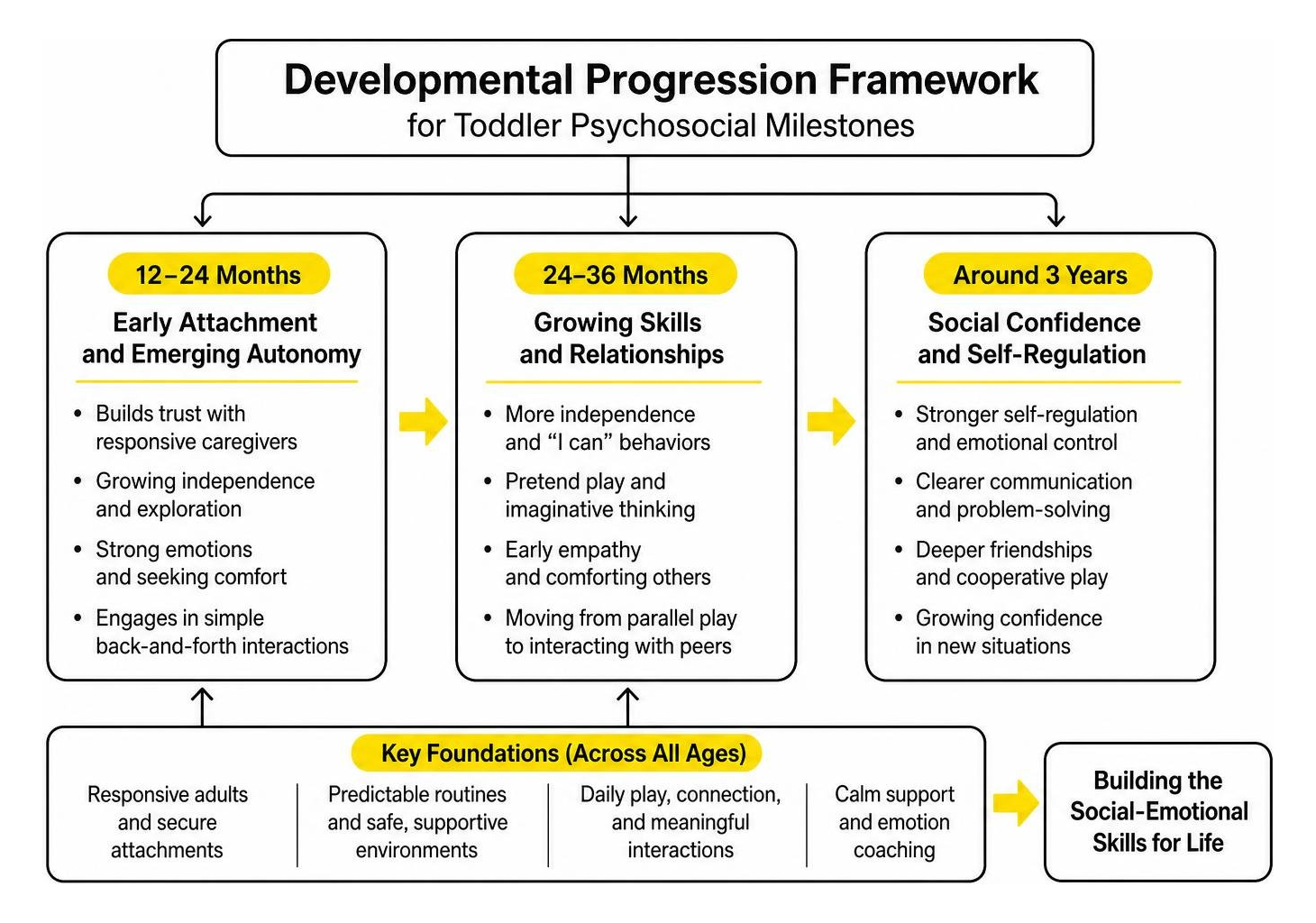
Ages 12 to 24 Months: Early Attachment and Emerging Autonomy
Between 12 and 24 months, children transition from infancy into active exploration. This phase is rooted in Erik Erikson’s theory of basic trust versus mistrust, where consistent, loving responses teach toddlers that the world is a safe place.
Key milestones during this stage include:
- Proto-declarative Pointing: Around 12 to 16 months, toddlers point to objects simply to share excitement with a caregiver (“Look at that dog!”), marking a major leap in joint attention.
- Stranger and Separation Anxiety: Peaking between 9 and 18 months, clinging or crying when parting from a primary caregiver is developmentally normal. Using effective ways to handle separation distress can ease transitions at drop-off.
- Emotional Mirroring: Toddlers watch their caregivers’ facial expressions to determine whether a new situation is safe or threatening.
- Affection and Familiarity: Children begin actively hugging, kissing, and seeking out familiar adults for comfort when tired or overwhelmed, as outlined in CDC guidance on early milestones.
Tracking Toddler Psychosocial Development Milestones from 24 to 36 Months
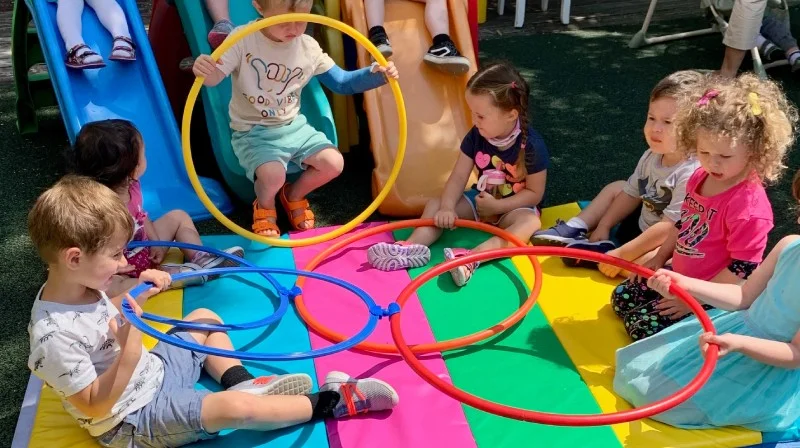
Between ages two and three, toddlers develop a clearer sense of self. They realize they are distinct individuals with their own desires, leading to the frequent use of words like “mine,” “I,” and “no.”
During this stage, you will notice:
- Parallel Play: Two-year-olds typically play side-by-side with peers without directly cooperating. They may imitate what another child is building while keeping their own toys separate.
- Emergence of Empathy: Toddlers begin to notice distress in others. A child might offer their blanket to a crying playmate or pat a peer’s back.
- Pretend Play: Play evolves from functional tasks (pushing a car) to symbolic scenarios (feeding a doll with a block).
- Complex Emotions: Toddlers start experiencing secondary emotions such as pride, embarrassment, and shame, as highlighted by 24-36 month social growth research.
Tracking these behaviors against a comprehensive checklist for 3-year-old milestones helps ensure your child is progressing comfortably across emotional and social areas.
Navigating Toddler Psychosocial Development Milestones: 2-Year-Old vs. 3-Year-Old Behaviors
The transition from age two to age three represents a shift from self-centered emotional reactivity to early social cooperation. By 30 months, most toddlers have an expressive vocabulary of at least 50 words, which helps them express their needs verbally rather than physically. Sleep also plays an essential role in emotional balance; 2-year-olds require 11 to 14 hours of sleep per day (including naps) to maintain steady emotional regulation.
| Developmental Dimension | Typical 2-Year-Old Behavior | Typical 3-Year-Old Behavior |
|---|---|---|
| Play Style | Parallel play (plays alongside others with minimal sharing) | Associative/cooperative play (shares toys, takes turns, assigns roles) |
| Emotional Expression | Intense, sudden outbursts; relies heavily on adult soothing | Uses simple words for feelings (“I’m mad”); begins self-soothing |
| Empathy & Social Awareness | Notices when another child cries; looks to adult for cues | Verbally comforts peers; shows affection without prompting |
| Conflict Resolution | Grabs or pushes when frustrated over toys | Can wait a short time for a turn with adult coaching |
| Independence & Routines | Resists transitions with “no”; emerging toilet training interest | Follows 2- to 3-step routines; washes hands; dresses with help |
The Power of Play and Caregiver Interaction in Building Emotional Regulation
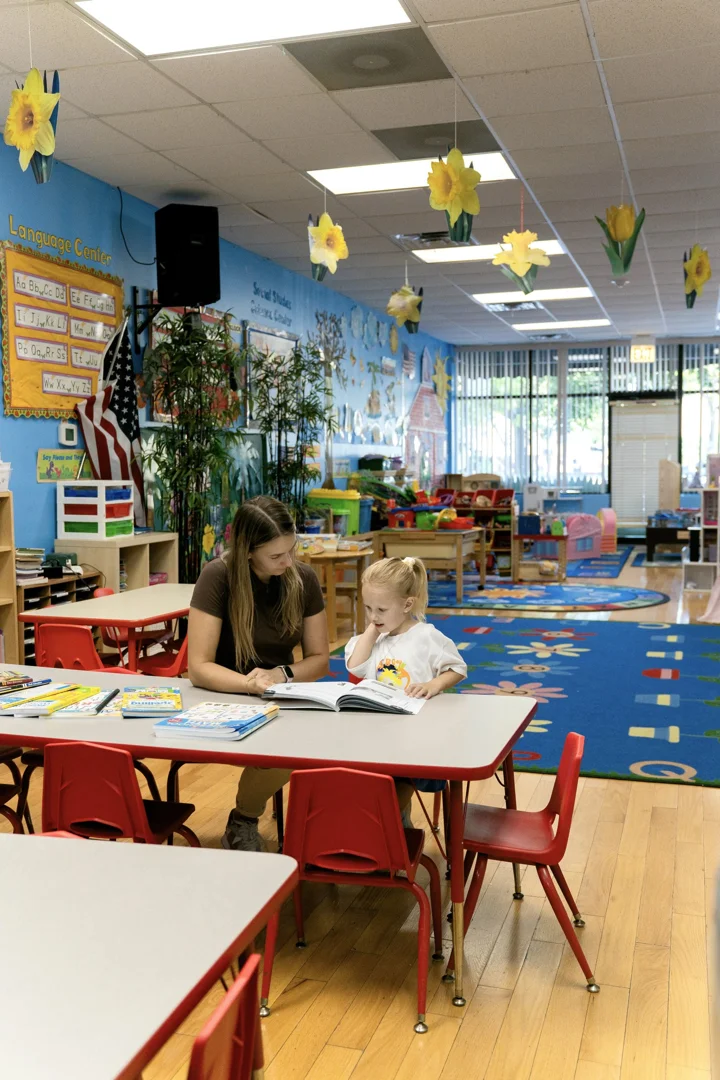
A toddler’s brain develops emotional regulation through repeated daily interactions with attuned adults (NBK534819). When a child experiences a meltdown, their limbic system and amygdala—the brain’s emotional threat center—become overwhelmed. Toddlers lack the mature prefrontal cortex wiring needed to calm down independently.
Caregivers provide co-regulation:
- A Calming Presence: A calm voice, relaxed posture, and steady breathing signal safety to the child’s nervous system.
- Emotional Validation: Acknowledging feelings (“You really wanted that red truck; it is hard to wait”) helps the toddler feel understood.
- Supportive Problem Solving: Guiding the child toward a replacement activity or a deep breath builds executive functioning over time.
Clinical studies on early childhood stages show that responsive caregiving forms the foundation for lifelong resilience (NBK534819). Play is the primary setting where children practice these skills. Exploring the foundations of play-based learning shows how sensory activities, building blocks, and imaginary games help children navigate sharing, frustration, and problem-solving. Reviewing our social-emotional milestone overview can provide deeper insight into how structured play environments support healthy development.
Practical Strategies for Fostering Empathy, Sharing, and Conflict Resolution at Home
Parents can use practical, everyday strategies to nurture healthy social and emotional habits:
- Build a Feelings Vocabulary: Use visual feeling charts featuring diverse expressions. Name your own everyday emotions (“I feel happy that we are going to the park” or “I feel frustrated that I dropped the keys”) to normalize talking about feelings.
- Offer Limited, Structured Choices: Toddlers crave autonomy. Asking “Do you want to put on your shoes or your coat first?” gives them healthy control and reduces power struggles.
- Facilitate Low-Conflict Play: When arranging playdates, provide duplicate items (such as two identical tubs of play-dough or multiple vehicles) so sharing is not a constant friction point.
- Model Calming Techniques: Teach physical grounding methods, like “smelling the flower and blowing out the candle” (deep breathing) or gentle hand squeezes when big emotions arise.
- Incorporate Cultural and Multilingual Traditions: Storytelling, family songs, and community routines reinforce a child’s sense of belonging. Research highlights the benefits of bilingual and multicultural early environments in expanding cognitive flexibility and perspective-taking.
- Praise Effort and Persistence: In alignment with Erikson’s initiative vs guilt theory, praising effort (“You worked so hard to fit those puzzle pieces together!”) fosters healthy initiative and self-esteem.
Recognizing Red Flags and Accessing Early Intervention Services
While every child develops at their own pace, about 20% to 25% of children seen in primary care settings experience clinically significant social-emotional challenges. Recognizing early warning signs ensures families receive timely support when needed (NBK557518).
Signs to discuss with your pediatrician include:
- Lack of eye contact, social smiles, or joyful back-and-forth interactions by 12–18 months
- No response to their name or failure to engage in joint attention (such as looking where you point)
- Extreme difficulty calming down, with tantrums lasting longer than 30–45 minutes daily past age 2½
- No interest in interacting with familiar caregivers or other children
- Loss of previously acquired speech, motor, or social skills at any age
- Significant challenges with communication, where spotting early communication signs helps differentiate speech delays from broader social hurdles
The American Academy of Pediatrics recommends routine developmental surveillance at 9, 18, and 30 months, alongside autism-specific screenings at 18 and 24 months (NBK557518). Tools like the Ages & Stages Questionnaires: Social-Emotional (ASQ:SE) help identify areas where a child may benefit from extra support. You can also consult the Cleveland Clinic developmental overview for broad clinical guidance on early childhood development.
Frequently Asked Questions About Toddler Social-Emotional Growth
How do I know if my 2-year-old’s tantrums are normal or a sign of a delay?
Occasional tantrums are a normal part of toddler development. Around 30% to 40% of toddlers have regular tantrums as they learn to navigate strong feelings and limited communication skills. A typical tantrum lasts between 2 and 15 minutes and resolves once the child feels heard or redirected. If tantrums regularly last longer than 30 minutes, involve physical harm to self or others, or happen multiple times a day without clear triggers, discuss them with your pediatrician to evaluate underlying sensory or emotional regulation needs.
When do toddlers truly begin to share and play cooperatively?
True cooperative play and intentional sharing generally develop between 3 and 4 years of age. Two-year-olds primarily engage in parallel play—playing side by side rather than together—because their concept of ownership is still developing. You can prepare them for cooperative play by practicing turn-taking games at home, such as rolling a ball back and forth or setting a gentle sand timer during play.
How does early social-emotional competence predict later school success?
Early social-emotional skills are strong predictors of future academic success. A child who can manage frustration, follow multi-step routines, communicate needs, and show empathy is better equipped to participate in group learning. These foundational skills support early literacy and problem-solving, easing the transition into kindergarten.
Conclusion: Nurturing Confident, Resilient Toddlers
Supporting your child through their toddler years requires patience, responsive caregiving, and a supportive community. By recognizing key social milestones, validating their growing feelings, and encouraging independent play, you give your child the tools they need to build lasting emotional resilience.
At Fantasy Island Schools for Kids, founded in 2009 by Beata Bielic, we support every aspect of your child’s growth. Our certified Early Childhood Education teachers are trained in trauma-informed care, health, and child safety. Located at 6100 N Milwaukee Ave in Chicago, IL 60646, our school operates Monday through Friday from 7 AM to 6 PM, offering both full-time and part-time enrollment for children ages 2 to 6.
Our balanced curriculum includes:
- A proven Gifted Enrichment Program that prepares students for advanced academic tracks
- Bilingual and multilingual instruction celebrating Polish-American heritage and cultural diversity
- Weekly music classes led by a qualified music teacher
- A spacious, multi-sensory indoor and outdoor play environment
- Freshly cooked, nutritious on-site meals daily, included in our weekly tuition of $300–$400 with no hidden fees
- Full support for working families through the Illinois Child Care Assistance Program (CCAP) and Illinois Action for Children
We proudly serve families across Chicago’s Northwest Side and surrounding communities, including Norwood Park, Edison Park, Gladstone Park, Jefferson Park, Sauganash, Edgebrook, Portage Park, Niles, Park Ridge, Skokie, Norridge, and Harwood Heights.
To learn more about your child’s growth across every stage, explore our comprehensive guide to toddler cognitive milestones or schedule a tour with our caring team today.
