

Helping Your Child with Separation Anxiety Starts With a Calm, Predictable Goodbye
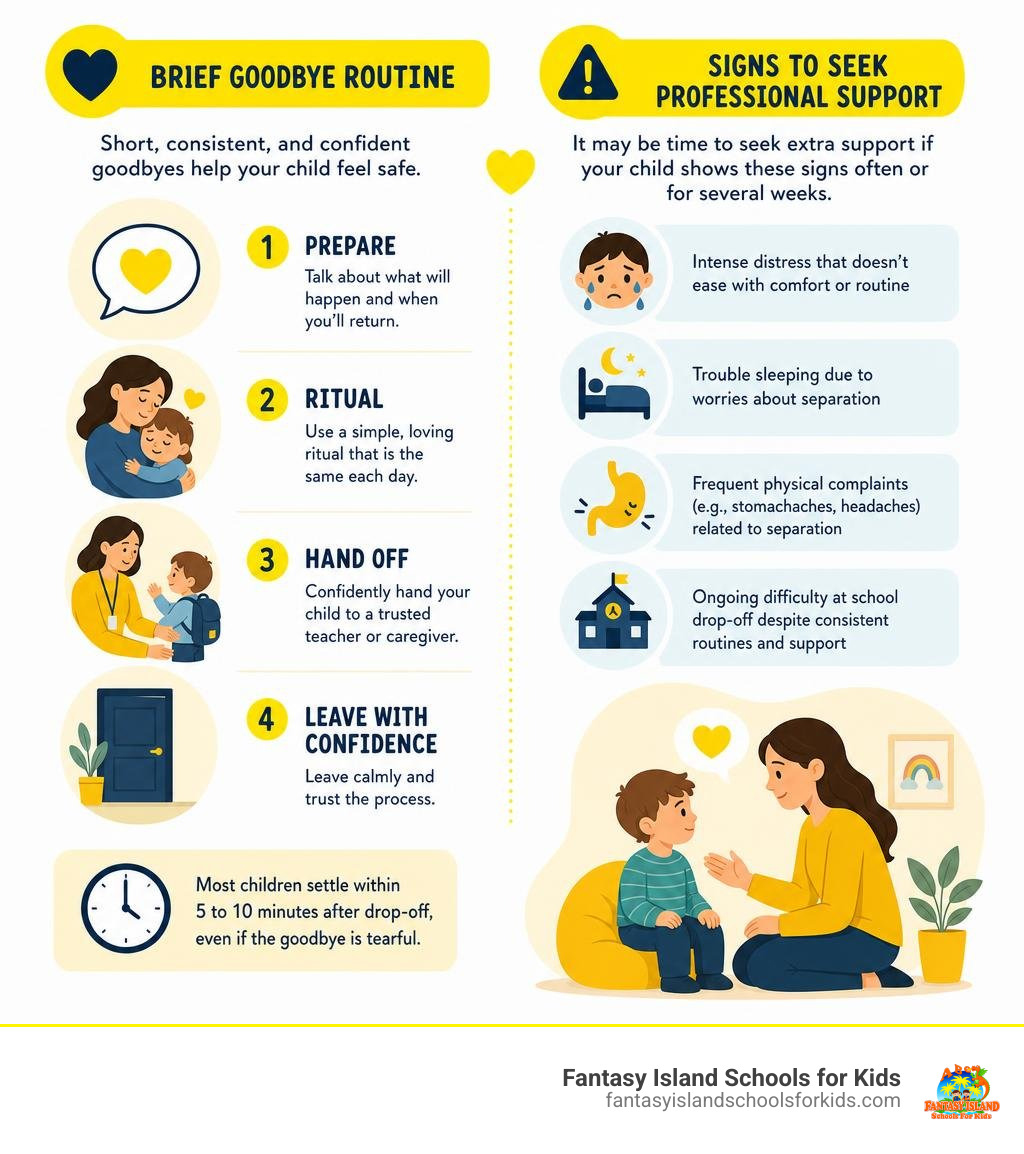
For helping child with separation anxiety, keep goodbyes warm, brief, and the same each day. Prepare your child by talking about what will happen, use a simple ritual such as a hug and two kisses, hand them to a trusted teacher, and leave with confidence. Most children settle within 5 to 10 minutes after drop-off, even if the goodbye itself is tearful.
Separation anxiety is a normal part of attachment and early development. It is especially common in toddlers, though it can return when a child starts a new classroom, changes routines, or has spent extra time at home. Your calm response helps your child learn an important message: we can be apart, and I always come back.
At Fantasy Island Schools for Kids, founded in 2009 at 6100 N Milwaukee Ave in Chicago, we know that a trusted routine and a caring classroom handoff can make mornings easier for children ages 2-6 and their parents. I am Beata Bielic, Executive Director and a former early-childhood teacher with more than 17 years of experience helping child with separation anxiety through patient, consistent transitions.
Helping child with separation anxiety vocabulary:
Understanding Typical Attachment vs. Separation Anxiety Disorder
Watching your little one cling to your leg or dissolve into tears at the classroom door can pull at your heartstrings. It is easy to wonder if their distress is a standard developmental milestone or a sign of something more significant. In the overwhelming majority of cases, morning tears are a healthy reflection of secure attachment. Children cry because they love you, rely on you, and are still mastering the emotional concept that temporary departures are safe.
Developmental separation anxiety naturally emerges as young minds begin to comprehend that people still exist even when out of view—a cognitive milestone known as object permanence. While typical separation distress resolves quickly once a caregiver is out of sight, clinical conditions require a closer look. Pediatric research indicates that true separation anxiety disorder occurs in only about 1% to 4% of the general pediatric population.
The following table breaks down the key differences between typical early childhood separation behaviors and symptoms that may point toward clinical anxiety:
| Characteristic | Typical Developmental Separation Anxiety | Separation Anxiety Disorder (Clinical Concern) |
|---|---|---|
| Typical Age Window | Peaks between 8 to 24 months; common at ages 2–3 during new transitions. | Can occur in early childhood, but persists unusually past preschool; rare after puberty. |
| Duration of Distress | Resolves within 5 to 10 minutes after departure once engaged in activities. | Distress continues persistently throughout the day; child cannot self-soothe. |
| Timeline Benchmark | Improves steadily over 2 to 4 weeks as routines become predictable. | Symptoms persist for 4 weeks or longer without easing. |
| Physical Symptoms | Occasional situational tears, fussiness, or clinging at the moment of parting. | Frequent somatic complaints (headaches, stomachaches, nausea) or nightmares about harm. |
| Impact on Functioning | Participates in classroom play, eats snacks, and bonds with educators. | Leads to severe school avoidance, social withdrawal, or inability to be in another room alone. |
According to clinical guidelines on separation anxiety disorder, a diagnosis involves persistent, developmentally inappropriate worry that causes functional impairment lasting at least four weeks. While standard tears at drop-off fade as your child builds familiarity with their teachers and peers, disorder-level anxiety often involves an unyielding fear that something catastrophic will happen to a parent while separated.
Helping Child with Separation Anxiety Across Different Developmental Stages
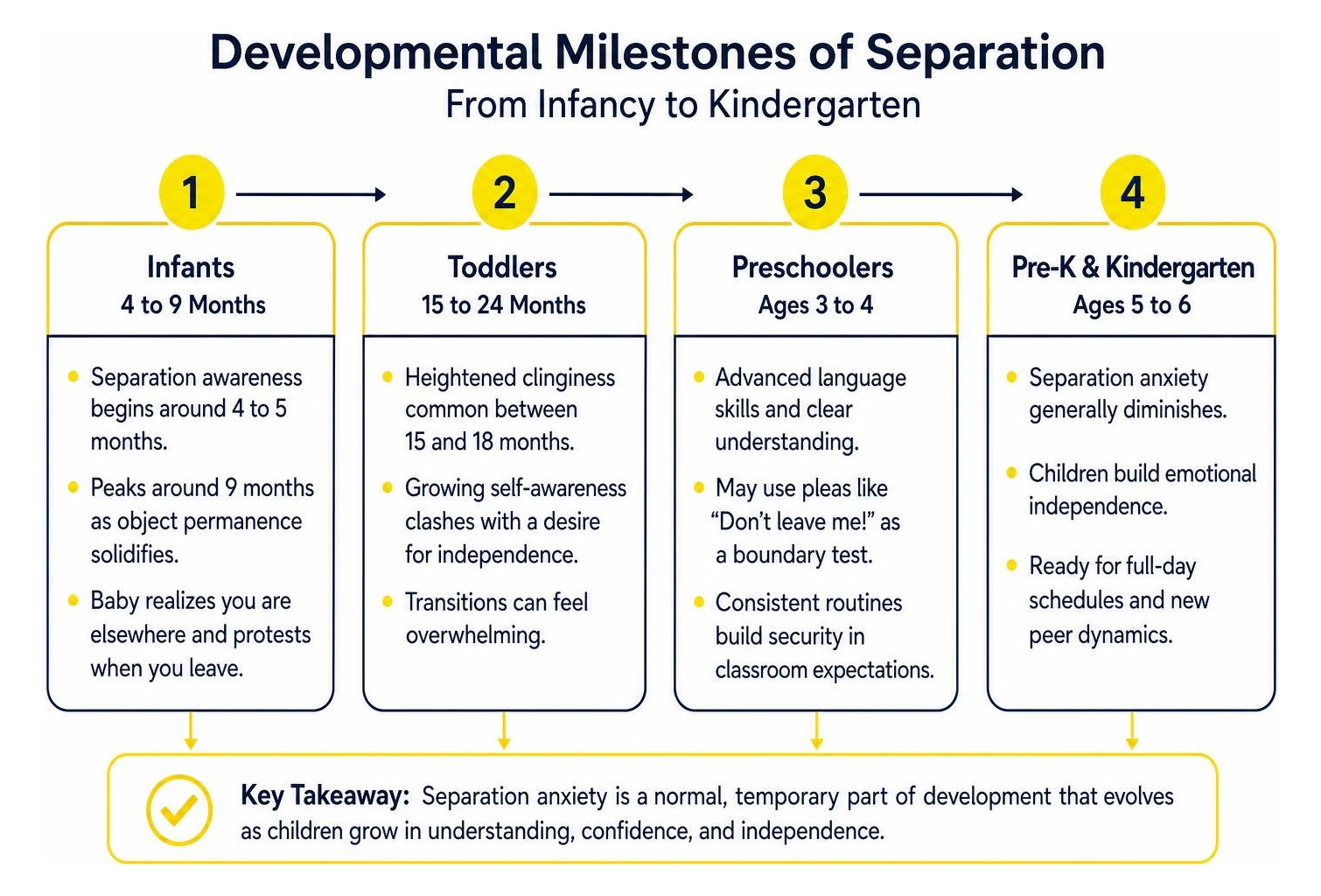
A child’s reaction to separation evolves alongside their cognitive and emotional maturity. Recognizing what is happening at each developmental stage empowers parents to respond with empathy and confidence:
- Infants (4 to 9 Months): Some babies begin noticing separation around 4 to 5 months, but robust separation awareness typically peaks around 9 months. This is when object permanence solidifies. When you step out of the room, your baby realizes you are somewhere else and protests because they cannot yet track when you will return.
- Toddlers (15 to 24 Months): Many toddlers who sailed smoothly through infancy suddenly show heightened clinginess between 15 and 18 months. During this stage of social emotional development in toddlers, growing self-awareness clashes with a desire for independence, making transitions feel overwhelming.
- Preschoolers (Ages 3 to 4): By age 3, children possess advanced language skills and clearly understand how their dramatic pleas impact their parents. A preschooler might shout, “Don’t leave me!” not out of panic, but as a boundary test to see if tears will keep you in the room. Consistent routines help them feel secure in classroom expectations.
- Pre-K & Kindergarten (Ages 5 to 6): As children prepare for primary education, separation anxiety generally diminishes. Evaluating 5 signs that your child is ready for kindergarten can help you ensure they have built the emotional independence needed to handle full-day schedules and new peer dynamics smoothly.
Helping Child with Separation Anxiety: 7 Proven Strategies for Smoother Goodbyes
Easing morning goodbyes requires a blend of predictability, patience, and clear emotional boundaries. Whether you are walking through the doors of a neighborhood early learning center or leaving your child with a babysitter for date night, applying structured transition tools creates a sense of safety.
Here are 7 evidence-based strategies to transform difficult departures into peaceful routines:
1. Create a Consistent, Playful Goodbye Ritual
Children thrive on repetitive routines. Establish a personalized parting sequence that remains identical every single day. This could be a special handshake, a gentle nose-boop, or a sweet phrase like “See you later, alligator!” followed by a double hug. Keeping this ritual brief—under two minutes—signals clearly to your child that the departure is happening, removing the uncertainty that fuels anxiety.
2. Explain Time in Child-Friendly Milestones
Young children have no functional concept of clock time. Telling a 3-year-old that you will return at 4:30 PM is meaningless and confusing. Instead, anchor your return to predictable daily events. Use phrases like “I will be back right after afternoon snack time” or “I will pick you up after you wake up from nap time.” Framing departures around concrete markers gives your child an internal schedule they can follow.
3. Introduce a Sensory Transitional Object
A small piece of home can provide massive comfort during moments of uncertainty. Pack a beloved comfort item, such as a pocket-sized family photo, a soft fabric square, or a small smooth stone your child found with you at the park. Many parents find success using a subtle scent cue—such as spraying a light mist of your familiar perfume or lotion onto a soft wristband—which offers soothing sensory reassurance throughout the day.
4. Practice Low-Stakes Separations
Confidence is built through repetition. Before starting a new school year or full-time childcare schedule, practice short separations in low-stakes environments. Leave your child with a trusted grandparent, neighbor, or family friend for 30 minutes, gradually extending the window to an hour or two. Practicing quick goodbyes and joyful reunions in familiar settings reinforces the foundational truth that goodbyes are always temporary.
5. Maintain Decisive, Warm Departures
When it is time to say goodbye, be decisive. Give your child your full, undivided attention for thirty seconds, perform your ritual, hand them over to their educator, and walk away with a warm smile. Lingering at the doorway or hesitating communicates subconscious doubt, causing your child to wonder, “Is this place unsafe? Is that why my parent is nervous?” Projecting steady confidence helps your child mirror your calm energy.
6. Build Familiarity with the Environment and Educators
Fear of the unknown magnifies separation distress. Whenever possible, visit your child’s classroom before their first official day. Allow them to explore the play areas, touch the toys, and meet their teachers while holding your hand. When a child recognizes the physical layout and knows their teacher’s name beforehand, the environment transforms from an intimidating unknown into a welcoming space.
7. Celebrate Brave Behavior with Positive Reinforcement
Acknowledge the effort your child puts into brave transitions. When picking them up at the end of the day, praise their resilience with specific language: “I noticed how you walked straight to the sensory table this morning even though you felt a little sad. That was so brave!” Pairing verbal praise with a sticker chart or visual milestone board at home reinforces pride in their growing independence. Following pediatric guidance on soothing separation anxiety ensures that you build emotional regulation skills that last a lifetime.
Common Drop-Off Mistakes That Worsen Transition Distress
Even the most well-intentioned parents can inadvertently reinforce separation distress by falling into common transition traps. Being mindful of these pitfalls protects your morning routine:
- Sneaking Away Unannounced: Slipping out the back door while your child is distracted might avoid an immediate crying fit, but it damages foundational trust. When a child realizes a parent vanished without warning, they become hyper-vigilant and significantly more clingy during future departures.
- Prolonging the Goodbye: Hanging around the doorway, offering endless extra hugs, or engaging in extensive negotiations drags out the emotional peak of separation. Keep your departure concise and structured.
- The “Check-In” Re-Entry: Never return to the classroom five minutes after leaving to see if your child has stopped crying. Re-entering resets the entire separation cycle, forcing your child to endure the distress of parting all over again.
- Shaming or Dismissing Emotions: Avoid phrases like “Big kids don’t cry” or “Stop acting like a baby.” Dismissing authentic worry undermines a child’s confidence. Instead, validate their feelings while standing firm on the departure: “I know it feels hard to say goodbye, but you are safe here and having fun today.”
- Bargaining or Changing the Plan: Offering bribes or cancelling attendance because of tears teaches children that intense crying alters family decisions, unintentionally prolonging future morning protests.
Managing Parental Stress and Partnering with Early Educators
Drop-off tears are often just as challenging for parents as they are for little ones. Sitting in your car after drop-off feeling guilty or overwhelmed is an experience shared by nearly every caregiver. However, children are emotional mirrors; they pick up on parental hesitation, rapid breathing, and anxious body language.
To support your child, practice your own emotional co-regulation. Take a slow, deep breath before stepping out of the vehicle, keep your posture relaxed, and maintain a cheerful, confident vocal tone. When you demonstrate complete trust in the learning environment, your child receives the nonverbal reassurance they need to step into the classroom.
A strong partnership with your child’s teachers makes all the difference. Qualified early childhood educators are experienced in co-regulation, distraction techniques, and comforting young learners. When choosing the right preschool options, look for programs where staff actively guide children toward hands-on learning centers, sensory play tables, or engaging group songs the moment drop-off occurs. A clear, coordinated handoff routine between parent and teacher turns morning goodbyes into a predictable, safe team effort.
Helping Child with Separation Anxiety: When to Seek Professional Support
While morning tears are an ordinary part of childhood development, persistent and unmanageable distress warrants a collaborative discussion with your family pediatrician or a child mental health specialist.
Consider seeking professional guidance if your child exhibits the following signs for more than four consecutive weeks:
- Intense panic or vomiting during morning departures that shows no sign of easing.
- Complete refusal to eat, interact with peers, or engage in play throughout the entire school day.
- Constant, disruptive nightmares about losing parents or family harm.
- Inability to sleep alone in their own bedroom or play in an adjacent room at home without a parent present.
- Severe somatic issues (daily morning migraines, intense stomachaches) that clear up immediately if allowed to stay home from school.
Evidence-based interventions, including parent-child interaction techniques and Cognitive Behavioral Therapy (CBT), provide children and families with practical self-soothing tools to overcome clinical anxiety challenges safely.
Frequently Asked Questions About Separation Anxiety
How long does typical morning drop-off crying last?
In typical developmental scenarios, morning tears last between 5 to 10 minutes. Once a parent leaves view, early childhood educators quickly redirect the child’s focus toward engaging toys, sensory bins, or fun circle-time songs. Most children calm down and participate fully in daily classroom routines within minutes of departure.
Why does separation anxiety flare up after school vacations or illness?
Separation anxiety commonly resurfaces following extended breaks, such as winter holidays, spring vacations, or several consecutive sick days at home. During these periods, children grow accustomed to uninterrupted parental proximity. When routine resumes, the shift in structure can prompt a brief regression. Re-establishing strict drop-off consistency will typically resolve the flare-up within two to three days.
What are the best comfort items to send with a child to preschool?
The best transitional objects are small, safe items that fit comfortably inside a pocket or backpack. Excellent options include a laminated family photo, a small plush keychain clipped inside their bag, a gentle paper heart with a drawn smile, or a fabric wristband carrying a light spritz of a parent’s familiar scent.
Conclusion
Guiding your child through morning goodbyes is a meaningful journey toward emotional independence and social confidence. With warm consistency, brief departure rituals, and strong collaboration with early childhood professionals, morning drop-offs quickly transform from tearful struggles into moments of joyful growth.
At Fantasy Island Schools for Kids, founded in 2009 by Beata Bielic and located at 6100 N Milwaukee Ave, Chicago, IL 60646, our mission is providing a warm, structured, and enriching home away from home. We serve children ages 2 to 6 across Chicago’s Northwest Side and surrounding suburbs—including Norwood Park, Edison Park, Gladstone Park, Jefferson Park, Sauganash, Edgebrook, Portage Park, Niles, Park Ridge, Skokie, Norridge, and Harwood Heights.
Our certified early childhood educators are First Aid/CPR certified, trained in trauma-informed care, and deeply experienced in helping young learners navigate separation transitions with comfort and patience. Our rich curriculum combines English-language instruction, with Polish and Ukrainian support, with a Gifted Enrichment Program, large multi-sensory play spaces, weekly music lessons with dedicated instructors, and freshly cooked on-site meals at no additional charge. Operating Monday through Friday from 7:00 AM to 6:00 PM with full-time and part-time options, our tuition is approximately $300–$400 per week. We proudly accept CCAP (Illinois Child Care Assistance Program) and Illinois Action for Children to ensure quality care remains accessible.
Explore our early childhood programs on Chicago’s Northwest Side and schedule a tour with us today to see how our nurturing classrooms help every child thrive!