

How to Prepare Toddler for Daycare With Less Stress
How to prepare toddler for daycare starts with a few simple steps: begin 2 to 4 weeks early, visit the classroom together, match home routines to the daycare schedule, practice short separations, and use the same brief goodbye ritual each morning.
- Talk about daycare in clear, positive words.
- Practice the new wake-up, meal, and nap routine before day one.
- Pack familiar, labeled items your child is allowed to bring.
- Share your child’s needs, cues, and comforts with their teachers.
- Keep drop-off warm, calm, and predictable.
Starting daycare is a major change for a toddler and for you. It is also a common one: about 62% of children under age 5 attend daycare or a similar early-learning setting. Some tears, clinginess, or extra tiredness can be part of the adjustment, especially because separation anxiety often peaks during the toddler years.
Fantasy Island Schools for Kids was founded in 2009 by Beata Bielic and is located at 6100 N Milwaukee Ave, Chicago, IL 60646 (Phone: 773-206-4627). We serve children ages 2 to 6 with full-time and part-time options, Monday through Friday from 7 AM to 6 PM, for families across Chicago’s Northwest Side and nearby suburbs.
I am Beata Bielic, Executive Director of Fantasy Island Schools for Kids, with more than 17 years of early-childhood education experience and a Master’s degree in Psychology. Since beginning here as a teacher in 2009, I have helped families learn how to prepare toddler for daycare with practical routines, honest communication, and a calm transition plan.
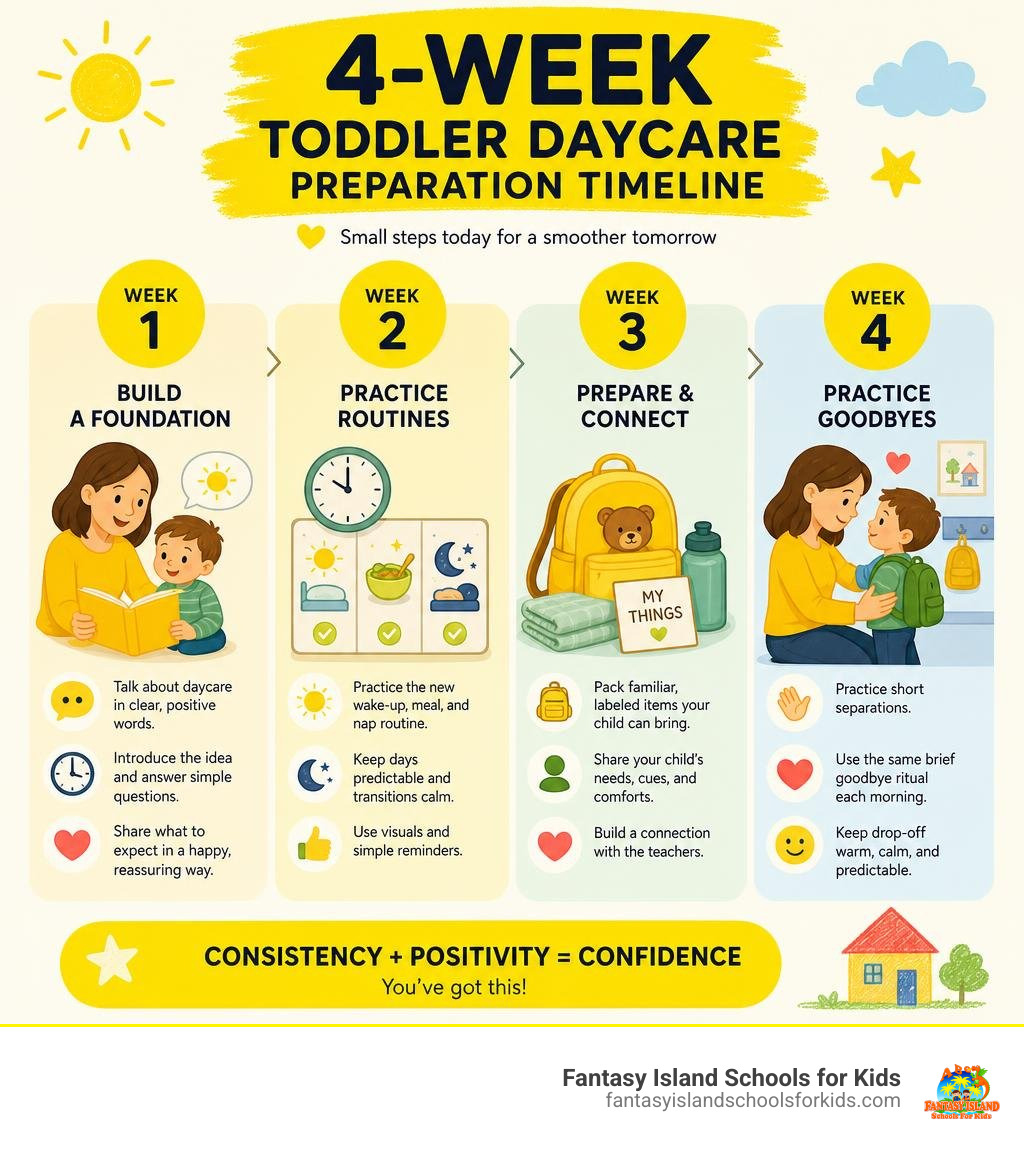
Timeline and Steps: How to Prepare Toddler for Daycare Before Day One
Giving yourself and your child a runway makes a world of difference. When parents ask us when to start preparing, we recommend opening the preparation window about 2 to 4 weeks before the first official drop-off. Trying to rush big schedule shifts or emotional talks into a single weekend often leads to overtired toddlers and stressed parents.

A smooth preparation plan moves through logical stages:
- 4 Weeks Out: Map out target sleep, meal, and nap times.
- 3 Weeks Out: Adjust schedules at home in small 10-to-15-minute increments.
- 2 Weeks Out: Schedule orientation visits, tour classrooms, and introduce teachers by name.
- 1 Week Out: Conduct mock morning dry-runs and pack gear together.
Facility orientation visits are incredibly effective. Walking through the building together allows your toddler to see where they will hang their coat, play with toys, wash their hands, and sleep. We love taking photo walkthroughs during orientation visits. You can take photos of the entrance, the teacher, the cubbies, and the play area. Reviewing these photos on your phone at home converts an unfamiliar place into a reassuringly predictable environment.
Run a mock morning dry-run a few days before your actual start date. Wake up at the required time, practice getting dressed, eat breakfast on schedule, and execute a practice drive or walk to the facility. This helps you identify time bottlenecks before real-world work deadlines apply pressure. Check out First Day of Daycare: Prep Guide for Toddlers & Parents for additional timeline tips.
How to Prepare Toddler for Daycare Through Routine Adjustments
The physical side of learning how to prepare toddler for daycare revolves around sleep-wake cycles, eating habits, and personal care. If your child is used to waking up at 8:30 AM and taking a late 2:00 PM nap, moving suddenly to a 7:00 AM wake-up and 12:00 PM group nap creates a spike in cortisol and irritability.
Start shifting sleep and nap times 2 to 4 weeks early. Move wake-up times and afternoon naps earlier by 10 to 15 minutes every few days. This gradual shift protects your toddler from becoming chronically overtired during their first week. You can read more about routine building in Preparing Toddlers For Daycare – Tips and Sample Routine!.
Eating habits also benefit from home practice. At home, toddlers are often used to snack-on-demand privileges or playing while eating. Daycares operate on structured meal schedules, often sitting family-style around group tables. Practice communal eating habits at home:
- Serve meals at fixed times (such as lunch between 11:00 AM and 11:30 AM).
- Sit together at a dining table without TV or tablet screens.
- Encourage self-feeding with child-sized utensils and open or straw cups.
Another critical routine shift involves hand hygiene and independence. In group settings, children wash their hands frequently—before eating, after outdoor play, and after messy sensory projects. Practicing independent hand washing with a stool or step-up at home bridges the independence gap and gives your toddler confidence when washing hands with peers. For more details on age-appropriate schedules, see Preparing your baby for daycare: A complete guide | Huckleberry.
How to Prepare Toddler for Daycare Emotionally with Play and Books
While routines prepare the body, play and books prepare the heart. Young children process big life changes through pretend play and stories rather than abstract lectures.
Set up pretend play scenarios using your child’s favorite stuffed animals or dolls. You can act out a full daycare morning: teddy bear arrives at school, hangs up his backpack, joins circle time, eats lunch, takes a nap, and gets picked up by mom or dad. Always emphasize the return home—this reinforces the core truth that parents always come back.
Children’s picture books are another fantastic resource. Reading transition stories normalizes complex feelings like excitement, fear, and sadness. Excellent books to read together include:
- Llama Llama Misses Mama by Anna Dewdney
- Bye-Bye Time by Elizabeth Verdick
- The Kissing Hand by Audrey Penn
Frame daycare in enthusiastic, concrete terms. Instead of saying, “You have to go to daycare because mommy works,” say, “You get to go to a fun classroom with painting, music, and new friends!” Replicating daycare activities at home—like setting up a dedicated coloring corner or block area—makes classroom stations familiar. As highlighted in How to Prepare Your Toddler for Daycare, positive framing and playful role-playing build excitement while easing anxiety.
Master Drop-Off: Goodbye Rituals, Separation Anxiety, and Handling Tantrums
The morning drop-off is often the most emotionally challenging moment for both parents and toddlers. Separation anxiety is a completely healthy, normal developmental milestone that peaks between 18 months and 3 years of age. Understanding this helps parents view drop-off tears not as a sign of failure, but as proof of a deep emotional bond.
Your emotional demeanor at the classroom door sets the tone for your child. Toddlers are highly perceptive and pick up on non-verbal cues. If you look tearful, hesitant, or anxious, your child assumes the classroom is an unsafe environment. Conversely, when you display a calm, warm, and confident attitude, you signal that you trust the early childhood educators and that your child is secure.
Creating a Reassuring Goodbye Ritual
A predictable goodbye ritual acts as an emotional safety net. Keep your goodbye routine short, sweet, and repeatable every single morning. A good ritual should take less than two minutes once you reach the classroom door.
Effective goodbye steps include:
- Physical Connection: A warm squeeze, a special secret handshake, or a double high-five.
- Concrete Time Anchor: Express when you will return using daily events rather than clocks (e.g., “I will see you right after afternoon snack time!”).
- Reassurance & Transfer: Reassure them of your love, hand them to their teacher or direct them to an activity, and depart prompt.
Transitional comfort objects provide incredible reassurance during separation. Sending a small, familiar item from home—such as a favorite soft plush, a small lovey, or a laminated family photo card—gives your child something physical to hold when missing home. Holding a family picture during quiet time or naptime offers immediate comfort. Explore How To Prepare Your Toddler For Childcare? (12-24 Mth Guide) for further drop-off ideas.
Managing Drop-Off Tantrums and Crying Without Lingering
When drop-off tears or tantrums occur, your response matters greatly. The golden rule of drop-offs is simple: never sneak out, and never linger.
Sneaking away while your toddler is distracted breaks trust. When the child turns around and realizes you vanished without saying goodbye, their anxiety spikes during future drop-offs. Always say a clear, loving goodbye.
On the flip side, lingering when your child is crying prolongs distress. Returning to the room for “one more hug” after saying goodbye creates confusion about whether you are actually leaving. It signals that crying can keep you from departing, making separation harder for everyone.
Validate their emotions calmly: “I see you are sad to say goodbye, and that is okay. You are safe with your teacher, and I will be back after snack time. I love you!” Then hand them gently to their teacher and walk out with a smile. Experienced early childhood educators are experts at comforting upset children. In almost all cases, drop-off tears stop within two to four minutes once parents leave line-of-sight and teachers engage the child with a toy or sensory table.
Daycare Packing Checklist and Collaborating with Caregivers
Being organized physically frees up your mental energy to focus on your child’s emotional needs during the transition. Preparing bags and clothing the night before eliminates morning rush stress.
What to Pack for Your Toddler’s First Day
Proper labeling is essential. In a room filled with toddlers, items can easily get mixed up. Use waterproof, dishwasher-safe name labels on every single bottle, cup, container, shoe, and tag of clothing.
Here is a handy checklist of essential items to pack for your toddler’s first week:
- Clothing Sets: At least 2 to 3 complete changes of season-appropriate clothing (shirts, pants, socks, and underwear). Blowouts, spillages, and art messes happen regularly!
- Diapering Supplies: A full sleeves pack of diapers or pull-ups, plus two packages of baby wipes (if not provided by the center).
- Footwear: Sturdy, non-slip indoor shoes or velcro sneakers that allow safe running in play areas.
- Comfort Objects: A labeled lovey, small blanket, or laminated family photo card for quiet time.
- Hydration & Meals: A labeled, leak-proof water bottle or sippy cup, plus any required personal foods if not provided on-site.
- Outdoor & Seasonal Gear: Sunscreen and broad-brimmed hats for warmer months; coats, boots, hats, and mittens for winter.
Partnering with Daycare Staff for a Smooth Transition
Building a collaborative partnership with your child’s teachers is just as important as preparing your child directly. Children form opinions of new caregivers by watching how their parents interact with them. Warm, friendly conversations show your toddler that their teachers are trusted allies.
Share essential insights about your child’s personality and habits prior to day one:
- Temperament & Cues: What does your toddler do when they are getting overtired, overwhelmed, or hungry?
- Comfort Strategies: What specific soothing methods work best when they are upset (e.g., rubbing their back, rocking, singing a specific song)?
- Communication Style: What words or gestures do they use for asking for water, going to the potty, or needing help?
- Health & Diet: Detailed allergy action plans, dietary restrictions, or medical needs.
Ask about the facility’s communication app preferences (such as Tadpoles, Brightwheel, or daily paper logs). Agree on how often you prefer daily updates so you feel informed without overwhelming staff. Review How to Prepare Your Child for Daycare – Start Early for additional caregiver communication guidance.
What to Expect: Adjustment Timelines, Post-Pickup Behaviors, and Red Flags
Understanding the post-pickup phase helps you support your toddler through the full daily cycle of daycare life.
The Typical 2-to-6-Week Daycare Adjustment Window
Parent expectations play a major role here. It is rare for a toddler to adjust seamlessly on day one and stay that way. A standard adjustment period ranges from 2 to 6 weeks.
Many toddlers display a common behavioral pattern:
- Days 1 and 2: Curiosity and novelty make drop-off surprisingly easy.
- Day 3 to Week 2: The realization settles in that daycare is a daily routine, leading to increased drop-off tears and morning reluctance.
- Weeks 3 to 6: Predictability takes hold, strong bonds form with teachers, and confidence blossoms.
Temporary behavior shifts at home are very common during the first month. Your toddler may exhibit “after-school restraint collapse”—saving up emotional stress all day in a structured environment and releasing it in a sudden evening melt-down at home. This is completely normal because home is their ultimate safe space.
To manage post-pickup decompression:
- Keep evening plans low-key during the first month.
- Offer an early dinner and allow extra cuddle time after pick-up.
- Maintain consistent bedtime schedules to counter fatigue.
- Avoid punishing stress-induced regressions; respond with extra patience.
Identifying Behavioral Red Flags That Require Extra Support
While initial tears and evening fatigue are typical, parents should monitor for persistent signs that indicate a child needs additional support.
Consult with your early childhood educators, pediatrician, or early intervention specialists if you observe any of these red flags past the initial 3-to-4-week mark:
- Unsoothable Distress: Crying inconsolably for hours at a time throughout the entire day at daycare without calming down.
- Extreme Refusal: Complete, prolonged refusal to drink water, eat meals, or sleep over multiple weeks.
- Severe Regression: Sudden, lasting physical or developmental regression (such as severe loss of speech skills or intense potty accidents in a previously potty-trained child) that shows no improvement after two weeks.
- Withdrawal: Extreme social detachment, flat affect, or unresponsiveness toward caregivers and peers.
Working closely with staff helps troubleshoot these challenges early, ensuring every child receives tailored emotional support.
Frequently Asked Questions About Daycare Preparation
How long does it typically take for a toddler to adjust to daycare?
Most toddlers adapt to daycare within two to six weeks. While some children adjust in a few days, others take up to a month to feel completely comfortable with new routines, teachers, and peers. Consistency in morning drop-offs, predictable schedules, and regular attendance help accelerate the adjustment process significantly.
What comfort items can I send to help my toddler feel secure?
Ideal comfort items include a small plush stuffed animal, a favorite soft security blanket, or a laminated family photo card that your child can hold during quiet times. Always verify your daycare facility’s policy on personal toys, and make sure every comfort item is clearly labeled with your child’s name.
How do I create a morning routine that makes daycare drop-offs easier?
Create an easier morning routine by laying out clothes, packing backpacks, and preparing meals the night before. Wake up early enough to give yourself a 15-to-20-minute buffer so you never feel rushed. Keep morning steps sequential (wake up, brush teeth, dress, breakfast, shoes) and maintain a calm, upbeat atmosphere before heading out the door.
Conclusion: Embracing Your Child’s Daycare Journey
Learning how to prepare toddler for daycare is a gentle, step-by-step journey that sets the stage for social growth, lifelong learning, and independence. By adjusting home routines early, reading stories, packing thoughtfully, and executing swift, confident goodbyes, you help your toddler feel secure and ready to explore their new world.
At Fantasy Island Schools for Kids, we know how important this milestone is for your family. Founded in 2009 by Beata Bielic, our center is located at 6100 N Milwaukee Ave, Chicago, IL 60646. We serve children ages 2 to 6 with full-time and part-time options, operating Monday through Friday from 7 AM to 6 PM.
Our programs serve families across Chicago’s Northwest Side and nearby suburbs, including Norwood Park, Edison Park, Gladstone Park, Jefferson Park, Sauganash, Edgebrook, Portage Park, Niles, Park Ridge, Skokie, Norridge, and Harwood Heights. Tuition ranges around $300 to $400 per week and includes freshly cooked on-site meals, weekly music instruction, and our proprietary Gifted Enrichment Program. To ensure high-quality early learning is accessible to all families, we proudly accept CCAP (Illinois Child Care Assistance Program) and Illinois Action for Children.
When you are ready to explore a warm, nurturing environment that combines an English-language program with Polish and Ukrainian support, certified educators, and vibrant play spaces, contact us to schedule your personal tour today!