

Introduction
Bridging weekend naps and the daycare schedule starts with keeping your child’s weekday wake-up time within 30 minutes on Saturdays and Sundays, aligning the midday rest window with the classroom routine, and moving bedtime 30 to 60 minutes earlier on days when a nap was short or skipped. These small adjustments help prevent the end-of-week sleep debt that can make Monday mornings harder for young children.
Navigating daytime rest is one of the biggest adjustments children face when starting or shifting classrooms in early childhood education. Between the lively buzz of peers, new room acoustics, and unfamiliar sleep spaces, it is completely natural for a child’s circadian rhythm to need time to calibrate. Understanding the balance between daytime rest and nighttime sleep is the foundation for an easy transition. By learning how your child’s biological clock works in a group setting and making small, thoughtful adjustments at home, you can create a seamless rhythm that supports their growth, emotional regulation, and daily joy.
Understanding the Typical Daycare Nap Schedule by Age
Rest needs change dramatically during early childhood. While every child is an individual, group child care programs structure daily rhythms around natural developmental windows to ensure all children receive restorative rest without compromising nighttime sleep.
| Developmental Stage / Age | Typical Number of Naps | Nap & Rest Duration | Ideal Timing Window | Daily Rhythms & Focus |
|---|---|---|---|---|
| Toddlers (Ages 2–3) | 1 midday nap | 1.5 to 2.5 hours | 12:30 PM – 2:30 PM | Solidifying single-nap endurance; balance active morning play with restorative afternoon sleep. |
| Preschoolers (Ages 3–4) | 1 nap or quiet rest | 1 to 2 hours | 1:00 PM – 2:30 PM | Transitioning to quiet body rest; cognitive decompression and energy reset. |
| Pre-K & Kindergarten (Ages 5–6) | 0 naps (quiet rest period) | 30 to 45 minutes | Early afternoon | Low-stimulus quiet activities, mindfulness, and sensory regulation. |
Toddler and Preschool Rest Windows
For children ages two and older, daytime sleep is driven by two internal forces: circadian rhythms (the internal biological clock governed by light and routine) and homeostatic sleep pressure (the natural accumulation of tiredness while awake).
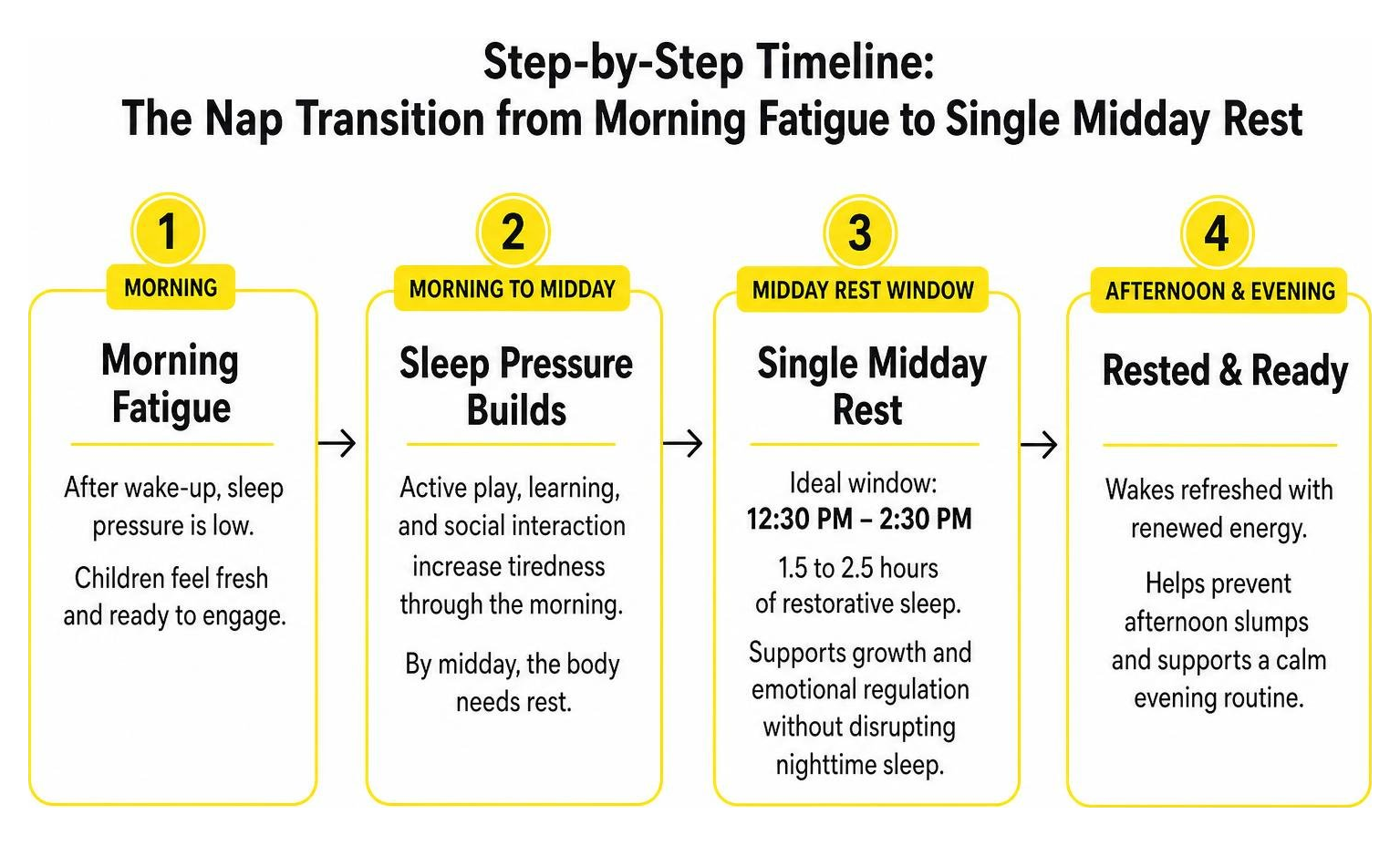
By age two, toddlers average a single midday rest period. Because morning activities in child care involve rich physical, cognitive, and social engagement, sleep pressure builds steadily by midday. A well-timed rest window between 12:30 PM and 2:30 PM allows children to enter restorative slow-wave sleep. This deep rest clears mental fatigue and supports physical growth without stealing sleep drive from the upcoming evening bedtime.
The Transition to One Midday Rest Period
While younger toddlers between 13 and 18 months naturally drop their morning snooze at home, almost all early learning centers consolidate rest into a single midday period. Moving to one nap requires developmental readiness, stamina, and careful pacing.
When children navigate this shift, they may experience temporary overstimulation or an afternoon energy slump around 4:00 PM or 5:00 PM. Recognizing that this transition is a gradual process helps parents support their child through temporary crankiness with patience and proactive scheduling.
How to Prepare Your Child for Daycare Naps Before Day One
Preparing your child for classroom rest before their first day reduces anxiety and builds comforting sleep associations. When children know what to expect, the classroom environment feels inviting rather than intimidating.
Aligning Home Sleep Routines with Childcare Policies
To prepare your child, gradually shift your home schedule over one to two weeks so lunch and nap times mirror the school’s daily schedule. Focus on consistent pre-rest cues: a 5-to-10-minute routine that includes a diaper change or potty visit, dimming the lights, turning on soft white noise, and reading a short story.
Keeping a simple sleep log for three to five days helps identify your child’s natural wake windows. In our early childhood daycare program, we welcome familiar comfort items like an approved small blanket, cot sheet, or comforting sleep item that carries the scent of home, providing an immediate sense of security.
Questions to Ask Providers About Rest Environments and Safe Sleep
Safety and comfort should always go hand in hand. Illinois child care centers must adhere to specific health, spacing, and supervision regulations during rest times. For licensed centers, the Illinois DCFS licensing standards for child care rest periods establish clear guidelines for rest equipment, supervision, and clean air space.
When touring centers, bring this checklist of essential safe rest questions:
- Cot and Mat Spacing: Are cots or rest mats spaced at least 3 feet apart to allow easy passageways, reduce distractions, and minimize the spread of airborne germs?
- Supervision: How do teachers actively supervise the classroom during rest time while maintaining a calming presence?
- Rest Surface Hygiene: How are individual cots labeled, sanitized, and stored between uses?
- Non-Sleeper Accommodation: What supportive, quiet activities are provided for children who wake early or do not fall asleep?
- Environmental Controls: How does the program manage room lighting, room temperature (ideally 68–72°F), and calming background sounds?
Bridging the Gap: Managing Weekend Naps and Daycare Sleep Debt
The “daycare sleep debt” cycle is familiar to many families: after a busy week of active learning and shorter naps, a child arrives at Saturday morning exhausted. Managing this dynamic requires a thoughtful weekend approach that stabilizes their internal clock without undoing weekday progress.

Aligning Your Weekend and Daycare Nap Schedule
The most effective way to preserve your child’s internal rhythm is to keep morning wake-up times and midday rest windows consistent on Saturdays and Sundays. While it might be tempting to let an overtired toddler sleep in late on the weekend, large shifts in wake-up times disrupt circadian rhythms, making Sunday night bedtime difficult.
Instead, preserve the standard rest schedule used in their preschool classrooms. If your child needs catch-up sleep, allow their afternoon nap to extend slightly—up to an extra 30 to 45 minutes—while keeping morning wake-up and evening bedtime within 30 minutes of their normal weekday hours.
Adjusting Bedtimes to Offset Short Naps
When your child takes a short nap or skips sleep entirely at child care, do not try to compensate with a late afternoon nap at 5:00 PM, as this will push bedtime late into the night. The most effective solution is to bring bedtime forward.
Moving bedtime earlier by 30 to 60 minutes (for example, shifting from 7:30 PM to 6:45 PM) allows your child to recover lost daytime sleep during deep, restorative nighttime cycles. An earlier bedtime prevents overtiredness, reduces evening meltdowns, and eliminates the cortisol spikes that cause midnight waking.
Solving Common Childcare Nap Challenges
Group sleep environments naturally present challenges, from ambient room noises to the sheer excitement of being around friends. With the right troubleshooting strategies, these hurdles are easily overcome.
Troubleshooting Nap Refusal and Overstimulation
If your child resists resting at school, the cause is often sensory overload rather than a lack of fatigue. Experiencing a vibrant classroom full of peer interactions keeps little nervous systems running high.
- Calming Time After Pick-Up: Provide a low-stimulus window immediately after school. Avoid rushing directly into crowded grocery stores or intense activities.
- Managing Car Catnaps: If your child is prone to falling asleep during the car ride home, keep the drive engaging by singing songs or talking about their day. A 10-minute car snooze at 5:15 PM can steal the sleep pressure needed for bedtime.
- Teacher Communication: Maintain open daily dialogue with teachers. Ask how your child settled, whether they accepted gentle back pats, and if small adjustments to cot placement away from high-traffic doorways might help.
Mastering the Daycare Nap Schedule for Children Who Don’t Sleep
Not every child falls asleep every single day, particularly as they approach ages 4 and 5. Early childhood educators are skilled at turning rest time into a peaceful restorative window, even for non-sleepers.
Children learn that while their bodies do not have to sleep, they do need to rest. After 20 to 30 minutes of quiet cot relaxation, children who are fully awake can be provided with low-stimulus, quiet activities such as picture books, soft puzzles, drawing, or sensory sorting trays. This respects the rest needs of sleeping peers while teaching older children valuable skills in quiet focus and body relaxation.
Frequently Asked Questions About Daycare Sleep
How long does it typically take for a child to adjust to resting at daycare?
Most children take between two and four weeks to fully adjust to a classroom rest routine. During the first two weeks, it is completely normal for naps to be shorter or more sporadic as your child builds trust with their teachers and adjusts to group sounds. With consistent caregiver bonding and predictable daily routines, children quickly learn to settle comfortably on their cots.
Is it okay if my toddler’s nap schedule at daycare differs from home?
Yes. Children are remarkably context-sensitive and quickly learn that different environments have different expectations. While it is beneficial to keep timing reasonably aligned on weekends, your child can easily adapt to resting on a mat at school with background noise while enjoying a crib or bed at home. Consistency in your supportive response matters far more than matching every minute perfectly.
What safe rest practices should I verify with my childcare center?
Always ensure the center provides individual, clean, state-approved cots or rest mats that are clearly labeled for your child’s exclusive use. Verify that cots are spaced at least three feet apart during rest periods to promote healthy airflow and safe supervision, and confirm that staff members maintain active visual supervision throughout the entire rest period.
Conclusion
Helping your child thrive with daytime rest is a partnership between your home and the classroom. By maintaining predictable wake times, supporting healthy routines on weekends, and adjusting bedtime when daytime rest falls short, you give your child the energy they need to learn, explore, and play.
At Fantasy Island Schools for Kids, we provide a warm, nurturing environment tailored to children ages 2 to 6. Our English-language program features Polish and Ukrainian language support, small class sizes, and an experiential curriculum that balances dynamic learning with peaceful, restorative rest. Families looking for high-quality Norwood Park early learning are invited to schedule a tour and visit our welcoming classrooms today.