

A Simple Way to Choose the Right Preschool
How to choose the right preschool starts with matching the program to your child’s needs and your family’s real-life routine. Look beyond a bright classroom or a long waitlist: the strongest choice combines warm, qualified teachers, safe daily practices, a play-rich curriculum, manageable costs, and a schedule that works for you.
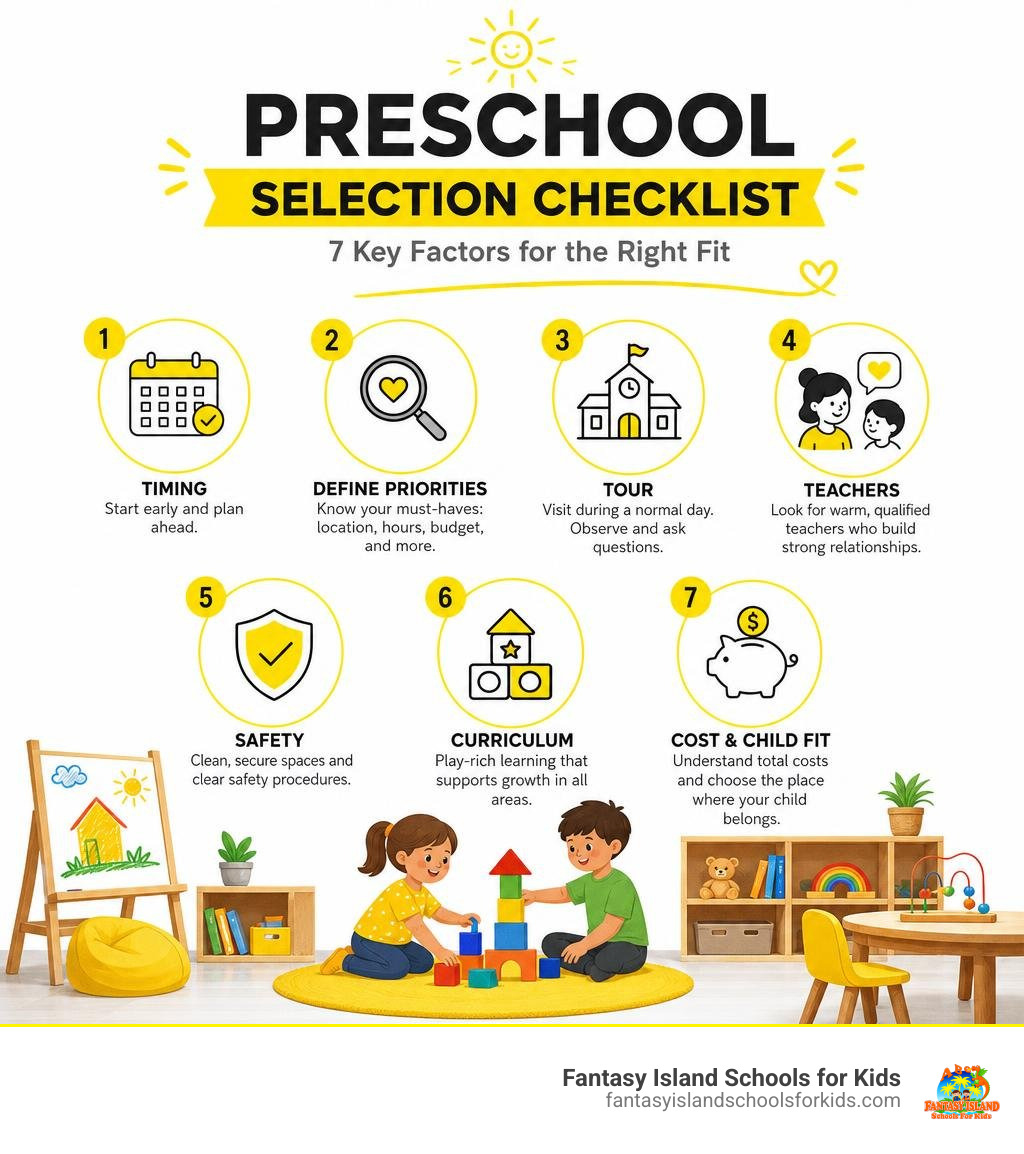
Use this quick checklist before you enroll:
- Start early. Many programs accept fall applications during the prior winter, and popular schools may have waitlists.
- Define your non-negotiables. Consider location, hours, budget, meals, full-time or part-time care, and support for your child’s language or learning needs.
- Tour during a normal school day. Watch how teachers speak with children, guide conflicts, and keep children engaged.
- Ask direct questions. Confirm staff qualifications, classroom ratios, turnover, safety procedures, cleaning routines, and total fees.
- Choose fit over appearances. Your child needs a place where they can feel safe, known, curious, and ready to participate.
For families on Chicago’s Northwest Side and nearby suburbs, practical details matter alongside quality: a reliable commute, clear communication, and a program that supports your child’s social, emotional, and early learning growth.
I am Beata Bielic, Executive Director of Fantasy Island Schools for Kids, which I founded in 2009 at 6100 N Milwaukee Ave, Chicago, IL 60646. With more than 17 years in early childhood education, including experience as a teacher and a Master’s degree in Psychology, I have helped many families learn how to choose the right preschool for children ages 2 through 6.
Key Factors in How to Choose the Right Preschool: Timeline and Priorities
When you begin searching for early childhood education options, the sheer volume of choices can feel overwhelming. Figuring out how to choose the right preschool requires breaking the process down into manageable steps: understanding enrollment cycles and setting clear family priorities early on.
Application Timelines and When to Begin Your Search
Most traditional preschool programs operate on an academic calendar running from September through May or June, with fall enrollment applications opening early in the preceding winter or late fall. If you are aiming for a specific start date, research consistently shows that starting your search 6 to 12 months in advance gives you the best selection of options and enough time to arrange backup plans.
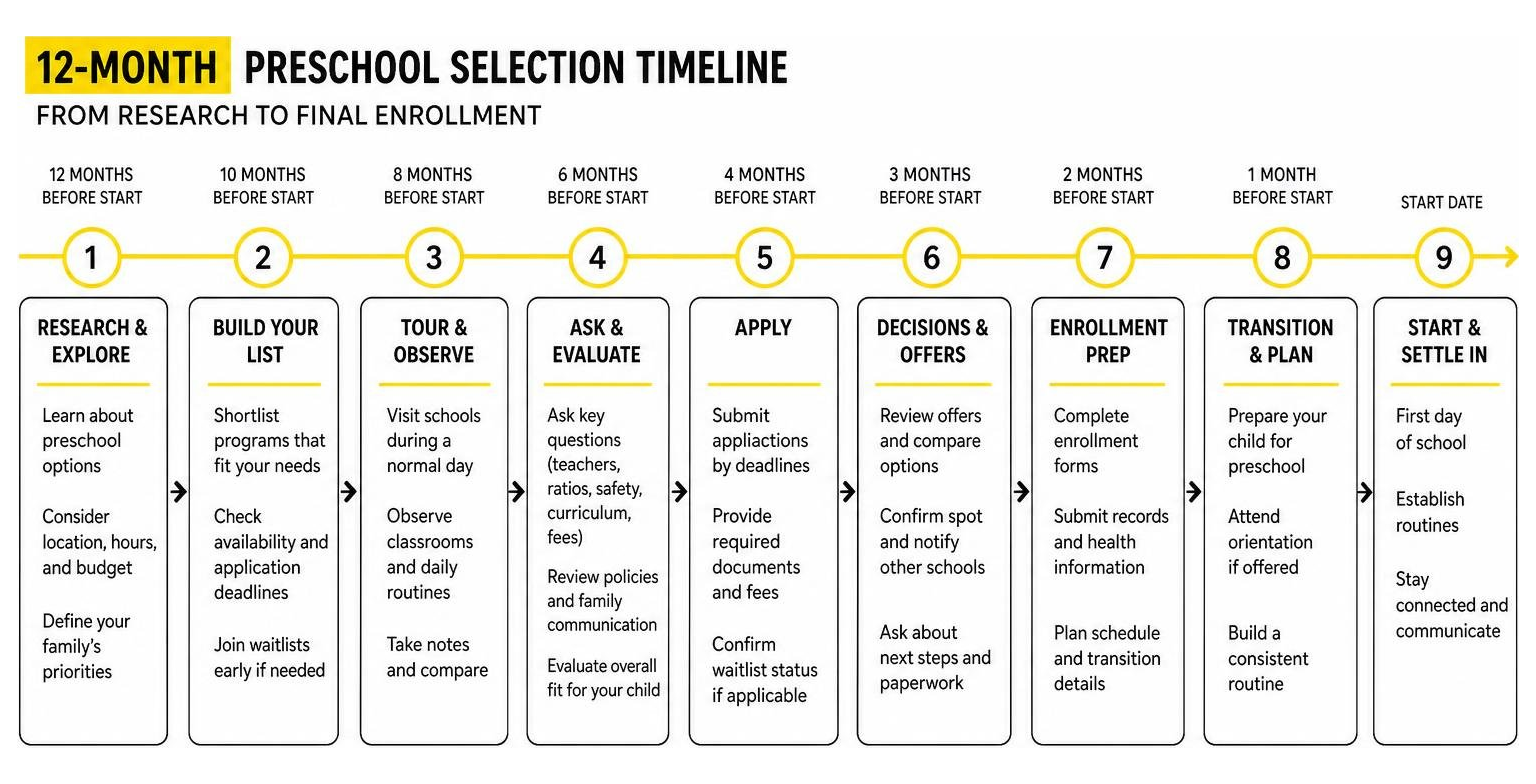
While stories abound of competitive urban markets where parents join waitlists during pregnancy, a standard 10-to-12-month search window works well for most families. High-demand programs often fill their available spots by January or February for the upcoming August or September term. Joining a waitlist early, touring multiple facilities, and keeping backup options active ensure you are never caught unprepared if a primary choice reaches capacity.
Location, Schedules, and Practical Family Logistics
Daily convenience significantly impacts your child’s routine and your family’s stress levels. Research indicates that 67% of families prioritize proximity to home when selecting early care, while 24% prioritize proximity to work. Deciding whether a neighborhood setting near home or a facility along your workplace commute makes the most sense depends on your daily schedule and pick-up logistics.
You also need to evaluate full-time versus part-time scheduling options. Many working parents need full-day coverage with extended hours, while others seek half-day morning sessions. For an in-depth breakdown of neighborhood scheduling dynamics on Chicago’s Northwest Side, read our guide on Navigating Full-Day Preschool Options Across Chicago Neighborhoods.
| Location Strategy | Primary Advantages | Considerations to Keep in Mind |
|---|---|---|
| Home-Adjacent Preschool | Keeps children connected to local neighborhood peers; shorter commutes on days off or working from home. | May require longer emergency travel times if parents work across town. |
| Work-Adjacent Preschool | Allows parents to stay close during the workday; quicker response time for emergencies or special events. | Commuting during peak rush hours with a young child in the vehicle can prove tiring. |
Evaluating Educational Philosophies and Curriculum Balance
Deciphering early education terminology can feel daunting. Knowing how to choose the right preschool involves understanding how different educational models shape your child’s daily experience.
Comparing Montessori, Reggio Emilia, and Play-Based Models
Preschool philosophies generally fall along a spectrum between child-led exploration and structured learning environments:
- Montessori: Emphasizes child-centered, independent learning through self-directed, tactile tasks in multi-age classrooms. Children choose self-correcting materials from organized shelves and develop deep concentration within structured individual boundaries.
- Reggio Emilia: Views the classroom environment as the “third teacher.” Curriculum emerges from children’s natural questions and curiosity, utilizing long-term collaborative arts and inquiry projects.
- Play-Based (Emergent): Prioritizes active social play, imaginative play, and multi-sensory activities. Learning concepts like counting, letter identification, and science fundamentals are woven directly into hands-on play centers.
- Waldorf: Focuses on rhythm, creative play, outdoor exploration, and artistic expression, avoiding technology and formal academics in early childhood.
- HighScope: Uses a structured “plan-do-review” sequence where children state their play choices, execute them, and reflect with teachers afterward.
How to Choose the Right Preschool Curriculum for School Readiness
Parent surveys reveal that 71% of families rank social interaction as the single most critical factor in early childhood decisions. Yet, many parents wonder if play-based environments adequately prepare children for future academic standards.
Early childhood research shows that traditional skill-and-drill instruction, repetitive flashcards, and forced paper worksheets are developmentally inappropriate for children ages 2 through 6. Developmentally appropriate programs keep structured sitting times to a maximum of 15–20 minutes per activity.
Pre-writing and math concepts are best mastered through multi-sensory play—such as rolling playdough into letter shapes, counting wooden blocks, or exploring rhythm in music class. As highlighted in Johns Hopkins insights on early readiness, evaluating how a program balances physical movement, self-regulation, and pre-academic concepts gives you clear insight into classroom quality.
At Fantasy Island Schools for Kids, our Gifted Enrichment Program blends structured cognitive challenges with hands-on, multi-sensory discovery. We combine language immersion, weekly music instruction led by a dedicated music teacher, and a large multi-sensory play area to build core academic readiness naturally through active participation.
School Tours: Assessing Staff Ratios, Safety, and Quality
Nothing replaces an in-person visit during regular operational hours. Observing live classroom dynamics lets you evaluate the real-time quality of teacher-child interactions.
Essential Tour Checklist and Key Teacher Qualification Questions
Teachers make or break a child’s early education experience. When touring prospective centers, use this checklist to gauge adult-child interactions and operational quality:
- Eye-Level Engagement: Do teachers crouch down to speak face-to-face with children using warm, encouraging language?
- Positive Guidance: How are behavioral conflicts handled? High-quality educators teach emotional vocabulary and problem-solving skills rather than resorting to punitive time-outs.
- Teacher Ratios: Are student-to-teacher ratios maintained at 1:10 or lower for preschoolers (ideally 1:8 for 3-year-olds)?
- Staff Credentials & Retention: Do lead teachers hold Early Childhood Education (ECE) certifications? How long have teachers been with the school? Low teacher turnover directly correlates with classroom stability.
As noted in the LAist guide to early childhood care, a director’s ability to clearly explain their developmental philosophy and staff support structure is a primary indicator of program quality.
Health Protocols, Cleanliness, and Classroom Red Flags
During your tour, check basic health, hygiene, and facility safety practices:
- Sanitization Procedures: Ask how often shared toys, tables, and multi-sensory play equipment are disinfected. High-touch items should be cleaned daily with child-safe sanitizers.
- Building Access Security: Confirm that main entryways remain locked with monitored keypad entries or front-desk check-ins. Verify that internal cabinets containing cleaning agents carry working safety locks.
- Sick Child & Allergy Policies: Review return-to-school rules following fever or illness, as well as formal protocols for managing severe food allergies.
- Red Flags: Watch out for chaos without clear routines, disengaged teachers sitting back while kids play unsupervised, strict reliance on television or tablet screens, or a lack of accessible outdoor physical activity spaces.
Budgeting, Financial Assistance, and Individual Needs
Understanding tuition structures, hidden expenses, and financial support systems allows families to select a program that remains sustainable throughout the school year.
Public Options, CCAP Subsidies, and Fee Transparency
Cost is a primary factor for 63% of families when evaluating preschools. Across private programs, full-time preschool care can range anywhere from $9,000 to over $24,000 per year depending on region and included services. Always ask for a full schedule of fees, including registration fees, supply fees, meal charges, late pick-up penalties, and holiday coverage costs.
Families searching for public financial support can explore state-funded early care subsidies. In Illinois, the Child Care Assistance Program (CCAP) administered through Illinois Action for Children provides tuition subsidies for eligible working families. When evaluating affordability, look for programs that accept CCAP and offer transparent pricing structures.
At Fantasy Island Schools for Kids, our tuition ranges between approximately $300 and $400 per week. This all-inclusive rate covers full-time or part-time care for ages 2 to 6, full enrollment in our Gifted Enrichment Program, weekly music sessions, and freshly cooked on-site meals at no extra cost. We proudly accept CCAP and Illinois Action for Children; families interested in subsidy details should contact our office directly or reach out to Illinois Action for Children for eligibility guidelines.
How to Choose the Right Preschool for Your Child’s Temperament
Your child’s unique personality should guide your final choice:
- Sensitive or Cautious Children: Thrives in quiet, predictable environments with soft lighting, clear visual schedules, stable teacher relationships, and dedicated cozy reading nooks.
- Highly Active Learners: Thrives in active, movement-friendly environments with ample daily outdoor play, large indoor multi-sensory play areas, and hands-on project work.
- Dual Language Learners (DLLs): Approximately 33% of U.S. children ages 0–8 are Dual Language Learners. Children in bilingual settings benefit enormously from educators who view home languages as cognitive assets.

At our center, our multilingual staff speaks Polish, English, and additional languages. We offer structured Polish-language kindergarten instruction and bilingual support to ensure children maintain their native language skills while building strong English literacy.
Frequently Asked Questions About Preschool Options
What is the ideal child-to-teacher ratio in preschool?
National early education standards recommend a child-to-teacher ratio of 1:10 or lower for 3- to 5-year-olds, with maximum class group sizes between 16 and 20 children. Maintaining lower ratios ensures teachers can offer personalized guidance, nurture self-regulation, and respond quickly to social or safety needs.
How do I know if my child is developmentally ready for preschool?
Developmental readiness typically centers on social-emotional indicators rather than academic knowledge. Most children show readiness between ages 2½ and 4 when they can handle brief separations from parents, express basic needs verbally or through gestures, show interest in playing alongside peers, and follow simple two-step directions. Complete potty-training independence is not always required prior to entry—many quality programs support bathroom routines as part of daily learning.
What is the difference between daycare and structured preschool?
While both options provide essential supervision for young children, their primary operational focus differs. Daycare centers emphasize continuous care, flexible schedules, and supervision across a wider age spectrum from infancy onward. Structured preschool programs focus specifically on ages 2 to 6, using intentional early learning frameworks to build pre-literacy, mathematical thinking, fine motor skills, and social independence ahead of kindergarten. As highlighted in this AP News report on early care options, modern early childhood care frequently combines both models by integrating full-day care schedules with structured preschool curricula.
Conclusion
Understanding how to choose the right preschool comes down to balancing practical household logistics with a nurturing, rich educational framework tailored to your child. By starting your search early, observing adult-child dynamics on school tours, evaluating safety standards, and matching tuition to your family budget, you can choose an early education community with complete confidence. Beyond checklists and quality metrics, pay close attention to your parental intuition: when you walk into a classroom where children are happily engaged and educators interact with warm respect, you have likely found the right environment.
At Fantasy Island Schools for Kids, founded in 2009 by Beata Bielic, we have spent years cultivating an inclusive, high-quality early childhood learning environment. Located at 6100 N Milwaukee Ave, Chicago, IL 60646, we serve children ages 2 through 6 from Mon-Fri 7 AM – 6 PM across Chicago’s Northwest Side and nearby suburbs—including Norwood Park, Edison Park, Gladstone Park, Jefferson Park, Sauganash, Edgebrook, Portage Park, Niles, Park Ridge, Skokie, Norridge, and Harwood Heights.
Our comprehensive curriculum features a specialized Gifted Enrichment Program, multilingual instruction (including Polish-language options), a large multi-sensory play space, weekly music classes, and freshly cooked on-site meals included in our tuition ($300–$400/week). All our teachers hold Early Childhood Education certifications, CPR/First Aid credentials, and training in trauma-informed care. We proudly accept CCAP and Illinois Action for Children to keep high-quality care accessible for our community.
Many of our graduates successfully transition into competitive gifted elementary programs, building a strong foundation for lifelong learning. To schedule a personal tour or learn more about our full-time and part-time preschool openings, contact us today.
