

How to Prepare for Your Preschool Visit
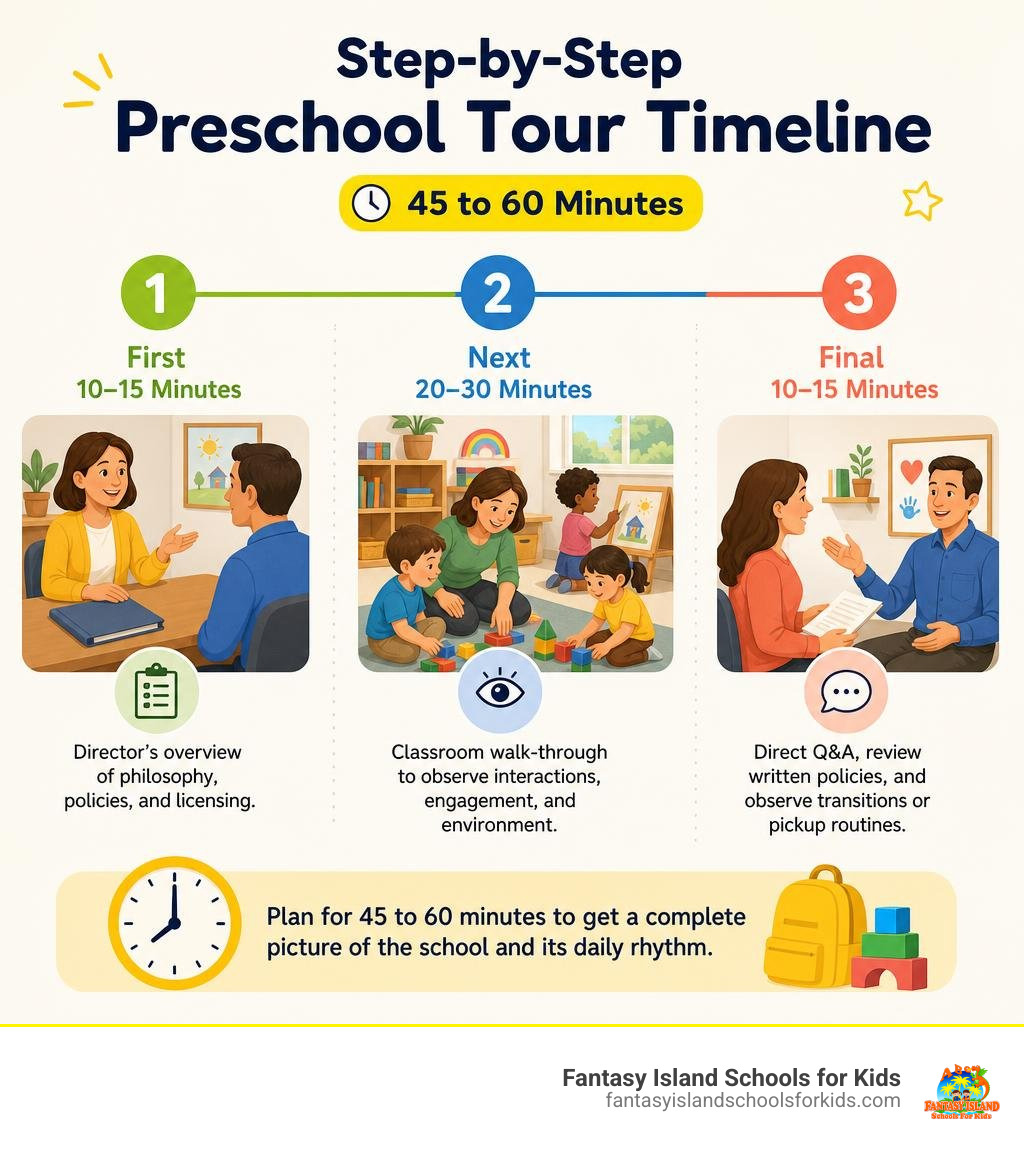
A preschool tour is a concentrated 45-to-60-minute window to evaluate an environment where your child may spend significant waking hours. To make the most of this visit, structure your time purposefully. Most effective tours follow a natural progression:
- First 10–15 Minutes: Director’s overview discussing philosophy, administrative policies, and licensing.
- Next 20–30 Minutes: Active classroom walk-through to observe teacher-child interactions, noise levels, and engagement.
- Final 10–15 Minutes: Direct Q&A, reviewing written policies, and observing hallway transitions or pickup routines.
To see true classroom dynamics, schedule your visit during active morning learning hours (typically between 8:30 AM and 10:30 AM). Visiting during naptime or end-of-day pickup limits your ability to watch instructional engagement.
Whenever possible, schedule an initial child-free visit. Touring without your little one allows you to focus entirely on administrative inquiries, documentation checks, and staff interviews. You can always arrange a brief follow-up visit with your child to observe how comfortable they feel in the space.
We recommend evaluating a comparison set of three to five centers. Touring fewer than three leaves you without a benchmark; touring more than five can lead to evaluation fatigue. For a structured approach to comparing local centers, consult our Step-by-Step Guide to Choosing the Right Preschool Options.
Essential Preschool Tour Questions for Evaluating Early Education Programs
Evaluating early childhood education programs requires digging beneath surface aesthetics. While colorful wall displays are welcoming, high-quality early learning depends on structural factors: staff stability, credentialed instruction, safe ratios, and transparent operating standards.
Use this category overview as your reference during visits, or review our Cheat Sheet to Choosing the Right Preschool: Compare Chicago Options to streamline your notes.
| Category | Must-Ask Question | What to Look For |
|---|---|---|
| Licensing & Safety | May I see your state license and most recent inspection report? | Publicly displayed, unblemished inspection records and secured entry points. |
| Staffing & Ratios | What is the actual child-to-teacher ratio in this room today? | Programs that maintain lower ratios than the state minimum requirements. |
| Curriculum | How does your curriculum balance play with kindergarten readiness? | Intentional, experiential learning targeting social, emotional, and early cognitive skills. |
| Behavior Guidance | What is your written positive discipline and redirection policy? | Calm, restorative approaches focused on emotional regulation rather than punitive measures. |
| Health & Nutrition | How are meals prepared and childhood food allergies managed? | On-site fresh preparation, strict handwashing, and documented allergy safeguards. |
| Total Costs | What is the all-in monthly tuition including supplies, food, and fees? | Complete transparency regarding registration, materials, and assistance programs like CCAP. |
Top Preschool Tour Questions About Staff Credentials and Turnover
Early childhood educators serve as your child’s primary emotional anchor during the school day. High staff turnover can disrupt a child’s sense of security and continuity of care, impacting their emotional well-being and learning consistency.
When interviewing directors, ask specific questions about staff qualifications, retention, and support systems:
- What specific credentials and degrees do your lead and assistant teachers hold? Look for lead instructors with dedicated Early Childhood Education (ECE) degrees or state credentials. At Fantasy Island Schools for Kids, all teachers hold Early Childhood Education certifications, and our team receives ongoing professional development in trauma-informed care.
- What emergency safety certifications does the staff maintain? Verify that all classroom teachers, assistants, and floaters hold active First Aid and Pediatric CPR certifications.
- What was your staff turnover rate over the last 12 months? Inquire about the average tenure of classroom teachers. A stable staff signals supportive working conditions and consistent care routines for children.
- Who covers classrooms when a primary teacher is sick or on vacation? Ask whether the facility employs dedicated floaters or relies on unfamiliar agency substitutes. Consistency in caregiver faces helps maintain behavioral expectations and comfort.
- What background check screenings do you require prior to employment? Ensure all personnel, including student teachers and support staff, undergo comprehensive federal and state fingerprint background checks.
To explore additional staffing questions, refer to Brightwheel’s guide on 20 Essential Questions to Ask on a Preschool Tour.
Core Preschool Tour Questions on Curriculum, Daily Routine, and Kindergarten Readiness
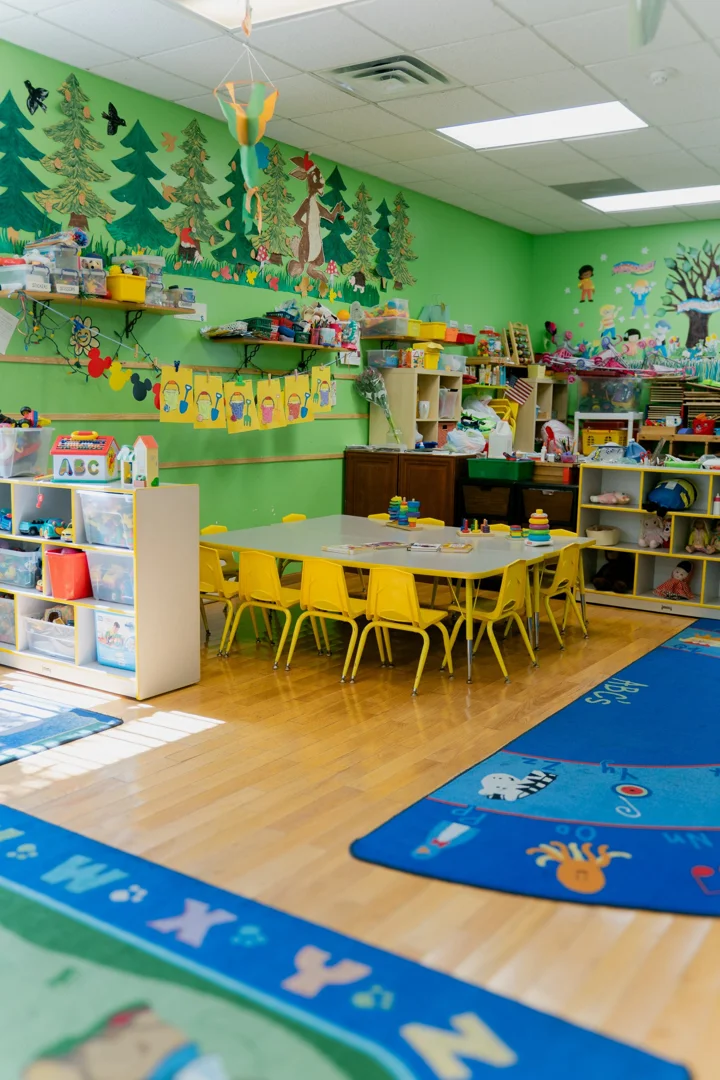
A high-quality curriculum should promote social-emotional development, fine and gross motor mastery, language acquisition, and problem-solving abilities through structured and child-led activities.
Ask these focused curriculum questions during your walk-through:
- What educational philosophy or curriculum framework guides your daily instruction? Whether a center uses play-based learning, Montessori, Reggio Emilia, or a specialized model, ensure the approach is intentional. Many of our graduates benefit from our gifted experiential curriculum (Gifted Enrichment Program), which combines project-based learning with multi-sensory exploration to foster critical thinking. Learn more about how structured learning frameworks operate in A Practical Guide to Daycare with Curriculum.
- Do you incorporate bilingual or multilingual instruction? Learning a second language in early childhood enhances cognitive flexibility and executive functioning. We integrate Polish and English instruction naturally throughout the day, supporting cognitive agility and cultural awareness.
- What does a typical daily schedule look like from arrival to dismissal? Look for a predictable balance between active group learning, independent choice time, quiet rest periods, and outdoor exploration.
- What are your policies on screen time and digital media? Early childhood classrooms should prioritize tangible, hands-on learning materials. Digital screens should be minimal or avoided entirely in favor of social and sensory activities.
- How much outdoor gross-motor time is scheduled daily? Ensure children spend substantial time outside every day, weather permitting, in secure, age-appropriate play yards.
- How do you assess developmental milestones and prepare children for kindergarten? Ask how teachers track early literacy, numeracy, pencil grip, and self-regulation skills without subjecting young learners to standardized pressure.
- Are specialized enrichment activities included in standard programming? Inquire whether music, movement, or art are taught by dedicated educators or carry separate add-on fees. Our weekly music classes with a qualified music teacher, for instance, are integrated directly into weekly tuition.
Critical Inquiries Regarding Health, Safety Protocols, and Nutrition
Health, hygiene, and emergency preparedness form the foundation of a safe preschool environment.
Ask these essential safety and wellness questions:
- What building security protocols and access controls are in place? Check that exterior doors remain locked, visitor check-ins are monitored, and entry requires unique security codes or administrative clearance.
- What are your sanitization protocols for shared toys and high-touch surfaces? Ask how frequently toys, nap cots, and sensory tables are sanitized, and observe whether handwashing sinks are accessible to children.
- What is your sick-child exclusion policy and return-to-care timeline? Inquire about fever thresholds, contagious illness notifications, and vaccination documentation requirements for enrolled children.
- How are meals prepared and distributed? Find out if meals are catered, packed from home, or prepared fresh on-site. At our Northwest Side center, on-site freshly cooked meals are prepared daily and provided at no extra cost, ensuring balanced, warm nutrition.
- How do you manage severe food allergies and dietary restrictions? Inquire about peanut-free policies, meal substitution options, and staff training regarding emergency medication (such as epinephrine auto-injectors).
Practical Questions on Tuition, Operating Schedules, and Classroom Policies
Operational logistics directly influence your family’s daily routine and budget predictability.
Discuss these financial and operational policies:
- What is the all-inclusive tuition, and are there separate hidden fees? Confirm whether costs cover meals, classroom supplies, diapers, and enrichment programs. Our tuition ranges from approximately $300 to $400 per week, covering freshly cooked meals, music enrichment, and our gifted curriculum.
- Do you accept child care subsidies or financial assistance? If you are seeking tuition assistance, ask if the center works with state-funded programs. We accept the Illinois Child Care Assistance Program (CCAP) and work with Illinois Action for Children. For additional regional budgeting guidance, review A Practical Guide to Affordable Preschool Options in Chicago.
- What are your exact operating hours, and what is your late pickup policy? Confirm drop-off and pickup flexibility. We operate Monday through Friday from 7:00 AM to 6:00 PM to accommodate working parents across Chicago’s Northwest Side and surrounding suburbs.
- What is your annual closure and holiday calendar? Request a written schedule of teacher institute days, winter breaks, and summer schedules to plan backup care in advance.
- Does my child need to be fully potty-trained before enrolling? Many programs require complete toilet independence, while others partner with parents during the process. We support children through developmental toilet learning routines without rigid pressure.
- What is your philosophy on positive discipline and conflict resolution? Ask how educators manage typical early childhood behaviors like sharing disputes or separation anxiety. Look for programs that use gentle redirection, emotional coaching, and eye-level communication.
- How do educators communicate daily milestones with families? Inquire whether the school uses daily digital reports, mobile communication apps, or scheduled parent-teacher conferences to share photos, meals, naps, and developmental progress.
Red Flags and Green Flags to Watch for During Your Tour
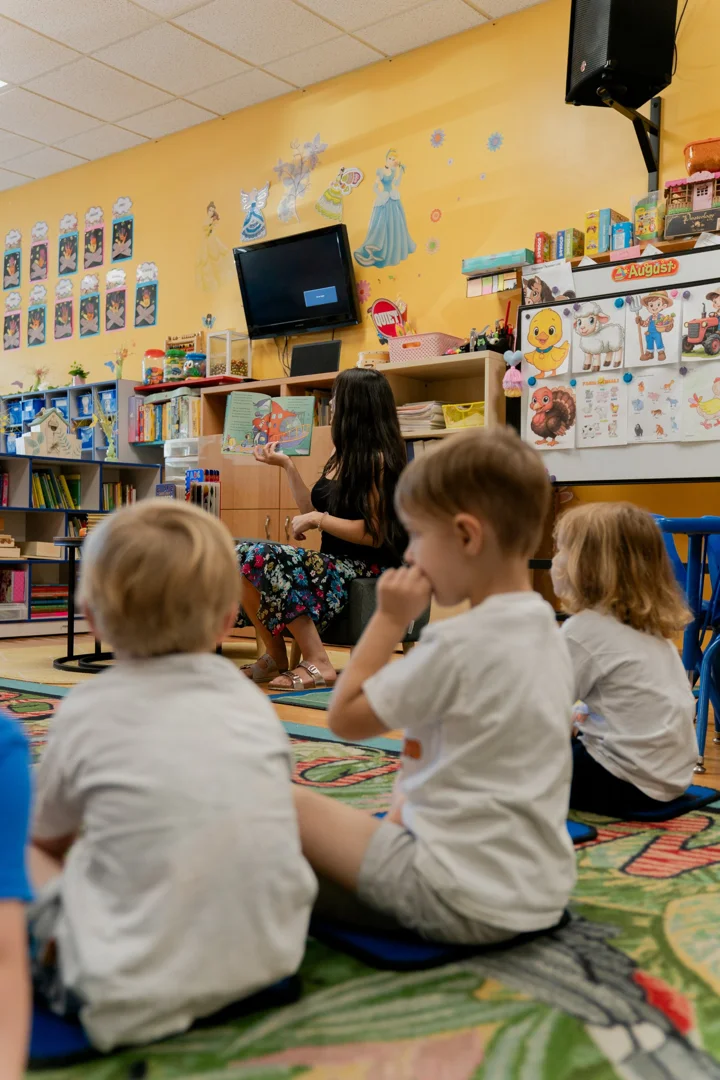
While asking your checklist of preschool tour questions, observe the unscripted classroom dynamics around you. Use this comparison to assess the environment:
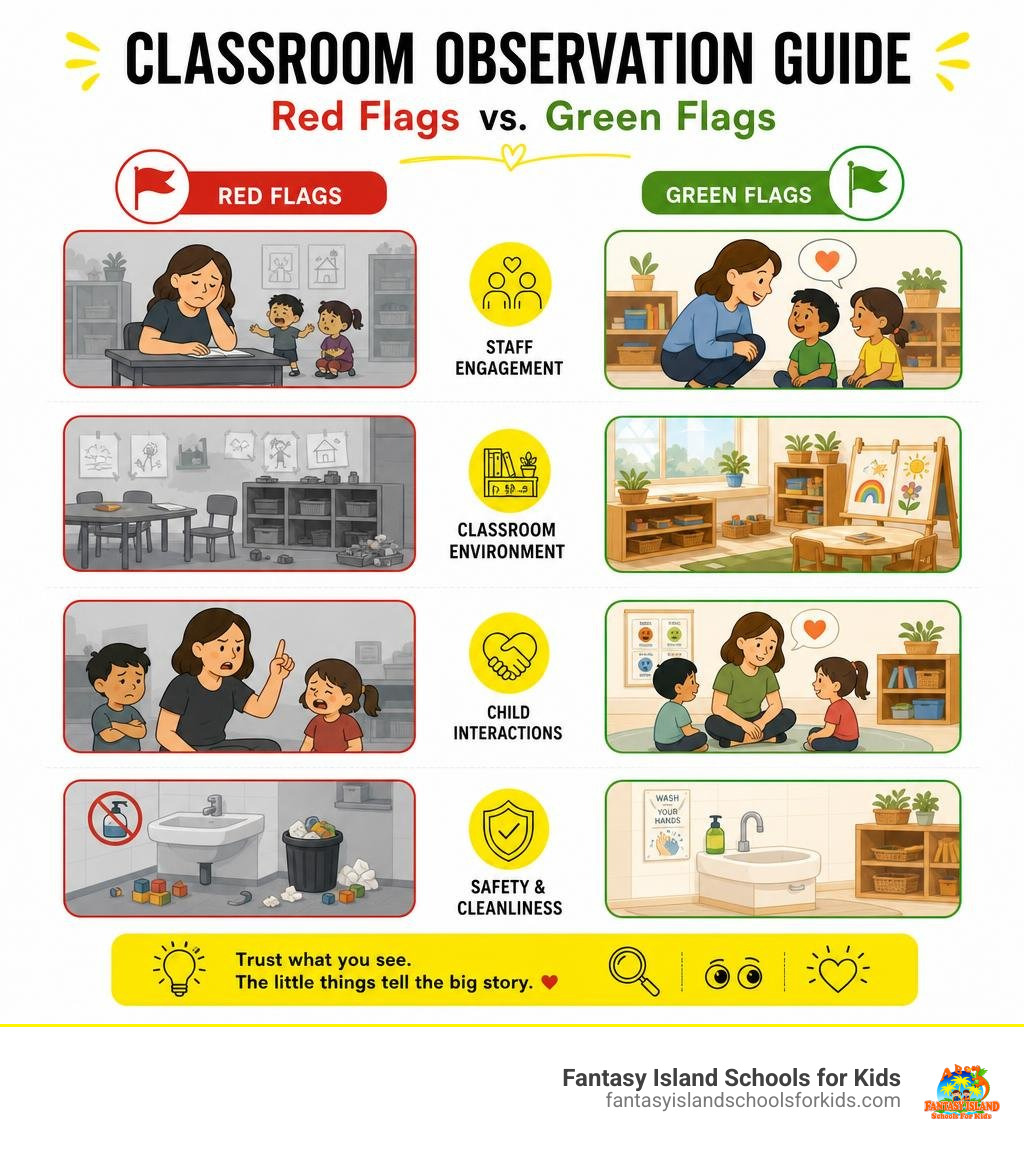
- Staff Engagement:
- Green Flag: Teachers crouch to eye level, using calm, narrated language and responsive listening.
- Red Flag: Staff members supervise passively from desks, appear disengaged, or manage behavior through raised voices.
- Classroom Environment:
- Green Flag: Children freely navigate organized learning centers with accessible, hands-on materials; original child-created artwork is displayed at child height.
- Red Flag: Overly regimented, silent classrooms or disorganized spaces where materials are out of reach.
- Safety & Transparency:
- Green Flag: Licensing documentation and emergency procedures are displayed; staff verify visitor identities immediately upon entry.
- Red Flag: Hesitation when asked for licensing inspection records, propped-open exterior doors, or unmonitored classroom transitions.
To understand how scheduling and classroom styles vary across local neighborhoods, explore Navigating Full-Day Preschool Options Across Chicago Neighborhoods.
Frequently Asked Questions About Preschool Tours
How many preschools should I tour before making a decision?
Touring three to five early childhood centers provides a clear comparison of educational philosophies, teacher interactions, facility cleanliness, and tuition value. Visiting fewer than three limits your perspective on local childcare standards, while visiting more than five can make it difficult to remember specific details.
What should I observe during a classroom walk-through?
Look beyond the physical decor. Watch whether the children appear joyful, engaged, and secure in their daily routines. Notice whether teachers converse with children at eye level, listen to their answers, and use positive redirection during moments of frustration. Pay attention to ambient noise: a busy hum of purposeful play reflects healthy engagement, whereas continuous chaotic shouting or rigid silence may indicate supervision issues.
When is the best time of year to begin touring preschools?
Early childhood enrollment cycles typically open in the winter and early spring for the upcoming fall school year. In high-demand Chicago neighborhoods, classrooms often fill their rosters months in advance. We recommend scheduling visits between October and February of the year prior to enrollment to explore programs, evaluate waitlists, and complete registration requirements without unnecessary stress.
Conclusion
Choosing an early childhood program is one of the most important developmental investments you will make for your child. By arriving with a comprehensive list of preschool tour questions, reviewing safety and inspection records, and observing how educators engage with children on an ordinary morning, you can make an informed, confident decision.
Fantasy Island Schools for Kids was founded in 2009 by Beata Bielic and is located at 6100 N Milwaukee Ave, Chicago, IL 60646. We proudly serve families across Chicago’s Northwest Side and nearby suburbs—including Norwood Park, Edison Park, Gladstone Park, Jefferson Park, Sauganash, Edgebrook, Portage Park, Niles, Park Ridge, Skokie, Norridge, and Harwood Heights.
We serve children ages 2 to 6 with full-time and part-time enrollment options, operating Monday through Friday from 7:00 AM to 6:00 PM. Our tuition runs approximately $300–$400 per week and includes freshly cooked on-site meals, weekly music enrichment classes, and our gifted curriculum. We also proudly accept CCAP (Illinois Child Care Assistance Program) and Illinois Action for Children to support family affordability.
Schedule a tour with Fantasy Island Schools for Kids today to see our certified educators, bilingual Polish-English learning environment, and experiential classrooms in action.
