

Preparing a Toddler for Daycare Starts Before the First Day
Preparing a toddler for daycare starts with small, familiar steps. Talk about what they will do there, visit the classroom if you can, and practice short goodbyes with a trusted adult. In the weeks before the first day, gradually shift sleep and meal times toward the daycare schedule. Pack and label their bag the night before, then use the same short, loving goodbye at drop-off.
Your child may still cry, even after you prepare. That does not mean you did anything wrong. A predictable routine and a caregiver who knows how to comfort your child can help you both through the change.
I’m Beata Bielic, founder of Fantasy Island Schools for Kids, with a master’s in psychology and more than 17 years of early childhood education experience. I bring that experience to this guide on preparing toddler for daycare, starting with steps you can try at home.
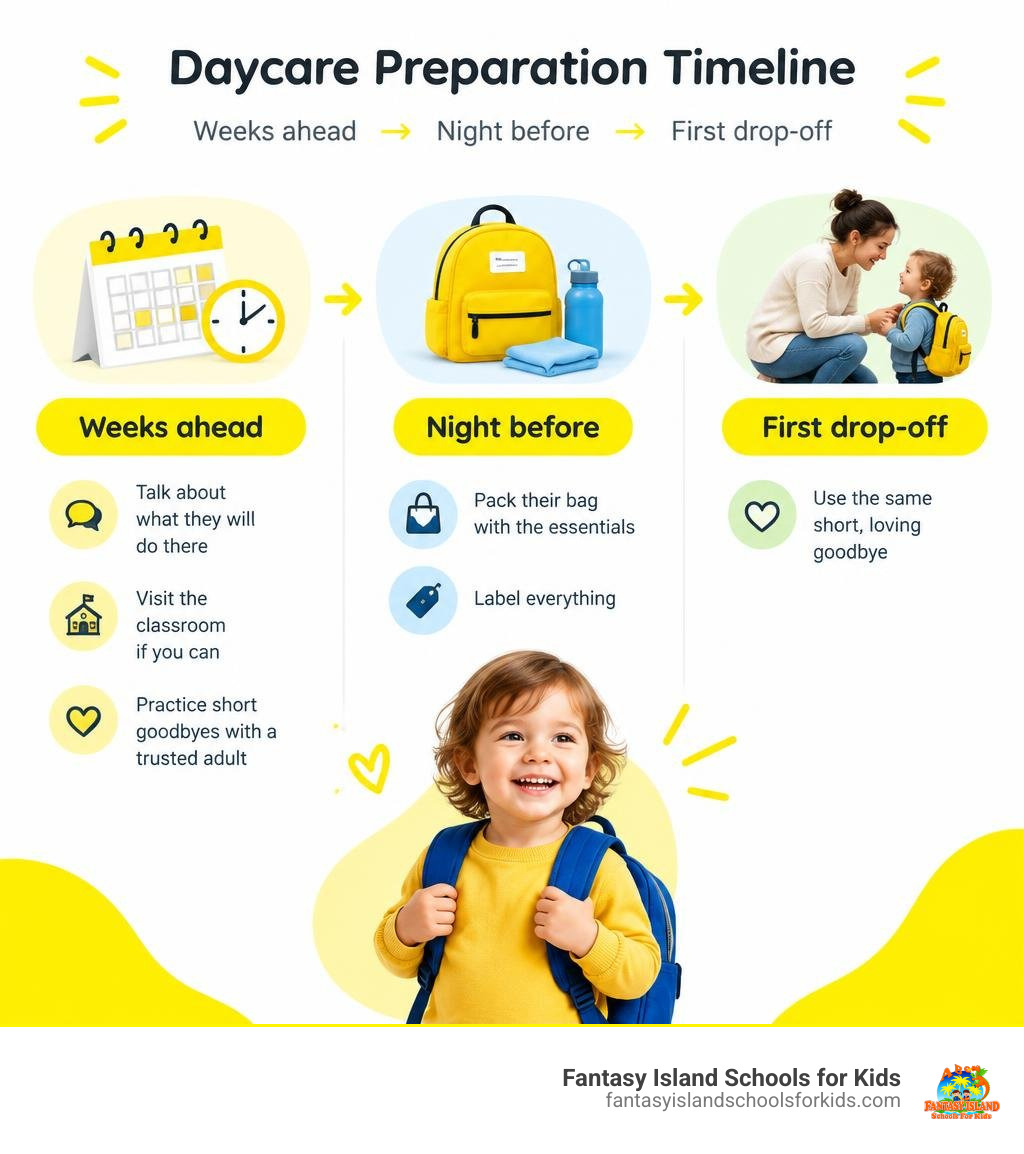
Simple preparing toddler for daycare word guide:
Emotional Readiness: Helping Your Child Build Confidence
Building emotional readiness begins by turning the unknown into something familiar. Toddlers feel safest when they understand what to expect from their environment, their daily rhythm, and the adults caring for them. When enrolling your child in a quality daycare program, introducing the concept of a learning community early on makes a significant difference.
According to resources on starting child care, introducing group settings and discussing new routines well in advance creates an emotional anchor. Encouraging self-expression and naming big emotions allows toddlers to navigate transitions with greater resilience.
Emotionally Preparing a Toddler for Daycare Through Pretend Play and Books
Pretend play is one of the most effective tools for early childhood emotional regulation. You can set up a “mini-school” at home using your toddler’s favorite stuffed animals:
- Role-play circle time: Gather toys in a circle, sing a morning song, and serve a pretend snack.
- Practice hand washing and cleanup: Walk through everyday routines like washing hands before eating and putting toys back in bins.
- Act out drop-off and pickup: Have a toy parent say a warm goodbye, leave the room for a minute, and return with a joyful greeting.
Pair pretend play with relatable storybooks like The Kissing Hand or Llama Llama Misses Mama. Reading stories about starting school helps children identify with characters who feel nervous at first and then discover that school is a fun, welcoming place.
Practicing Short Separations and Building Caregiver Trust
If your child has spent most of their time exclusively with immediate family, jumping into a full day of childcare can feel overwhelming. Practicing short separations helps build their “separation muscles.”
Leave your toddler with a trusted grandparent, relative, or babysitter for short intervals—starting with 30 minutes and working up to a few hours. The key is to always say goodbye, leave calmly, and return when promised. This teaches your child that separation is temporary and that you will always come back.
Sharing your child’s personality profile with their new teachers is equally crucial. As highlighted in Karitane’s toddler childcare tips, open communication about your child’s soothing preferences, favorite songs, communication cues, and nap habits allows educators to step in effectively during moments of distress.
Practical Steps for Preparing Toddler for Daycare Routines and Schedules
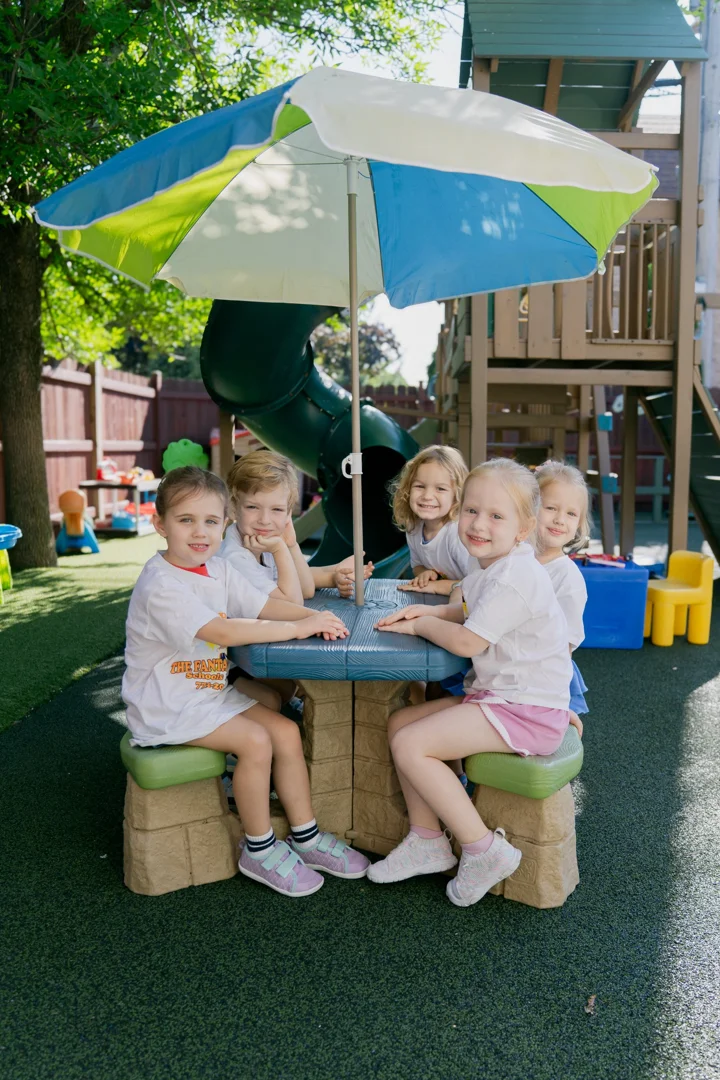
Logistical preparation creates predictability. When a toddler’s internal body clock aligns with their school schedule, they arrive well-rested, energized, and ready to engage.
Aligning Sleep, Nap, and Meal Schedules at Home
Daycare centers typically operate on a structured schedule with set times for morning snack, outdoor play, lunch, and an afternoon nap. Shifting home schedules 2 to 4 weeks before the first day prevents overtiredness and crankiness.
- Morning Wake-Up: Gradually adjust wake-up times to match your future drop-off routine.
- Lunchtime: Most early learning centers serve lunch between 11:30 AM and 12:00 PM. Adjust your home lunch accordingly.
- Afternoon Nap: Align quiet time with the center’s standard nap window (typically 12:30 PM to 2:30 PM).
- Bedtime: Ensure your toddler gets 11 to 14 hours of total sleep per 24-hour cycle to keep their immune system strong and their mood stable.
Essential Packing Checklist: What to Send and Label
Having the right gear packed and clearly labeled prevents lost items and keeps your child comfortable.
| Category | Recommended Items | Special Tips |
|---|---|---|
| Clothing | 2–3 full changes of weather-appropriate clothes (shirts, pants, socks, underwear) | Choose elastic waistbands and avoid complicated buttons or overalls. |
| Footwear | 1 pair of comfortable indoor/outdoor sneakers | Velcro closures encourage toddler independence. |
| Comfort Item | Small stuffed animal, family photo, or lovey | Ensure it is approved by the center for naptime use. |
| Hydration & Meals | Spill-proof labeled water bottle | Check if the center provides meals or requires packed lunches. |
| Hygiene | Diapers, wipes, diaper cream (if applicable) | Label individual diaper packs with waterproof markers. |
Label every single item—from shoes and jackets to water bottles—using durable, waterproof name labels or clothing stamps.
Mastering the Morning Drop-Off Without Tears

The morning drop-off sets the tone for the entire day. A smooth transition relies on consistency, warmth, and brevity.
Preparing Toddler for Daycare Drop-Offs with a Goodbye Ritual
A predictable goodbye ritual gives your child a clear signal that it is time for school. Keep it simple, positive, and under two minutes:
- Acknowledge and Validate: “I see you’re feeling unsure, but you are safe here with your teacher.”
- Execute the Ritual: Two hugs, one butterfly kiss, and a high-five, or a special phrase like, “I love you, you are safe, and I’ll see you right after afternoon snack!”
- Handoff to Educator: Pass your child directly to their teacher.
- Swift Exit: Turn and leave confidently without lingering or sneaking out.
Sneaking away while your child is distracted breaks trust and can cause panic when they realize you are gone. A direct, loving goodbye builds lifelong security.
Managing Separation Anxiety and Parent Emotions
Children are incredibly perceptive; they take their emotional cues directly from your facial expressions and body language. If you appear anxious, hesitant, or tearful, your child assumes the environment is unsafe.
- Model Confidence: Stand tall, smile warmly, and speak with enthusiasm.
- Avoid Lingering: Peeking through windows or returning for “one last hug” restarts the separation anxiety cycle.
- Process Your Own Feelings: It is completely normal for parents to experience guilt or sadness. Allow yourself to have a good cry in the car or on your commute once you have left the building.
What to Expect During the Adjustment Period and Typical Timeline
Every child adjusts to childcare at their own pace. The typical settling period ranges from a few days to several weeks.
The 4 Phases of Toddler Daycare Transition
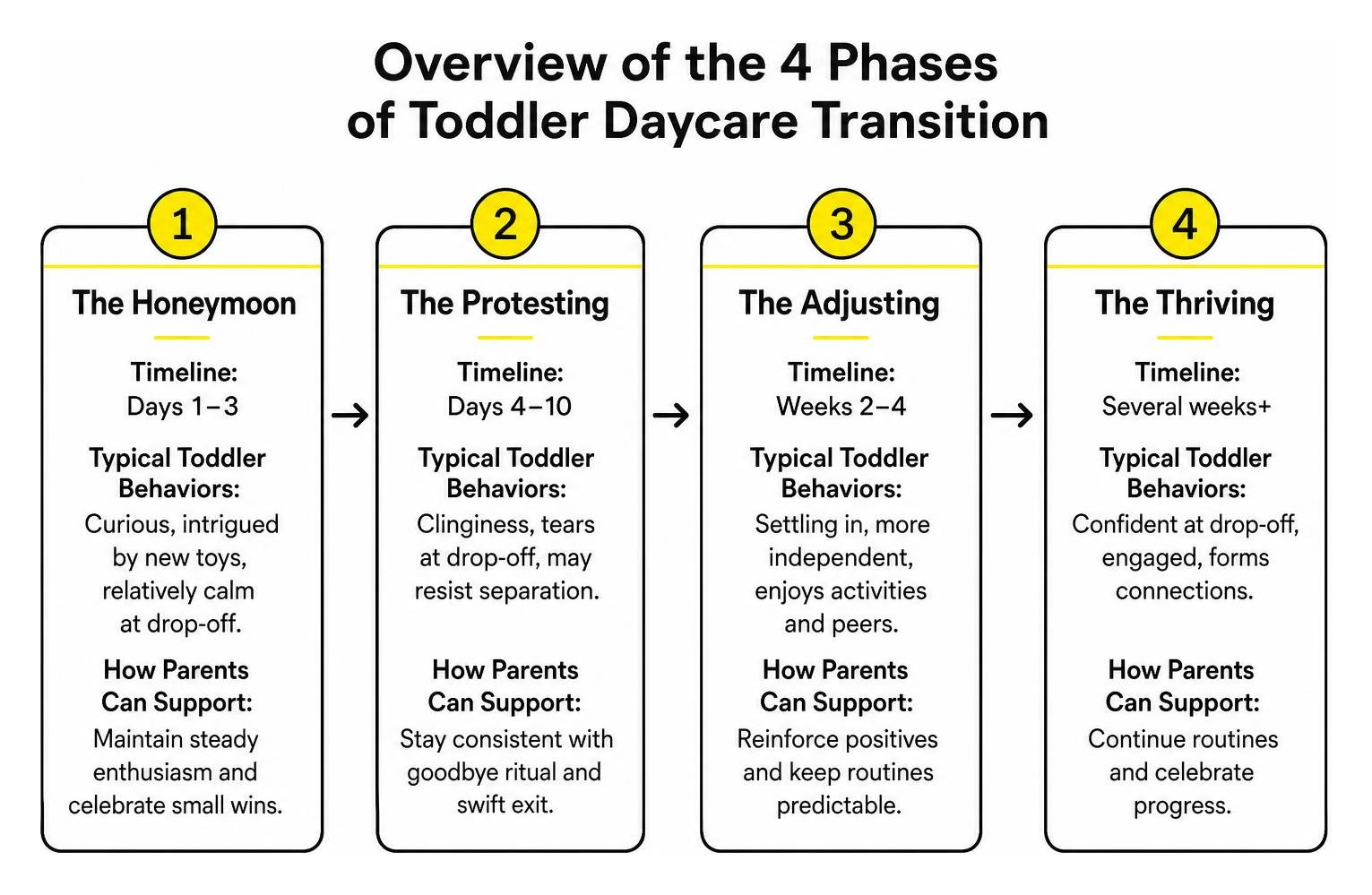
Understanding the normal stages of adjustment helps set realistic expectations:
| Phase | Timeline | Typical Toddler Behaviors | How Parents Can Support |
|---|---|---|---|
| 1. The Honeymoon | Days 1–3 | Curious, intrigued by new toys, relatively calm at drop-off. | Maintain steady enthusiasm and celebrate small wins. |
| 2. The Reality Check | Days 4–14 | Tears at drop-off, clinging, realization that daycare is a daily routine. | Stick firmly to your goodbye ritual; maintain calm consistency. |
| 3. The Adjustment | Weeks 2–4 | Crying decreases to 2–5 minutes; engages well with teachers and activities. | Talk positively about classroom friends and teachers at dinner. |
| 4. The Settled State | Weeks 4–6+ | Smiles at drop-off, waves goodbye, participates fully in daily routines. | Continue consistent sleep routines and open teacher communication. |
Signs of Positive Adjustment vs When to Intervene
Signs of healthy adjustment include settling down within 10 to 15 minutes of drop-off, showing interest in sensory activities, eating snacks, and talking about school at home.
It is normal for toddlers to have an “after-school meltdown” at pick-up. Known as restraint collapse, children hold their emotions together all day in a structured environment and finally release their fatigue in the safety of your presence. Offer a healthy snack, a warm hug, and quiet connection rather than over-scheduling evenings.
If severe distress, inconsolable crying lasting hours, significant sleep disruption, or persistent regression continues past 6 to 8 weeks, schedule a check-in with your child’s educators and pediatrician to explore tailored soothing strategies.
Frequently Asked Questions About Daycare Transition
How long does it normally take for a toddler to adjust to daycare?
Most toddlers settle into their new routine within 2 to 4 weeks. Some children adapt in a few days, while more sensitive children may take up to 6 weeks to feel completely secure.
What should I do if my toddler cries hysterically at drop-off?
Stay calm, perform your established goodbye ritual, hand your child directly to the teacher, and exit promptly. Early childhood educators are trained in comforting distressed children, and tears almost always stop within minutes once engaging activities begin.
Is it normal for my toddler to have meltdowns at home after daycare?
Yes. After-daycare meltdowns are very common. Toddlers expend significant energy adapting to classroom rules and social sharing. A calm evening routine with plenty of downtime helps them recharge.
What items from home can comfort my toddler during the day?
A small transitional object—such as a favorite soft lovey, a family photo laminated for durability, or a small blanket that smells like home—provides reassurance during rest periods.
Conclusion
Preparing your toddler for daycare is an empowering milestone that builds independence, social awareness, and cognitive curiosity. By aligning schedules early, establishing a consistent goodbye routine, and partnering closely with your child’s teachers, you create a foundation for a happy, thriving transition.
At Fantasy Island Schools for Kids, our state-licensed Norwood Park center provides a nurturing, structured environment for children ages 2–6. With small class sizes, experienced educators, three nutritious on-site meals daily, and enriching activities like Brain Gym and weekly music, we partner with families across Chicago’s Northwest Side to make every child’s first school experience joyful and secure.
Ready to see how we support your child’s growth? Schedule a tour with us today.