

How to Support Language Development in Preschool
Talk, read, and play with your child every day. Between ages 3 and 5, children often move from short sentences and simple questions toward longer conversations and stories. Supporting language development in preschool involves noticing both what your child says and what they understand. A high-quality preschool program nurtures these early communication skills through rich peer interactions and guided play. If anything concerns you about your child’s progress, talk with your pediatrician about whether a hearing check or speech-language evaluation would help.
You do not need a lesson plan to get started. Ask what happened during pretend play, pause for your child’s answer, and build on it: “The kitten got lost. Where should we look first?” Giving children ample time to listen, talk, and tell their own stories builds a strong foundation for lifelong learning.
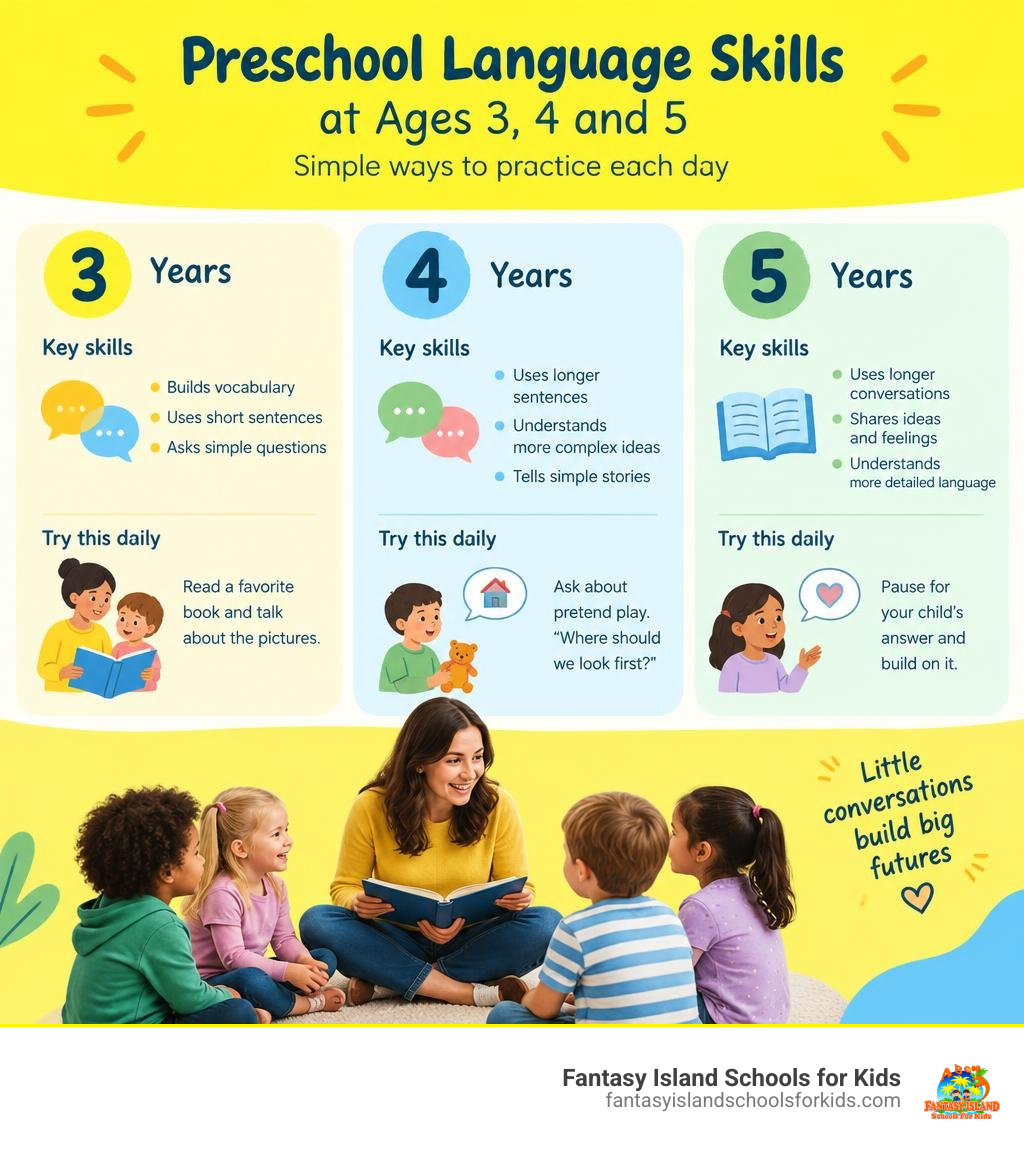
Core Milestones for Language Development in Preschool (Ages 3–5)
Preschool represents a period of explosive growth in communication. During these crucial years, children transition from using fragmented phrases to engaging in lively, back-and-forth conversations. Understanding typical 3-year-old developmental milestones helps parents and educators identify strengths and spot potential areas where a child may need extra scaffolding.
Language acquisition involves two core components: receptive language (what a child understands) and expressive language (what a child communicates through words, gestures, and sentences). According to (Feldman, 2019), early speech and language acquisition develops as a child’s innate learning capabilities interact with a socially engaging, language-rich environment.
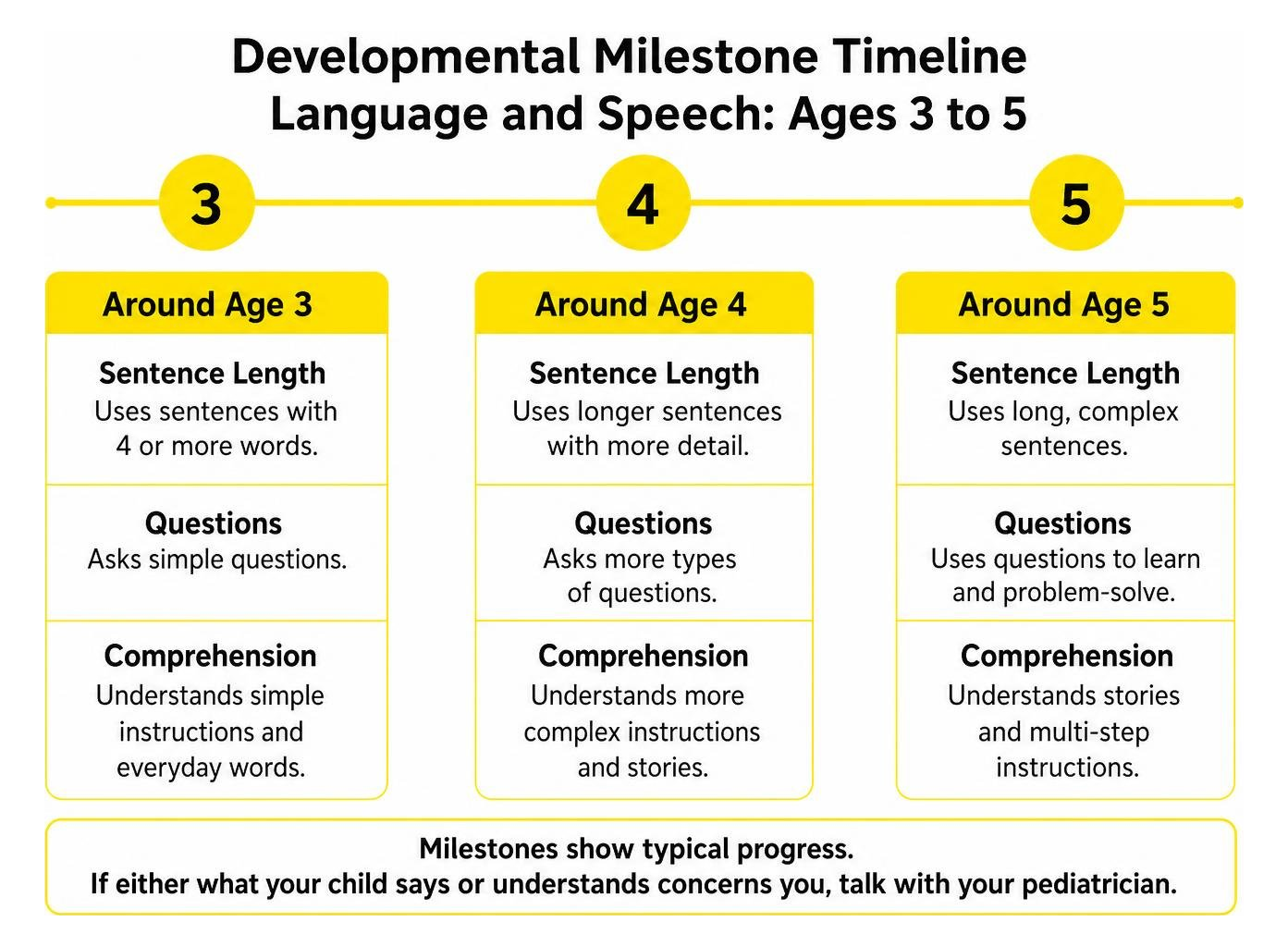
Age 3 to 4 Milestones: Sentences, Questions, and Comprehension
Between the third and fourth birthdays, children begin experimenting with more complex grammatical tools and expanding their everyday vocabulary:
- Sentence Length: At 3–4 years, your child should be using sentences with four or more words.
- Connecting Words: Children start incorporating conjunctions such as because, so, if, and when to join related thoughts (for example, “I want the green crayon because I’m coloring the grass”).
- Question Answering and Asking: Children can answer simple “Who?”, “What?”, “Where?”, and “Why?” questions and frequently ask their own inquisitive questions to explore the world.
- Following Directions: At 3–4 years, your child will understand instructions that have more than 2 steps, as long as they’re about familiar routines (such as “Take off your shoes, put them in the cubby, and sit at the table”).
- Spatial Concepts: Children reliably comprehend basic prepositions like in, on, under, and next to.
Age 4 to 5 Milestones: Complex Grammar and Narrative Storytelling
As children approach kindergarten age, their language skills become much closer to adult communication patterns:
- Conversational Intelligibility: By age 4, most adults will understand your child, although your child might not pronounce every sound perfectly. Specifically, people who don’t know the child well can understand them about 90 percent of the time.
- Grammar and Tenses: Children consistently use past, present, and future tenses, although cute over-regularizations (like saying “he runned” or “two feets”) remain common.
- Emotional Vocabulary: By age 4, your child might be able to understand and use words to express basic emotions like happy, sad, angry, or surprised.
- Narrative Skills: Four- and five-year-olds can tell simple sequential stories with a beginning, middle, and end, recounting daily experiences or retelling favorite fairy tales.
- Phonological Awareness: Emergent literacy skills take root as children recognize rhymes, repeat silly tongue twisters, and identify the beginning sounds of common words.
How to Create a Language-Rich Environment Through Play and Routine
Children do not learn language through flashcards or passive listening; they learn through dynamic, interactive environments where words have immediate meaning and social value.

Peer interaction plays an essential role in this process. Cooperative play with peers gives children natural opportunities to negotiate roles, exchange ideas, and solve problems together. When children engage in collaborative make-believe, they practice the back-and-forth of real conversation while building vocabulary that carries over into everyday speech. Understanding the broader play-based learning benefits reinforces why experiential play serves as a cornerstone for academic and social readiness, aligning closely with the NAEYC early learning framework.
Fostering Receptive and Expressive Language Development in Preschool Classrooms
Creating a responsive communication environment requires intentional strategies embedded throughout daily routines:
- Scaffold Conversations: When a child says a basic phrase (“Big truck”), expand it into a full descriptive sentence: “Yes, that is a huge yellow dump truck carrying heavy rocks!”
- Use Open-Ended Prompts: Replace yes-or-no questions with open-ended prompts like “What do you think will happen if we mix the blue and yellow paint?”
- Incorporate Multi-Sensory Activities: Integrating texture bins, music, and physical movement within multi-sensory learning environments allows children to pair physical sensations with descriptive adjectives (e.g., slimy, rough, vibrant).
- Categorization and Sorting Games: Group objects by attributes (animals vs. vehicles, vegetables vs. fruits) to strengthen semantic networks and category vocabulary.
- Narrate Routine Actions: Talk through everyday tasks such as handwashing, snack prep, or clean-up, modeling sequencing vocabulary like first, next, then, and finally.
Building Literacy Through Shared Reading and Storytelling Strategies
Shared reading is one of the most effective tools for accelerating oral vocabulary. Rather than reading passively while your child listens quietly, engage in dialogic reading—turning storytime into a two-way conversation.
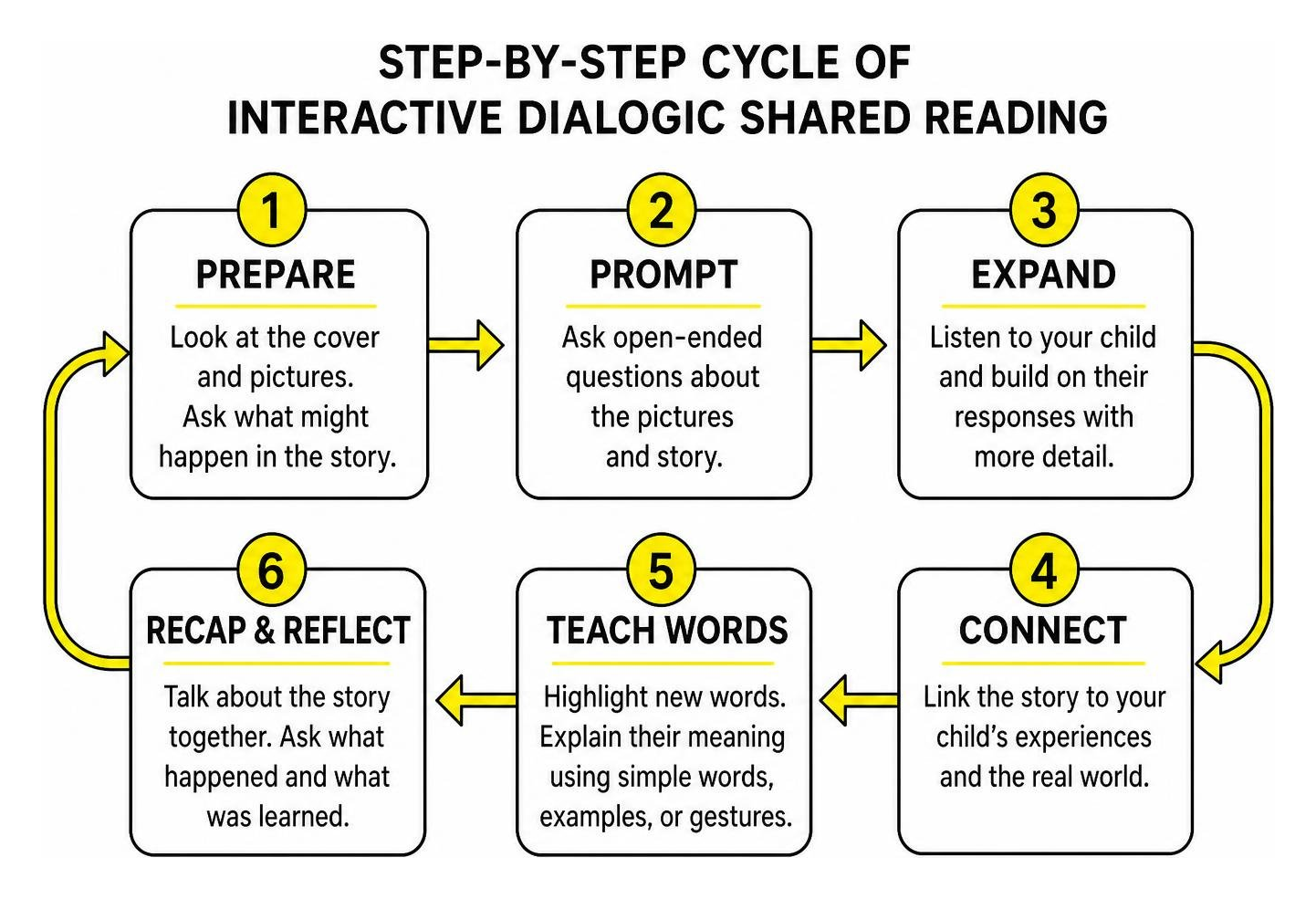
- Prompt Predictive Thinking: Before turning the page, ask: “Look at the rabbit’s face. How do you think he feels right now?”
- Connect Books to Real-Life Experiences: Relate story events to your child’s life: “The character went to the dentist just like we did last Tuesday. Do you remember what the dentist’s chair looked like?”
- Explore Rich, Abstract Words: When encountering uncommon words in text (such as enormous or mysterious), pause to explain their meaning with relatable synonyms, gestures, and vocal inflection. High-quality early childhood frameworks, such as those outlined in the evidence-based oral language resource from early literacy panels, emphasize that regular dialogic reading significantly enhances reading comprehension in later elementary grades.
Speech vs. Language Disorders: Identifying Delays and Seeking Early Help
Parents often wonder whether a child’s communication quirk is a normal developmental variation or a sign that requires targeted support. Distinguishing between speech issues and language issues is the first step toward getting the right assistance.
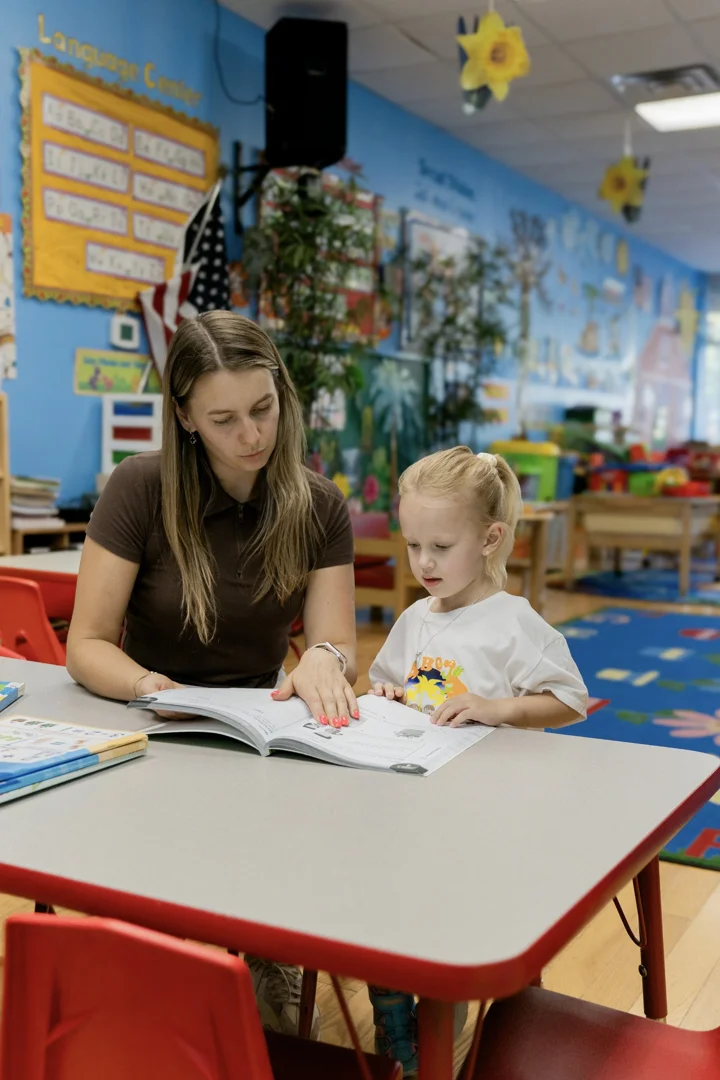
Familiarizing yourself with the practical steps for identifying early speech delay signs gives you clarity on when to monitor and when to seek an evaluation.
Speech Disorders vs. Language Disorders in Early Childhood
While these terms are frequently used interchangeably, they refer to different aspects of communication:
| Feature | Speech Disorders | Language Disorders |
|---|---|---|
| Primary Definition | Difficulty producing the physical sounds of spoken language correctly or fluently. | Difficulty understanding others (receptive) or sharing thoughts and ideas (expressive). |
| Core Areas Affected | Articulation (pronouncing sounds), voice pitch/volume, and fluency (stuttering). | Vocabulary breadth, sentence structure, grammar, understanding directions, and social communication. |
| Common Signs | Substituting sounds past the expected age, omitting sounds, or repeating syllables (e.g., “b-b-banana”). | Using very short sentences, struggling to follow multi-step directions, or difficulty finding words. |
| Typical Example | A child says “tat” instead of “cat” or “wabbit” instead of “rabbit” past the typical developmental age. | A 4-year-old struggles to combine more than two words or cannot answer simple “What?” questions. |
| Primary Focus of Therapy | Oral-motor coordination, sound placement, articulation drills, and speech rhythm techniques. | Vocabulary acquisition, grammatical scaffolding, auditory processing, and conversational discourse. |
When and How to Consult a Pediatric Speech-Language Pathologist
Early intervention can make a transformative difference in a child’s developmental trajectory. You should speak with your pediatrician about a referral to a licensed Speech-Language Pathologist (SLP) if your preschooler shows any of the following signs:
- Does not use at least 3-word sentences consistently by age 3.
- Does not use 4-word sentences or struggles to answer basic “Who?” or “What?” questions by age 4.
- Is difficult for family members to understand at age 3, or is understood less than 90% of the time by unfamiliar listeners at age 4.
- Struggles noticeably to follow simple 2-step directions involving familiar household items.
- Demonstrates frustration, withdrawal, or behavioral challenges when attempting to communicate basic needs.
- Shows a loss of previously acquired speech or social communication skills at any age.
A comprehensive evaluation typically includes hearing assessments, play-based observations, and standardized language scoring tools.
Supporting Multilingual Learners and Managing Media Use
Many children grow up in multilingual environments where they hear multiple languages at home and in the community. Research confirms that supporting a child’s home language does not hinder their ability to learn English. Instead, strong foundations in a home language provide conceptual anchors that facilitate second-language acquisition.
At Fantasy Island Schools for Kids, we support children’s linguistic and cognitive growth through our specialized preschool classrooms, where English is the primary language of instruction alongside dedicated Polish and Ukrainian language support to ensure every child feels understood, valued, and socially confident.
Screen Time vs. Real-World Interaction: Protecting Language Development in Preschool Years
In modern family life, digital media is everywhere. While educational media can introduce interesting concepts, excessive or passive screen time can displace vital conversational turn-taking.
- Prioritize Interactive Communication: Language is acquired best through responsive human interaction. Strive for back-and-forth dialogue where children receive immediate vocal and facial feedback.
- Engage in Co-Viewing: When your child does watch media, watch together. Talk about the storyline, ask questions about what the characters are doing, and relate on-screen events to your child’s real-world play.
- Protect Daily Conversation Routines: Keep meals, car rides, and the hour before bedtime screen-free to make room for spontaneous conversations and storytelling.
Home-School Collaboration for Consistent Communication Growth
When parents and early childhood educators maintain consistent communication strategies, children progress much more rapidly. Teachers can share classroom themes, new vocabulary words, and songs through daily logs or digital portfolios, allowing families to reinforce those concepts at home. Exploring options within a gifted preschool curriculum illustrates how consistent, vocabulary-rich interactions between school and home unlock cognitive potential and build lasting school readiness.
Frequently Asked Questions About Preschool Language Growth
What should a 4-year-old’s speech clarity sound like to unfamiliar adults?
By age 4, people who do not know the child well should be able to understand their speech approximately 90% of the time. While complex sounds like th, r, l, and ch may still be developing, the child’s overall message should be clear in everyday conversational contexts.
Does speaking a native language at home delay English preschool learning?
No. Learning more than one language does not cause speech or language delays. Multilingual children may occasionally mix words from both languages in a single sentence (known as code-mixing), but this is a normal stage of language processing. Their total conceptual vocabulary across both languages typically meets or exceeds that of monolingual peers.
How can parents encourage deeper conversations during everyday routines?
Use natural transition moments—such as grocery shopping, cooking dinner, or driving home—to ask open-ended questions. Pause and give your child at least 5 to 10 seconds of “wait time” to process your question and formulate their thoughts without rushing them.
Conclusion
Nurturing strong communication skills during the preschool years sets the stage for a lifetime of confident learning, reading success, and meaningful social relationships. By combining conversational turn-taking, rich shared reading, and collaborative play, you provide your child with the essential tools needed to thrive.
Located on Chicago’s Northwest Side, Fantasy Island Schools for Kids provides small class sizes, ECE-certified teachers, and a stimulating curriculum featuring twice-weekly Brain Gym and weekly music to support every child’s development. We invite you to schedule a tour and experience our warm, language-rich classrooms firsthand.
References
Feldman HM. “How Young Children Learn Language and Speech..” Pediatrics in review, 2019. PMCID PMC7236655.