
What to Pack for Daycare During Your Toddler’s First Week
Wondering what to pack for daycare? Start with seven essentials: two changes of clothes, diapers or training pants and wipes, a labeled water bottle, a comfort item if allowed, indoor shoes, weather gear, and any required health forms. Ask your child’s teacher what can stay in a cubby, and check whether you need to send feeding supplies. At Fantasy Island Schools for Kids, three meals are cooked on-site each day.
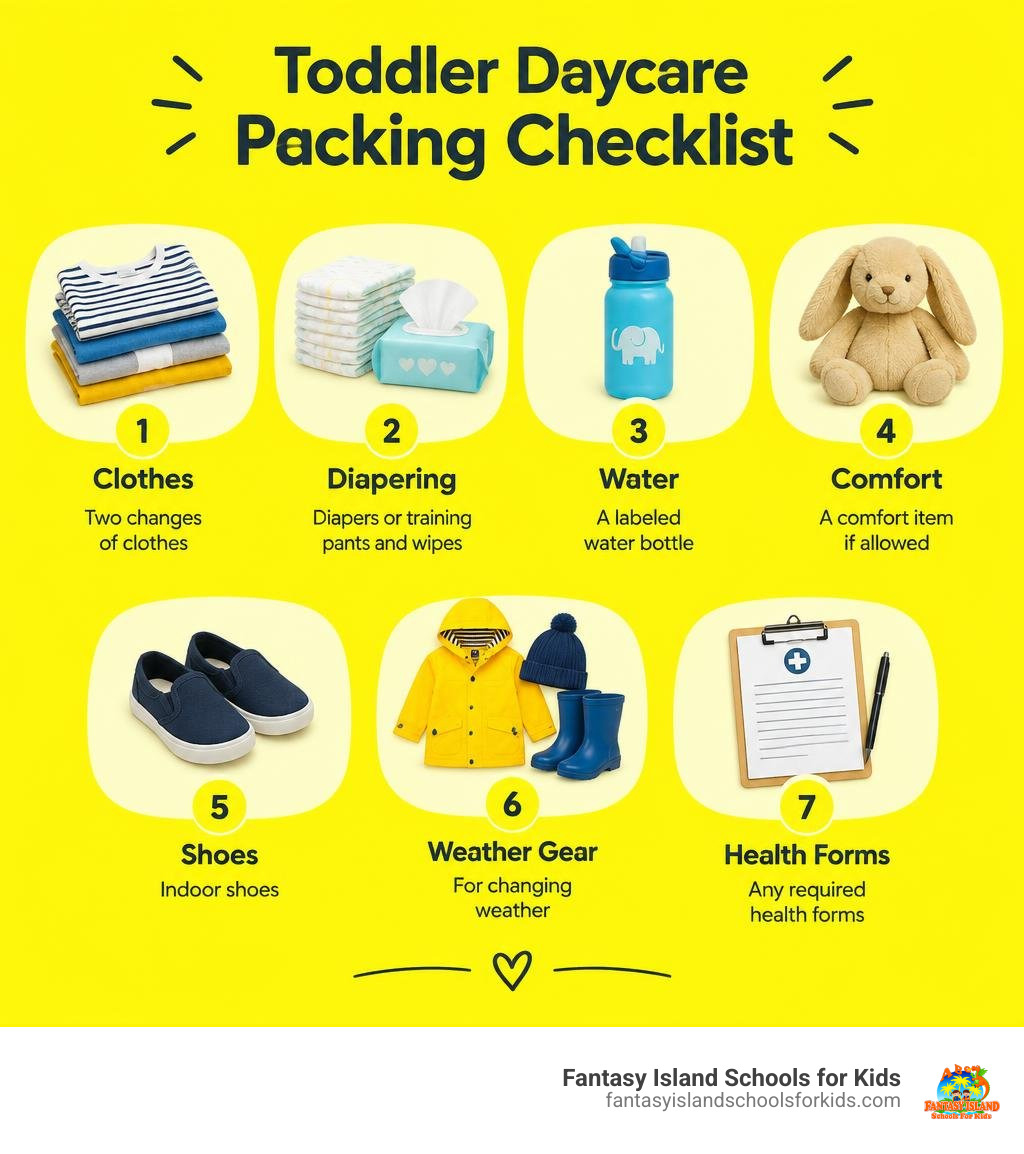
What to Pack for Daycare: The Essential 7-Item Packing List
Starting a toddler program is a major milestone for both you and your child. While the emotional transition takes patience, packing doesn’t have to cause daily morning panic. In our daycare classrooms, we see how the right gear helps toddlers feel secure, comfortable, and ready to explore.
When you prepare your child’s bag, the goal is simple: pack smart rather than packing heavy. Choose a toddler backpack that fits comfortably in a small cubby without overflowing. Following a practical guide to prepare your toddler for daycare helps you establish a smooth routine from day one.
The easiest way to prevent clutter is using a “two-tier” packing method. Some items travel back and forth every day, while others remain securely in your child’s assigned cubby and get restocked as needed.
| Category | Daily Backpack Items | Stay-at-Daycare Cubby Supplies |
|---|---|---|
| Clothing | Soiled clothes wet bag (if returning empty) | 2 complete changes of clothes, extra socks |
| Hydration & Food | Fresh, leak-proof water bottle | Emergency shelf-stable snack (if allowed) |
| Rest & Comfort | Daily comfort item or lovey (if brought daily) | Crib sheet, light nap blanket, family photo |
| Hygiene | Daily medication (handed directly to staff) | Full sleeve of diapers/pull-ups, 2 packs of wipes, cream |
| Footwear & Outerwear | Weather jacket or coat worn at arrival | Non-slip indoor shoes, backup sun hat, rain gear |
1. Two Complete Weather-Appropriate Changes of Clothes
Toddlers learn through hands-on sensory exploration, water play, finger painting, and outdoor discovery. Messes are a healthy sign of active learning, but wet or stained clothing can quickly make a child uncomfortable. Pack at least two full changes of clothes tailored to the current season.
Each backup set should include:
- A soft shirt or long-sleeve top
- Pants or leggings with flexible elastic waistbands
- Two pairs of breathable socks
- Extra training underwear or backup pull-ups
Choose simple, breathable fabrics like cotton or bamboo viscose. Steer clear of complicated buttons, overalls, or belts. Elastic waistbands encourage independence, letting toddlers practice pulling their pants up and down during potty breaks. Always include a reusable waterproof wet bag or gallon zip-top pouch inside the bag. When accidents or messy craft spills happen, educators can seal the damp garments inside to keep the rest of the backpack clean.
2. Diapers, Training Pants, and Hypoallergenic Wipes
If your child is in diapers or navigating potty training, keeping a reliable hygiene stash at school is essential. Toddlers may need several diaper changes during a full day of care.
Most licensed centers ask parents to bring a full sleeve of diapers or pull-ups on Monday morning rather than sending loose diapers daily. Pair this with one or two sealed packs of hypoallergenic, fragrance-free baby wipes.
If your child needs diaper rash barrier ointment, check your center’s medical policy. Many centers require written authorization before staff can apply topical diaper creams, so check your center’s policy and label the container with your child’s full name.
3. Spill-Proof Water Bottle and Feeding Supplies
Staying hydrated throughout an active day of climbing, dancing, and outdoor games keeps your toddler energized. Send a clean, leak-proof water bottle (around 10 to 12 ounces / 350–500 ml) equipped with a covered straw or non-spill spout every morning.
Mealtime policies vary depending on your center. Review standard guidelines on childcare center policies to see what is provided versus what you must bring from home.
If your center requires packed lunches:
- Use an insulated lunchbox with slim freezer packs.
- Choose a bento-style lunch container with separate compartments to keep textures distinct.
- Include an easy-to-clean silicone or fabric bib with a crumb catcher.
- Ensure all food follows local safety rules (such as strict nut-free guidelines).
At our center, we eliminate the daily lunchbox scramble by cooking three fresh, nutritious meals on-site every day, including morning snack, lunch, and afternoon snack.
4. Comfort Items for Rest and Nap Time
Rest time in a new environment can feel intimidating for a two- or three-year-old. Having familiar items from home creates a reassuring bridge between family routines and classroom schedules. Using proven strategies to ease separation anxiety makes nap transitions much smoother.
Helpful soothing items include:
- A small, familiar crib-sized blanket or fitted cot sheet
- A small plush animal or soft lovey (check classroom size limits)
- A backup pacifier with an attached clip in a sanitary case
- A laminated family photo taped inside their cubby
Familiar textures and household scents provide emotional security when your child settles onto their rest mat. Look into expert-approved soothing items for daycare transitions that fit easily into compact storage cubbies without taking up unnecessary space.
5. Indoor Shoes and Non-Slip Footwear
Many high-quality early childhood programs operate a “two-shoe policy.” Children wear durable outdoor shoes on the playground, then switch to clean indoor footwear upon entering the classroom. This routine keeps floor spaces clean for crawling, building, and floor games.
Look for indoor shoes with the following features:
- Flexible, non-slip rubber soles: Provide traction on smooth wooden or linoleum floors.
- Velcro closures: Allow your toddler to practice taking shoes on and off independently.
- Closed toes and heels: Protect active little toes during physical play.
- Breathable uppers: Keep feet cool and comfortable throughout the day.
Avoid flip-flops, crocs, or open-toe sandals, which slip off easily and pose tripping hazards on indoor climbing structures.
6. Seasonal Outdoor Gear and Weather Protection
Outdoor play is a vital part of early childhood development, supporting gross motor skills, sensory discovery, and emotional regulation. In quality programs, children head outside daily across every season whenever weather conditions allow.
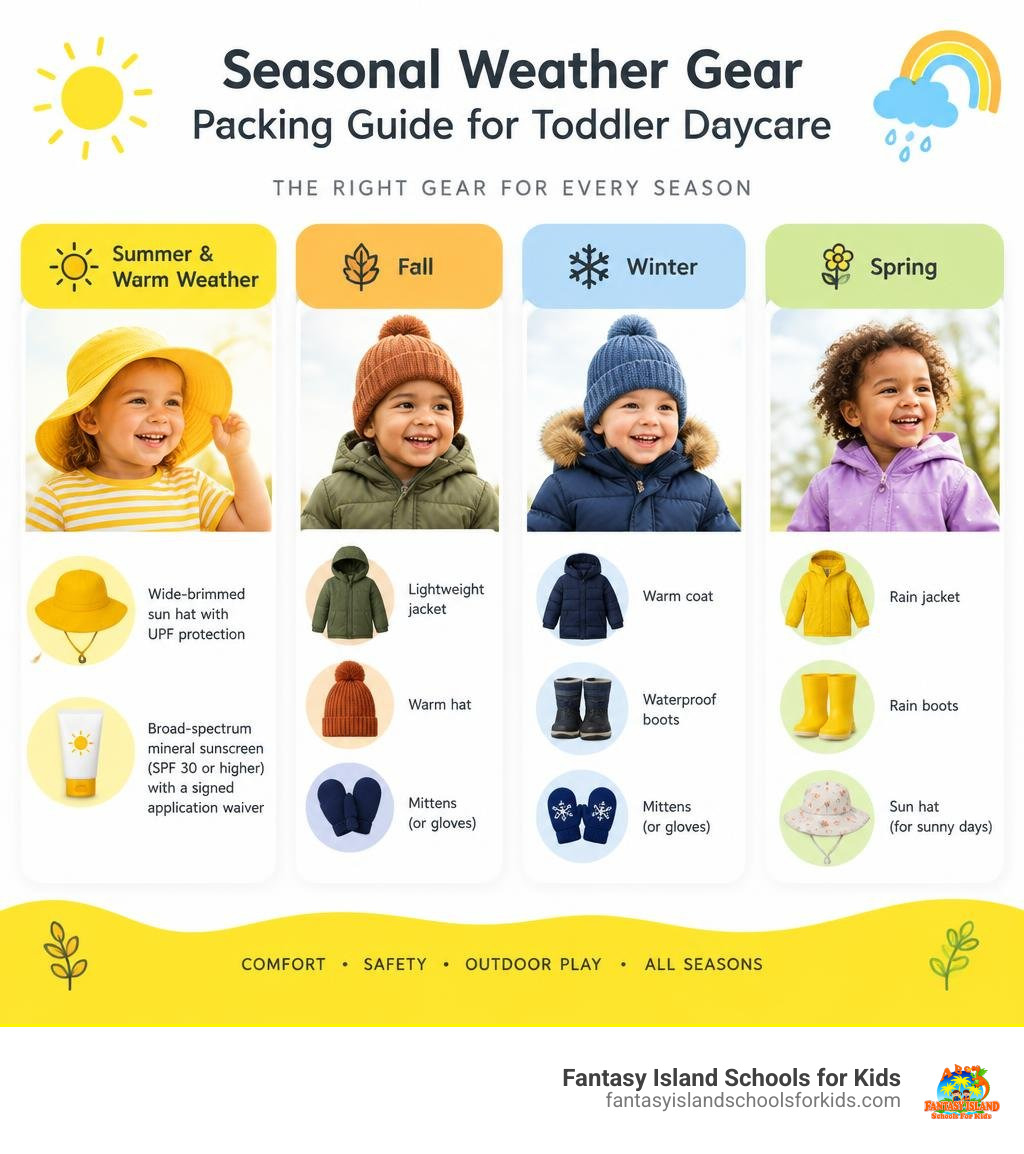
Make sure your child’s cubby is stocked according to the time of year:
Summer & Warm Weather
- Wide-brimmed sun hat with UPF protection
- Broad-spectrum mineral sunscreen (SPF 30 or higher) with a signed application waiver
- Lightweight, breathable clothing and an extra pair of cotton socks
Spring & Fall
- Waterproof rain jacket or hooded mud suit
- Easy-on rubber rain boots
- Lightweight knit sweater or zip-up fleece for chilly mornings
Winter & Cold Weather
- Insulated waterproof winter coat and snow bibs or snow pants
- Water-resistant snow boots with sturdy grip
- Two pairs of waterproof mittens (mittens work much better than separated gloves for toddlers)
- A snug, fleece-lined winter beanie and neck warmer (avoid long trailing scarves)
7. Labeled Emergency Health Items and Medical Forms
Your child’s health and safety remain the top priority throughout the school day. Before the first morning drop-off, ensure the administrative office has complete, up-to-date health records, emergency contacts, and state-mandated immunization documents.
If your toddler requires life-saving allergy treatments (like an epinephrine auto-injector) or daily prescription medications:
- Provide an individualized Allergy Action Plan signed by your pediatrician.
- Submit signed medication administration forms.
- Keep medications in their original prescription packaging with the pharmacy label clearly showing your child’s full legal name and exact dosage.
- Hand all medications directly to an educator or administrator; never leave medications, vitamin gummies, or fever reducers loose in a toddler’s backpack.
How to Organize and Restock the Daycare Bag Efficiently
A chaotic morning search for lost socks or water bottles creates stress for both parent and child. Building an organized system at home turns daycare preparation into a quick, repeatable five-minute habit.
Try using color-coded zippered pouches inside the main bag:
- Blue pouch: Diapers, wipes, and diaper cream
- Green pouch: Full spare clothing changes and extra socks
- Yellow pouch: Nap accessories and comfort items
Aligning your home routine with classroom expectations sets your child up for success. Research and resources from university early learning programs highlight how consistent daily schedules help young children feel grounded and secure.
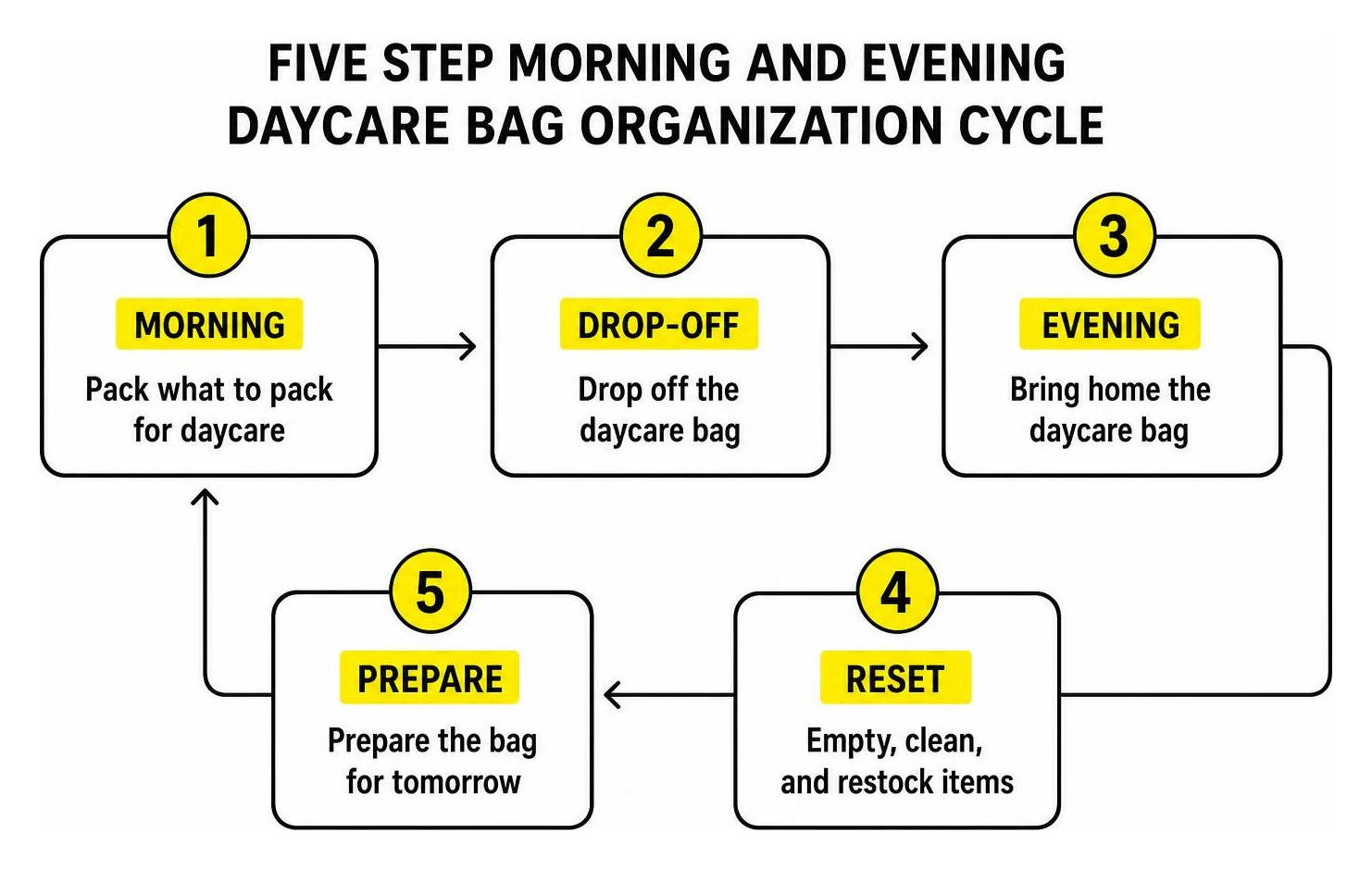
What to Pack for Daycare in the Daily Go-Bag
Your daily go-bag handles items that travel back and forth each day:
- Filled water bottle
- Soiled clothing wet bag (to empty and clean each evening)
- Any daily communication log or center folder
- Special comfort lovey (if your child sleeps with it at home each night)
Seasonal Gear and Outdoor Additions: What to Pack for Daycare Year-Round
Every Friday afternoon, peek into your child’s cubby to perform a quick inventory check. Confirm that spare clothing still fits properly, swap out lightweight summer shirts for warm fall layers when temperatures shift, and restock diaper supplies so you never get caught empty-handed on Monday morning.
Labeling Guidelines and What to Leave at Home
In a classroom with active toddlers, identical water bottles, shoes, and jacket styles can easily get mixed up. Labeling every single item helps prevent mix-ups in a busy classroom.
Invest in durable, waterproof stick-on labels or custom iron-on name tags for:
- Jackets, coats, and snowsuits (label inner collar tags)
- Hats, mittens, and boots
- Water bottle bases and lids
- Extra clothing tags, socks, and indoor shoes
- Nap blankets and sheet bags
What to Leave at Home
To maintain classroom harmony, safety, and licensing compliance, leave these items out of your child’s backpack:
- Personal toys and electronics: They create sharing disputes, cause distress if broken, and get lost easily.
- Candy, gum, or unapproved snacks: Loose food can cause severe allergic reactions for classmates.
- Jewelry, coins, or small hair clips: These present serious choking hazards for young toddlers.
- Glass containers: Always use durable stainless steel or BPA-free plastic.
Frequently Asked Questions About Daycare Packing
How many outfits should I pack for my toddler each day?
Keep at least two complete outfit changes in your toddler’s classroom cubby. Each set should feature a shirt, elastic-waist pants, underwear or training pants, and socks. If your child is actively potty training or loves messy water play, consider leaving three pairs of pants and extra socks on hand.
Should the daycare bag stay at school or come home daily?
Most families leave bulk supplies—such as extra outfits, diaper sleeves, wipes, indoor shoes, and nap bedding—in the child’s cubby throughout the week. Only the daily travel bag (containing the water bottle, daily folder, and soiled clothes pouch) travels back and forth each day. Bedding and outerwear typically come home on Fridays for washing.
What items are strictly prohibited in daycare backpacks?
Prohibited items include over-the-counter medications, loose vitamins, sharp objects, personal toys from home, glass food containers, candy, and nuts. Any required prescription medication must be delivered directly to the administrative staff alongside completed medical forms rather than stored in a child’s backpack.
Conclusion
Packing for your child’s first week of daycare doesn’t need to feel overwhelming. By focusing on these seven core essentials, labeling every item clearly, and setting up an easy two-bag organization system, you can eliminate morning stress and help your toddler step into the classroom with confidence.
At Fantasy Island Schools for Kids, we serve families across Chicago’s Northwest Side, including Norwood Park, Edison Park, and Portage Park, with licensed, engaging programs for children ages 2 to 6. Our small class sizes, experienced educators, and on-site cooked meals ensure your little one has everything they need for a joyful day of learning. Schedule a tour today to see our classrooms in action and learn more about our daily routines.