

Understanding the Spectrum of Play-Based Learning vs. Direct Instruction
Play-based learning strengthens cognitive development, early literacy, spatial reasoning, self-regulation, and social-emotional resilience in young children. Rather than relying on passive lectures or repetitive worksheets, children build foundational neural connections through dynamic, tactile, and interactive engagement that connects academic concepts with joyful exploration.
Play-based learning exists along an instructional continuum that balances child agency with intentional teacher scaffolding. The spectrum ranges from self-directed free play to structured direct instruction:
| Play Modality | Child Agency | Adult Involvement | Learning Objective Focus | Primary Developmental Output |
|---|---|---|---|---|
| Free Play | High (Entirely child-led) | Minimal (Observant, supportive environment) | Open-ended exploration | Self-regulation, imagination, peer negotiation |
| Guided Play | High (Child-directed actions) | Moderate to High (Scaffolding, intentional prompts) | Targeted academic & cognitive goals | Spatial reasoning, vocabulary, conceptual math |
| Playful Games | Moderate (Rules-based structure) | Moderate (Co-player, referee, guide) | Specific discrete academic benchmarks | Numerical line sense, turn-taking, executive function |
| Direct Instruction | Low (Adult-directed tasks) | High (Explicit modeling and drill) | Standardized, rote content delivery | Discrete skill memorization (e.g., phonemic drills) |
Cognitive scientists investigating how human brains acquire knowledge emphasize that learning environments must be joyful, meaningful, actively engaging, iterative, and socially interactive. When exploring modern research on human brain learning and playful pedagogy, developmental experts highlight that active agency combined with intentional teacher guidance produces far deeper comprehension than traditional rote memorization.

Free Play vs. Guided Play: The Scaffolding Spectrum
While both free play and guided play are essential elements of a well-rounded early childhood setting, they achieve distinct developmental outcomes. In free play, children choose the materials, establish their own narrative themes, and navigate peer interactions independently. This autonomy builds intrinsic motivation, stress-coping strategies, and divergent thinking.
In guided play, educators introduce subtle, purposeful constraints or intentional prompts while preserving child autonomy—an approach often compared to “bumper bowling.” The teacher sets the pedagogical boundaries (the bumpers) so that the child’s self-directed experimentation rolls toward a meaningful learning destination without dictating the precise path.
For instance, rather than lecturing preschoolers on geometry, an educator might introduce wooden blueprint templates into the block center and ask open-ended questions like, “What shapes can we combine to build a bridge wide enough for this truck?” Studies show that children acquire target vocabulary, geometric concepts, and spatial reasoning significantly faster during guided play interventions than during unguided free play alone or passive direct instruction.
Educational Games and Structured Rule-Based Play
Structured games with predetermined rules form another vital component of playful pedagogy. Games introduce structured constraints that require children to practice cognitive flexibility, impulse control, and working memory—the core pillars of executive function.
Board games featuring linear numerical tracks (such as moving game pieces along numbered sequences from 1 to 20) have been empirically proven to enhance early mathematical understanding. Playing linear number games reinforces counting-on strategies and mental number-line mapping far more effectively than playing circular or color-coded board games.
Tracking these evolving cognitive milestones is essential during early childhood. Parents looking to understand foundational reasoning markers can consult The Definitive Guide to Toddler Cognitive Development Milestones to see how rule-based engagement and problem-solving emerge naturally across ages 2 through 6.
Core Play Based Learning Benefits Across Key Developmental Domains
A comprehensive empirical synthesis on learning through play examining more than 300 studies across 40 countries demonstrated a direct link between playful learning pedagogies and children’s holistic skill development. Rather than treating physical, social, emotional, and cognitive growth as isolated tracks, play-based methodologies weave these areas together, reinforcing executive functioning and 21st-century competencies like collaboration, communication, and critical thinking.
Cognitive and Academic Play Based Learning Benefits
Play-based learning develops foundational pre-academic skills by embedding literacy, STEM, and inquiry-based problem-solving into authentic, experiential contexts:
- Early Literacy & Vocabulary: Sociodramatic play centers (such as pretend veterinary clinics, restaurants, or market stalls) require children to construct narratives, read symbolic signs, and write menus or patient charts. Children participating in rich dramatic play frequently demonstrate advanced grammar, receptive vocabulary, and narrative comprehension essential for later reading fluency.
- Spatial Reasoning & Pre-Math Foundations: Tangible manipulation of loose parts, unit blocks, and measuring cups enables children to grasp volume, symmetry, and geometric properties through physical trial and error. Longitudinal studies show that constructive block play in early childhood is predictive of higher mathematical achievement in middle and high school.
- Hypothesis Testing & Scientific Inquiry: When building ramps, mixing colors, or observing objects in sensory water tables, children intuitively adopt the scientific method—forming predictions, experiencing productive failure, and refining their approach.
For advanced learners who need extra stimulation, open-ended playful challenges provide natural differentiation. Educators can incorporate 10 Creative Enrichment Activities for Gifted Preschoolers to expand analytical reasoning through multi-layered storytelling, pattern challenges, and complex engineering prompts.
Social-Emotional and Physical Play Based Learning Benefits
Social-emotional maturity and physical motor coordination are fundamental prerequisites for classroom focus and academic success:
- Emotional Self-Regulation: Play gives children a safe space to process big emotions, navigate minor frustrations, and practice delay of gratification. Experiencing manageable frustration when a tower falls and retrying builds genuine emotional resilience.
- Peer Negotiation and Empathy: Socio-dramatic role-play requires children to step into different perspectives, negotiate shared rules, and resolve interpersonal conflicts collaboratively. Research indicates that frequent peer play directly correlates with higher social competence and reduced aggression.
- Motor Skill Refinement: Multi-sensory exploration and gross motor play—such as navigating indoor obstacle courses, sensory balancing beams, and manipulating playdough or tweezers—strengthen core posture, vestibular processing, and fine-motor pencil grip.
Understanding these milestones helps parents identify natural growth stages. Reviewing resources like All About Social-Emotional Development in Toddlers Key Milestones can provide useful guidance on how peer play nurtures empathy and self-control.
Implementing Play-Based Learning in Classroom and Home Environments
Transitioning from abstract theory to daily classroom practice requires deliberate environmental design, ongoing observational assessment, and alignment with state standards. In Illinois, early childhood education frameworks have placed increasing focus on play-based methodologies. The state legislature and educational bodies have emphasized explicit definitions of playful learning in kindergarten to ensure developmental appropriateness, as highlighted in recent Illinois play-based learning policy updates.
Classroom Scaffolding and Authentic Milestone Assessment
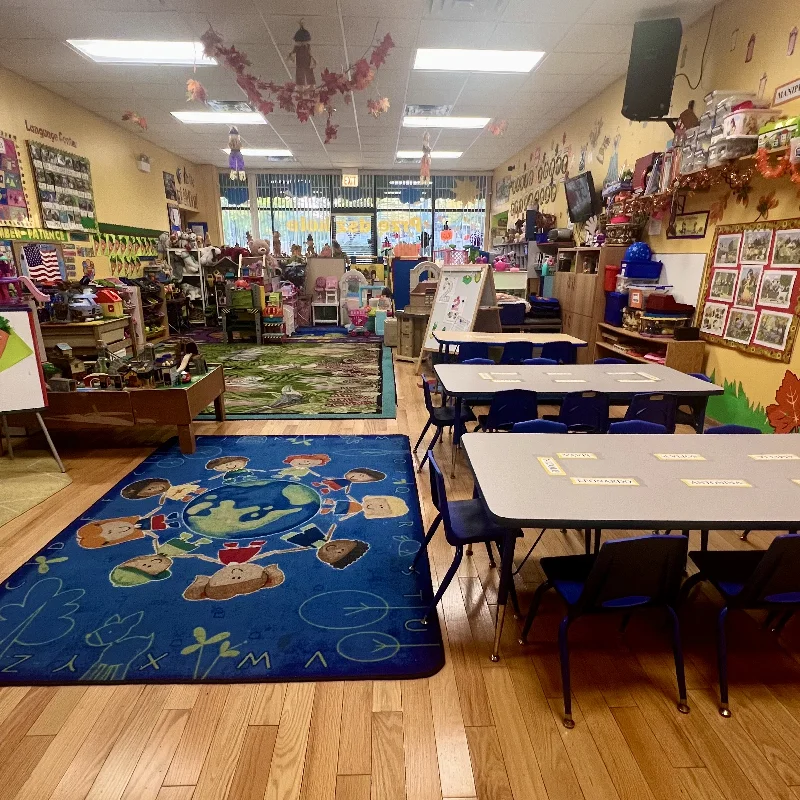
A high-quality play-based classroom is not a chaotic free-for-all; it is a structured, resource-rich environment divided into intentional thematic discovery centers:
- Socio-Dramatic Zones: Equipped with culturally responsive props, literacy tools (notepads, clipboards), and role-playing items that encourage collaborative narrative development.
- Constructive Engineering Centers: Stocked with unit blocks, natural loose parts, blueprints, and architectural measuring tools.
- Sensory & Scientific Discovery Tables: Featuring tactile bins (kinetic sand, water basins, organic grains) paired with measuring cylinders, pipettes, and classification trays.
Because learning takes place through active exploration rather than paper worksheets, educators utilize authentic observational assessment. Teachers capture milestone progress through detailed anecdotal records, developmental rubrics, photographic portfolios, and transcripts of student problem-solving discussions.
When parents explore early learning programs, evaluating how centers balance curriculum standards with active play is crucial. For families weighing various classroom styles, Navigating Full-Day Preschool Options Across Chicago Neighborhoods offers practical guidance on evaluating program quality and safety.
Everyday Play-Based Strategies for Parents and Caregivers
Parents can easily reinforce play-based learning principles at home without expensive educational kits:
- Transform Daily Chores into Math Games: Have your child sort laundry by color, match sock pairs, or count out forks while setting the dinner table to practice classification and one-to-one number correspondence.
- Create Tactile Sensory Bins: Fill a simple shallow container with dry rice, dried beans, or water and measuring spoons. Prompt your child with descriptive questions (“How many small scoops does it take to fill the big bowl?”) to build descriptive vocabulary and fine motor coordination.
- Encourage Open-Ended Building: Provide everyday recyclable materials like cardboard boxes, paper towel tubes, and masking tape, inviting your child to invent imaginative structures through trial and error.
- Follow Their Narrative Lead: During pretend play, step in as a supporting character rather than directing the scene. Ask curious questions (“The spaceship landed on a new planet—what should our crew explore first?”) to expand conversational dialogue and narrative depth.
Inclusive and Culturally Responsive Play for Diverse Learners
Play is an equitable pedagogical bridge that accommodates children of all developmental profiles, learning styles, and linguistic backgrounds. Because play relies on tangible objects, expressive movement, and visual modeling, it lowers the communicative barrier for dual-language learners and neurodivergent children.
In inclusive early childhood environments, playful learning is adapted to support diverse needs through targeted strategies:
- Neurodiversity and Sensory Accommodations: For children with sensory processing differences or autism spectrum profiles, structured gross motor play, visual choice schedules, and specialized sensory spaces provide regulating inputs that encourage peer engagement. gross motor toy play significantly enhances vocalization and social interactions between children and caregivers.
- Therapeutic Play Models: Incorporating child-led relational models (such as Floortime techniques and Integrated Play Groups) allows educators to use preferred toys to gently expand shared attention and interactive communication.
- Culturally Responsive Dramatic Centers: Providing authentic props, multicultural literature, and familiar domestic tools that reflect children’s home lives validates their cultural identity and deepens sociodramatic engagement.
- Multilingual Immersion through Play: Early bilingual exposure flourishes when children acquire new vocabulary naturally in context. In our dual-language English and Polish programs, children learn thematic vocabulary while cooking pretend meals, constructing block towers, or singing during group music sessions. Immersing children in play-based language routines strengthens cognitive flexibility, auditory processing, and cross-cultural empathy without the stress of rigid translation drills.
Frequently Asked Questions about Play-Based Learning
Is play-based learning rigorous enough to prepare children for kindergarten and elementary school?
Yes. Research consistently shows that children enrolled in high-quality play-based preschools enter kindergarten with strong social-emotional self-regulation, robust vocabulary, and advanced problem-solving capabilities. A comprehensive meta-analysis of early childhood instruction revealed that guided play was more effective than direct instruction for teaching early academic concepts to children younger than eight. By fostering a lifelong curiosity and intrinsic motivation to learn, play-based programs prepare children for sustained academic success throughout elementary school and beyond.
How do teachers evaluate a child’s academic progress without worksheets?
Educators evaluate student development using authentic, continuous observational assessment. Rather than relying on rigid, one-size-fits-all worksheets that only capture rote memorization, teachers document children’s real-time problem-solving, language use, and fine motor manipulation. Teachers compile comprehensive student portfolios containing photo documentation of constructive projects, recorded transcripts of peer negotiations, work samples, and developmental checklists aligned with state early learning benchmarks.
What is the primary difference between guided play and unstructured free play?
The primary distinction lies in the degree of adult scaffolding and intentionality. Free play is entirely initiated and directed by the child with no preset learning target, allowing for open-ended creativity and emotional processing. Guided play preserves the child’s active agency and choices while an educator intentionally arranges the environment, provides pedagogical materials, and asks open-ended, probing questions to guide the child toward specific cognitive, mathematical, or linguistic discoveries.
Conclusion
Early childhood education sets the foundation for a child’s lifelong relationship with learning. Far from being a frivolous break from academic study, play is the primary vehicle through which developing brains build critical thinking, resilience, social empathy, and conceptual mastery. When children are encouraged to question, tinker, collaborate, and discover within an intentional, supportive environment, learning becomes an intrinsically joyful adventure.
At Fantasy Island Schools for Kids, founded in 2009 by Beata Bielic and located at 6100 N Milwaukee Ave, Chicago, IL 60646, our curriculum is designed to help young learners thrive across all developmental areas. Serving children ages 2 to 6 with flexible full-time and part-time enrollment options, we operate Monday through Friday from 7:00 AM to 6:00 PM.
We proudly support families throughout Chicago’s Northwest Side and nearby suburbs—including Norwood Park, Edison Park, Gladstone Park, Jefferson Park, Sauganash, Edgebrook, Portage Park, Niles, Park Ridge, Skokie, Norridge, and Harwood Heights. Our comprehensive tuition (approximately $300–$400 per week) includes freshly cooked on-site meals, weekly music instruction, our specialized Gifted Enrichment Program, and multilingual Polish-language immersion in our multi-sensory facility. To ensure quality early education remains accessible, we proudly accept CCAP (Illinois Child Care Assistance Program) and Illinois Action for Children.
Parents frequently tell us how our balanced, joyful environment helps their children transition smoothly into elementary school. We invite you to explore enrollment at Fantasy Island Schools for Kids and partner with our certified early childhood educators to give your child an inspiring, play-filled start.
