

Understanding Separation Anxiety at Daycare Drop Off: Stages and Triggers
You can turn tearful daycare drop-offs into smooth goodbyes by establishing a predictable morning routine, using a brief and consistent goodbye ritual, and making a confident hand-off to your child’s teacher. These small, steady steps help your child feel safe and learn that separations are temporary.
Separation anxiety is a natural, healthy developmental stage that reflects a secure attachment between a child and their primary caregiver. When young children protest departures, their brains are responding to a temporary disruption in their safe base. According to early childhood research published by the National Association for the Education of Young Children (NAEYC), difficult goodbyes often peak as toddlers navigate emerging independence alongside their deep need for caregiver reassurance.
In early childhood, the brain’s stress response can cause cortisol levels to rise during transitions. Young children do not yet have fully developed self-regulation skills, so they rely on familiar adults to co-regulate their emotions. When parents provide a steady, predictable departure, children learn that brief separations are safe and that reunions always follow.
Why Separation Anxiety at Daycare Drop Off Peaks in Toddlers and Preschoolers
Signs of separation distress can begin as early as 6 to 9 months, coinciding with the cognitive emergence of object permanence—the understanding that people still exist even when out of sight. A prominent peak often occurs around 18 months, when toddlers become fiercely independent yet acutely aware of their physical distance from parents.
Between ages 2 and 4, children entering a daycare or early learning setting may experience secondary waves of separation anxiety. During these preschool years, children develop active imaginations and deeper awareness of social dynamics, which can temporarily heighten morning hesitation. Most children outgrow standard separation distress by age 3 to 5 as their language, cognitive mapping, and coping skills expand.
Common Environmental and Routine Triggers
While developmental milestones establish the baseline for separation distress, daily environmental factors can amplify morning tears:
- Rushed Mornings: Frantic departures rob children of the emotional runway they need to transition between home and school.
- Physical Depletion: Overtiredness, minor illnesses, or skipped breakfasts lower a toddler’s emotional threshold for handling change.
- Sensory Overload: Busy hallways, loud voices, and bustling entryways can overwhelm sensitive sensory systems.
- Family Transitions: Events such as a new baby, moving homes, or changes in family schedules frequently trigger temporary separation regressions.
Guidance from UNICEF Parenting highlights that managing external stressors and maintaining predictable routines significantly reduces a child’s vulnerability to drop-off distress.
Proven Morning Routines: Creating Smooth and Tear-Free Goodbyes
A calm drop-off begins long before arriving at the classroom door. Establishing practical toddler preparation routines at home creates a predictable bridge between family time and the school day.
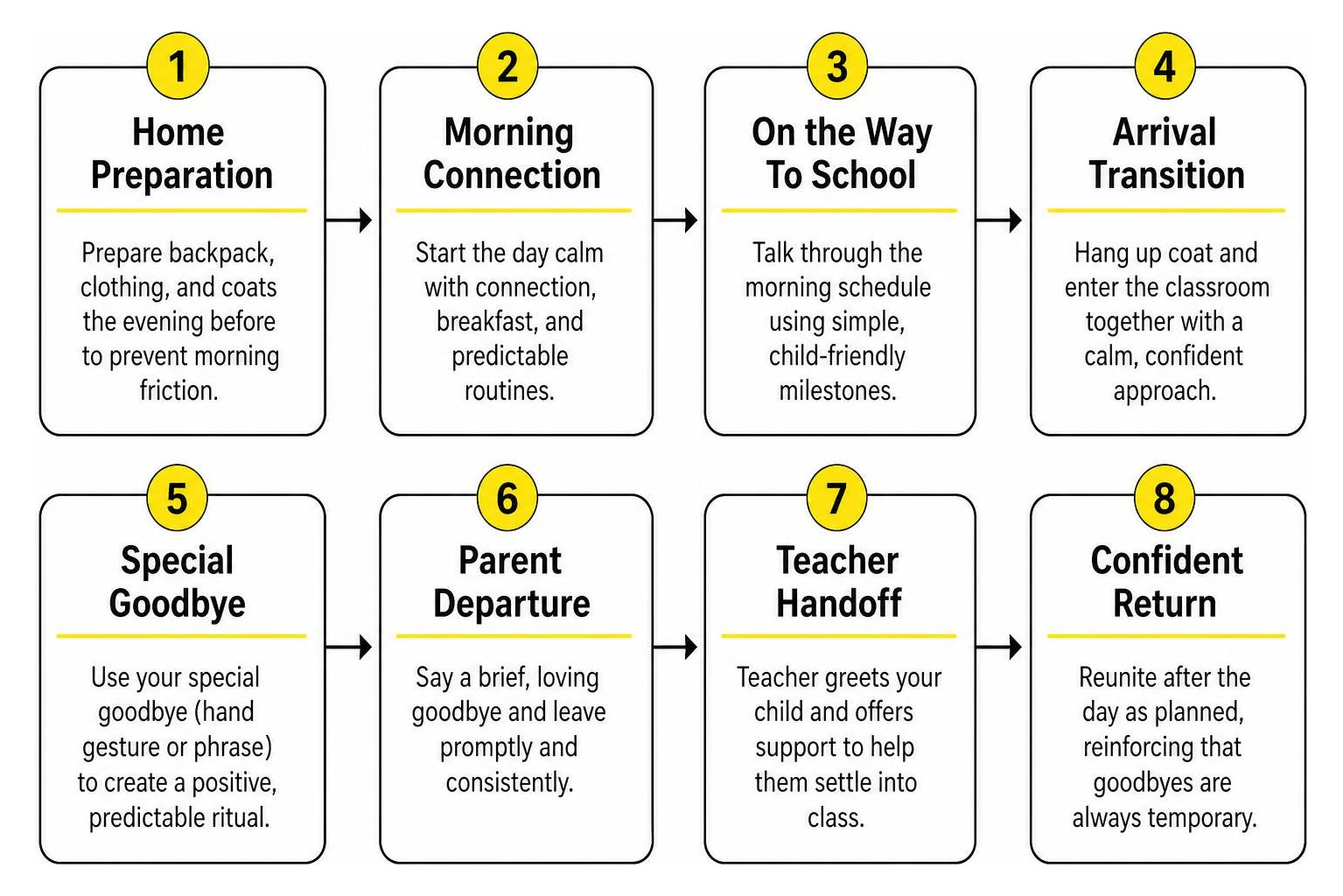
Preparing backpacks, clothing, and coats the evening before prevents morning friction. During the drive or walk to school, talk through the morning schedule using child-friendly milestones: “First we will hang up your coat, then we will do our special high-five, and I will see you right after afternoon snack time.”
Practical Techniques to Ease Separation Anxiety at Daycare Drop Off
When you arrive, maintaining a calm, confident posture is essential. Children constantly look to their parents’ facial expressions and body language to gauge whether an environment is safe. Applying tested strategies to help your child with separation anxiety keeps departures smooth and positive:
- Keep Farewells Loving and Brief: Lingering at the door or returning for “just one more hug” prolongs emotional suspense and increases anxiety.
- Use Consistent Language: Stick to the same short parting phrase every day, such as “I love you, you are safe, and I will be back after naptime.”
- Perform a Clear Physical Hand-Off: Walk your child directly to the educator, exchange your parting phrase, and step away so the teacher can engage them in an activity.
The Role of Goodbye Rituals and Comfort Objects
A goodbye ritual gives your child a predictable role in the departure process. Rituals transform a moment of potential loss into a familiar game. Effective rituals include:
- A special sequence like a high-five, a silly handshake, and a nose boop.
- A pocket-sized laminated family photo the child can keep in their cubby.
- A small transitional comfort object, such as a favorite soft toy or small blanket that carries familiar scents from home.
- A shared “matching sticker” or a drawn heart on both your wrist and your child’s wrist to serve as a tangible reminder of your connection.
Why Parents Should Never Sneak Away
When a child is momentarily engaged with a toy or teacher, parents may feel tempted to slip out quietly to avoid tears. While this may spare parents temporary discomfort, sneaking away undermines your child’s sense of security.
When children look up and realize a parent has vanished without warning, it can foster mistrust and hypervigilance during future drop-offs. A clear, honest goodbye—even if accompanied by brief tears—teaches your child that you will always announce your departure and, most importantly, you will always return.
Building Independence and Partnering with Daycare Staff
Easing drop-off transitions works best as a collaborative partnership between parents and early childhood educators. In high-quality preschool environments, teachers are skilled in co-regulation and attachment-building techniques that help children find comfort quickly.
Working in Harmony with Early Childhood Educators
Communicate openly with your child’s classroom teachers about their interests, comfort cues, and any morning challenges. When teachers know what topics excite your child, they can immediately redirect their focus upon arrival:
- Share morning updates quickly: “Leo slept a bit late today, but he is excited to build with blocks.”
- Allow the educator to step in and offer physical comfort or engaging materials during the handoff.
- Ask educators for objective feedback regarding how quickly your child settles after you leave. In most cases, tears resolve within three to five minutes once the departure is complete.
Practicing Separations and Fostering Autonomy at Home
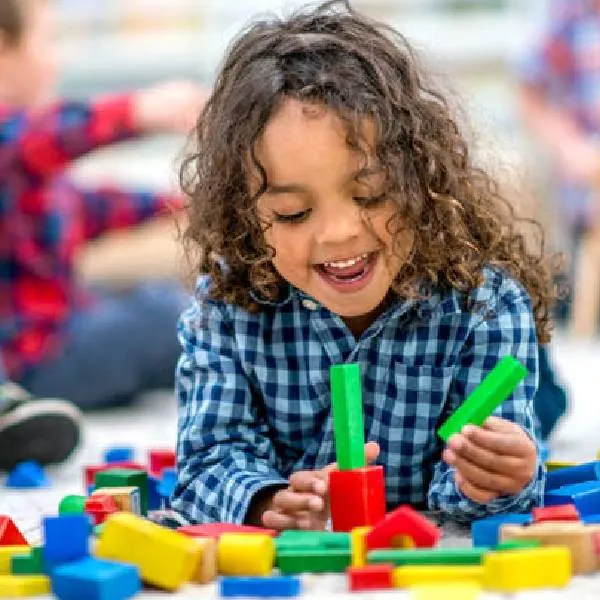
Building emotional resilience happens through everyday moments at home. Practicing autonomy helps children realize they are capable individuals even when parents are in another room:
- Independent Play Windows: Encourage your child to play independently with puzzles or blocks for 10 to 15 minutes while you work nearby.
- Low-Stakes Separations: Practice short departures by leaving your child with a trusted relative or babysitter for brief errands before school routines begin.
- Role-Playing Games: Use stuffed animals to act out the daycare morning routine, demonstrating how the toy character says goodbye, plays with friends, and enjoys a happy reunion.
- Praise Everyday Autonomy: Acknowledge small acts of independence, such as putting on shoes or carrying their own small backpack, with warm, specific encouragement.
Normal Separation Distress vs. Separation Anxiety Disorder
It is completely normal for young children to show emotional distress during departures. However, clinical separation anxiety disorder affects approximately 1% to 4% of the pediatric population, as detailed by the Mayo Clinic.
Understanding the differences between typical developmental distress and persistent clinical challenges helps parents know when extra support may be beneficial:
| Characteristic | Typical Developmental Separation Distress | Potential Separation Anxiety Disorder |
|---|---|---|
| Duration of Crying | Resolves within 5–10 minutes after parent departs. | Crying or panic persists inconsolably for hours throughout the day. |
| Classroom Engagement | Engages happily in play, snacks, and activities once settled. | Remains withdrawn, constantly checks doors/windows, and refuses to participate. |
| Physical Symptoms | Occasional reluctance; complaints resolve once engaged. | Frequent, debilitating complaints (severe stomachaches, vomiting, headaches). |
| Sleep Patterns | Normal bedtime routines with occasional developmental wakings. | Persistent, severe nightmares about abandonment or refusal to sleep away from parents. |
| Timeline | Improves over 2–4 weeks as routines become familiar. | Persists with high severity for more than 4–6 weeks without improvement. |
If distress significantly interferes with daily functioning across multiple settings for over a month, consulting your pediatrician or a family counselor can provide tailored developmental strategies.
Frequently Asked Questions About Drop-Off Anxiety
Explore our FAQ section below for quick answers to common parent concerns:
How Long Does Normal Daycare Drop-Off Crying Usually Last?
For most children entering a new classroom, crying at drop-off resolves within 5 to 10 minutes after the parent leaves. Over the course of two to four weeks of consistent, predictable drop-offs, the morning tears typically decrease until goodbyes become cheerful and smooth.
What Should I Do If My Child Starts Crying Again After Weeks of Calm Drop-Offs?
Drop-off regressions are very common after long weekends, family vacations, illnesses, or developmental leaps. Reassure your child with extra warmth at home, validate their feelings, and strictly maintain your short, consistent goodbye routine at school to rebuild their sense of predictability.
How Can I Manage My Own Guilt and Anxiety During Morning Departures?
Children are exceptionally perceptive and mirror their parents’ emotional states. Take a slow, grounding breath before stepping into the school, remind yourself that healthy separations foster lifelong independence, and establish a quick check-in protocol with your child’s teachers so you can receive reassuring updates during the day.
Conclusion
Transforming tearful mornings into confident goodbyes is an achievable journey built on small, consistent steps. When you establish predictable home routines, maintain warm and concise departures, and trust educators to comfort your child, you equip your little one with essential emotional resilience.
At Fantasy Island Schools for Kids, serving families on Chicago’s Northwest Side, we understand the delicate nature of morning transitions. Our ECE-certified teachers, small class sizes, and nurturing classroom environments ensure that every child receives attentive, loving care from the moment they arrive. If you would like to experience our welcoming community firsthand, we invite you to schedule a tour and see how we support children every day.