

Preschool to Kindergarten Transition Tips That Build Confidence
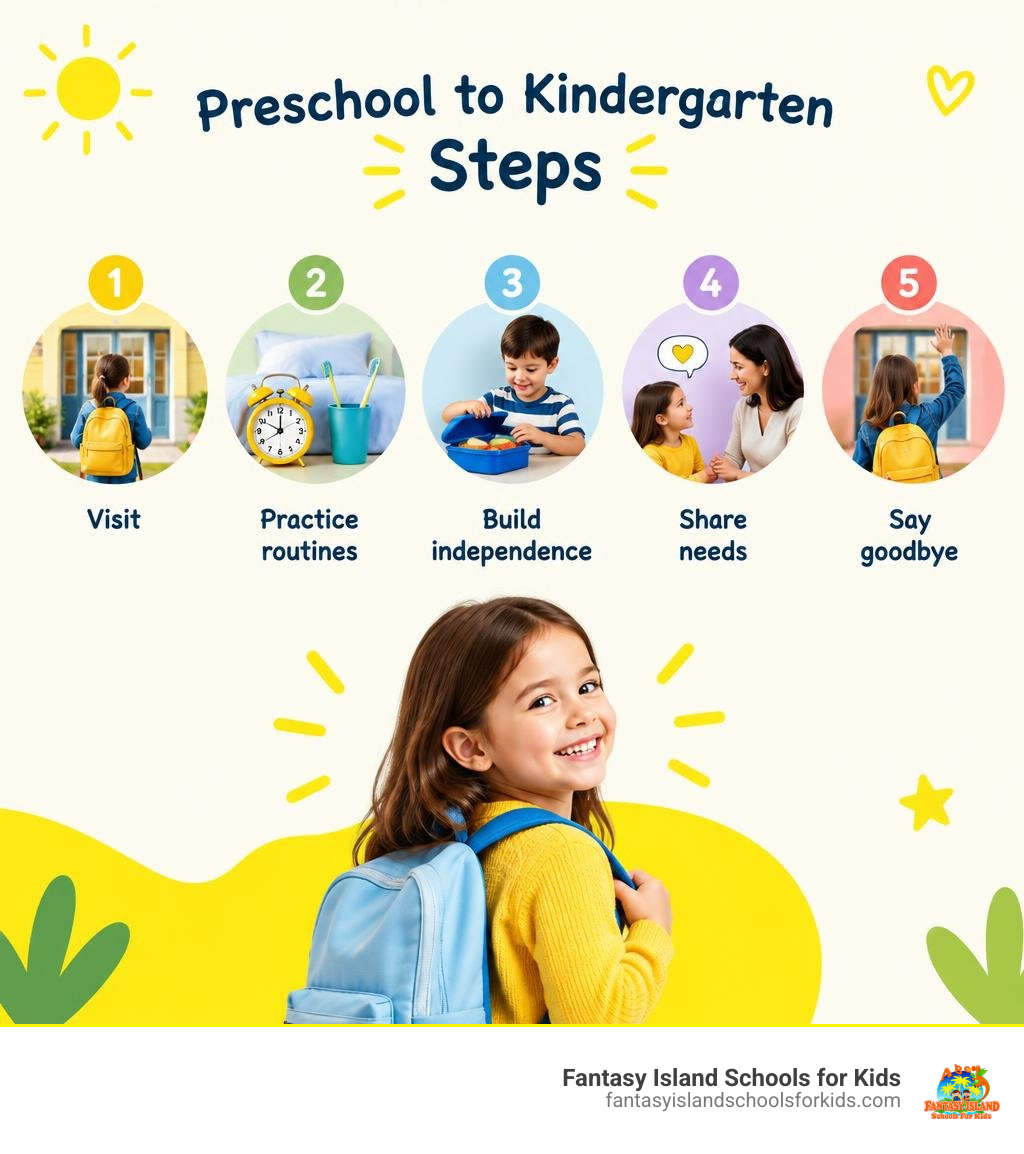
The most useful preschool to kindergarten transition tips are simple: visit the new school if you can, practice the morning and bedtime routine, and let your child try everyday tasks like opening a lunchbox and washing their hands. Talk about what will change, listen to their worries, and practice a short, reassuring goodbye. You do not need to make every skill perfect before the first day.
The shift can feel big for parents, too. Small steps at home and an open conversation with your child’s teacher can help everyone feel more prepared. A strong kindergarten foundation begins with confidence, curiosity, and daily routines that help your child feel capable.
Essential preschool to kindergarten transition tips terms:
Essential Preschool to Kindergarten Transition Tips for Families
Starting kindergarten represents a wonderful milestone in early childhood development. Success in the early grades depends heavily on foundational self-help abilities, emotional regulation, and daily predictability.

A high-quality early preschool foundation equips children with curiosity and social comfort. As you begin preparing for this next step at home, focusing on small, actionable daily routines gives your child the tools to feel capable and self-reliant.
Practical Preschool to Kindergarten Transition Tips for Home Routines
Establishing consistent habits several weeks before the school year begins helps children adapt naturally to new expectations.
- Prioritize Restful Sleep: The American Academy of Pediatrics recommends that children aged five and six get 10 to 13 hours of sleep each night. Research highlighted by the Child Mind Institute research on starting elementary school confirms that five-year-olds who consistently get at least 10 hours of rest adjust far better behaviorally, socially, and academically. Begin shifting bedtime and wake-up schedules earlier by 15-minute increments two to three weeks before school starts.
- Practice Morning Sequences: Walk through the complete morning routine using visual schedule cards with simple icons illustrating waking up, dressing, eating breakfast, brushing teeth, and putting on shoes.
- Master Snack and Lunch Containers: Practice opening zippered lunch bags, thermos lids, bento boxes, and juice boxes at home. For fruit like clementines, score the peel slightly so your child can easily remove the rest independently.
- Tackle Clothing Fasteners: Encourage your child to practice fastening their own buttons, snaps, zippers, and hook-and-loop shoe straps so they feel self-sufficient during bathroom breaks and outdoor play.
Building Classroom Independence and Motor Dexterity
Fine motor dexterity and physical endurance are crucial in modern kindergarten classrooms. You can naturally build these abilities through everyday play without formal drills:
- Pencil Grip and Directionality: Guide your child toward a functional three-finger pencil grip using shorter crayons or golf pencils. Encourage them to form shapes, letters, and numbers from the top down and left to right to build efficient writing habits.
- Paper Stabilization and Scissor Skills: Provide child-safe scissors and scrap paper. Show your child how to use their non-dominant hand to stabilize and turn the paper while cutting.
- Hand Strength Play: Incorporate modeling dough, beading onto pipe cleaners, squeezing clothespins, or picking up small items with kid-friendly tweezers to build finger and hand endurance.
- Bathroom Hygiene and Self-Care: Ensure your child can comfortably wipe, flush, and wash their hands with soap for at least 20 seconds without adult prompting. Teach them to cough and sneeze into their elbow.
Supporting Social and Emotional Readiness for the Big Move
Social-emotional development serves as the bedrock of early learning. Children thrive when they understand what to expect in a larger classroom setting with more peers.
| Area of Development | Preschool Setting | Kindergarten Classroom Expectations |
|---|---|---|
| Daily Structure | Fluid play centers, flexible transitions, rest/nap periods | Structured daily schedule, extended seat work, designated subject blocks |
| Class Size & Independence | Lower child-to-teacher ratios, frequent direct guidance | Larger peer groups (often 20–25 students), independent task management |
| Mealtime Routines | Family-style dining in the classroom with hands-on help | Cafeteria-style lunchroom, independent packaging opening, time boundaries |
| Communication Flow | Daily direct chats and real-time app notifications | Weekly email summaries, school learning portals, scheduled conferences |
Managing Separation Anxiety and First-Day Jitters
Feeling nervous about entering a new environment is completely normal for both children and parents. Acknowledging these feelings creates safety and trust.
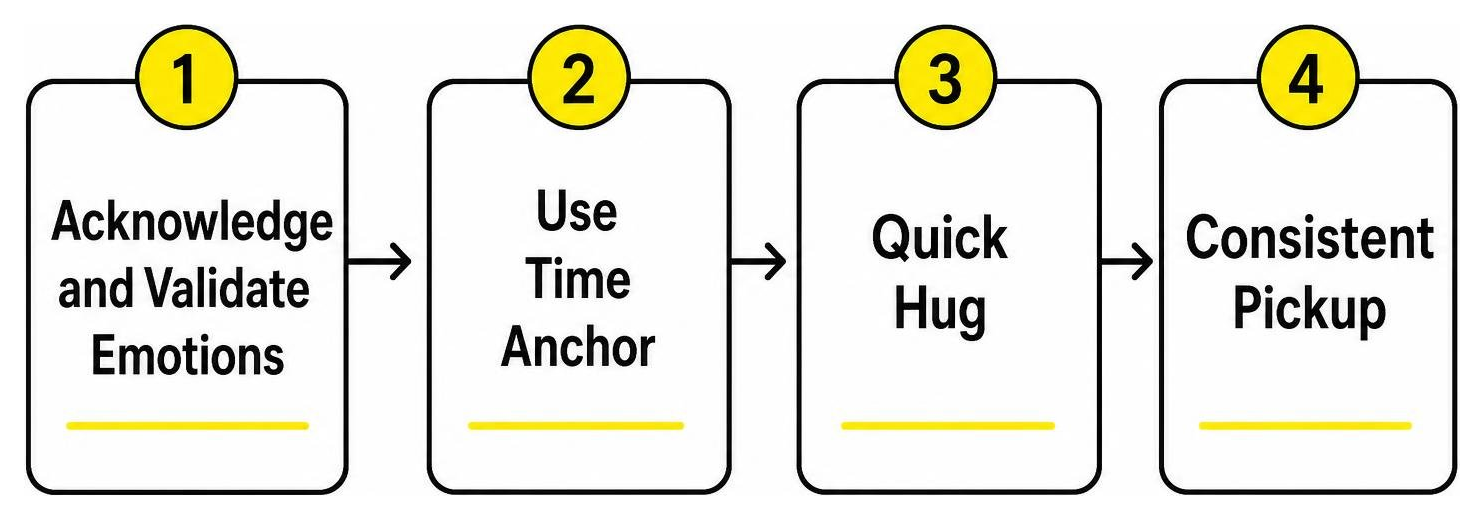
- Acknowledge and Validate Emotions: As outlined in the NAEYC guide on saying goodbye to preschool, validate fears rather than brushing them away. Reassure your child that feeling nervous is natural whenever we try something new and exciting.
- Establish Concrete Time Anchors: Young children do not understand clock time. Use meaningful daily markers during goodbyes, such as, “I will be back right after afternoon playground time.”
- Introduce a Comfort Item: A small family photo kept inside their backpack or a tiny pocket stone you hold together before leaving can provide warmth during moments of longing.
- Practice Calming Techniques: Teach simple belly breathing—inhaling slowly to expand the belly like a balloon and exhaling gently—to help your child self-regulate when overwhelmed.
- Keep Goodbyes Loving and Brief: Lingering during drop-off can unintentionally increase anxiety. A confident smile, a warm hug, and a predictable phrase signal that your child is safe.
Actionable Preschool to Kindergarten Transition Tips for Making New Friends
Navigating a new peer group is exciting, but it can feel overwhelming for some children. Families can nurture these social connections before the first bell rings:
- Set Micro-Goals for Socializing: As recommended in PBS KIDS strategies for starting a new school, give your child small, achievable goals, such as smiling at one new classmate or asking someone to share the sandbox.
- Role-Play Social Scripts: Practice simple introductions using puppets or stuffed animals: “My name is Alex. Can I play blocks with you?”
- Play Cooperative Board Games: Games like Uno, Go Fish, or simple board games teach turn-taking, patience, and how to win or lose gracefully.
- Visit the School Playground: Spending time on the elementary school playground over the summer allows your child to familiarize themselves with the physical space and make casual connections with incoming classmates.
Bridging the Gap: Preschool, School, and Parent Collaboration
A smooth transition is a collaborative bridge connecting the family, the early childhood center, and the elementary school.
Early educators play a central role in preparing students for structured kindergarten curriculum expectations. Collaborative transition practices—such as educator learning walks, sharing developmental progress portfolios, and aligning classroom routines—are highlighted in NAEYC insights on early childhood transitions as proven ways to sustain early academic and social gains.
Sharing Crucial Information with Your Child’s New Teacher
Teachers appreciate proactive, concise communication that helps them understand your child’s personality and needs from day one:
- Create a “Get to Know My Child” Summary: Draft a brief one-page overview outlining your child’s unique interests, strengths, calming preferences, and any major family transitions.
- Health and Safety Details: Notify both the classroom teacher and the school nurse in writing regarding allergies, dietary restrictions, or medical plans.
- Special Services Continuity: If your child receives early intervention or has an Individualized Education Program (IEP), ensure all developmental assessments and documentation are transferred well in advance of the first day.
Navigating the Emotional Adjustment for Parents
The transition to kindergarten often brings mixed emotions for parents as direct, daily contact with teachers shifts toward broader school communications.
- Expect After-School Restraint Collapse: Children spend significant mental and physical energy following new rules and managing stimulation all day. When they return home to their safe space, they may experience emotional outbursts or deep fatigue. Offer quiet downtime and a nutritious snack before asking questions about their day.
- Engage with the School Community: Joining the parent-teacher organization (PTO) or volunteering for school events helps you stay connected and build relationships with other neighborhood families.
- Connect with Other Parents: Organize casual park playdates after school to get to know other classroom parents and support your child’s emerging friendships.
Frequently Asked Questions About the Transition to Kindergarten
What academic skills should a child know before entering kindergarten?
Kindergarten teachers do not expect incoming children to be fluent readers or master complex math. Essential foundational readiness includes:
- Recognizing their own written first name and practicing writing it with an uppercase first letter and lowercase letters.
- Basic print awareness (holding a book correctly, turning pages from left to right, understanding that print carries meaning).
- Counting 10 to 20 everyday objects accurately through one-to-one correspondence.
- Identifying basic shapes and primary colors in their everyday environment.
- Listening attentively to a short story and answering open-ended questions about what happened.
How can I help my child deal with after-school meltdowns during the first weeks?
After-school meltdowns are a standard reaction known as after-school restraint collapse. To support your child:
- Provide an immediate, balanced afternoon snack and water to restore energy.
- Keep the first hour after school quiet, avoiding busy errands, lessons, or high-stimulation screen time.
- Allow open-ended sensory play, such as coloring, playdough, or water play, to release physical tension.
- Delay asking detailed questions about the school day until your child has rested, then ask specific, positive questions like, “What made you smile at recess today?”
What transition books are best for reading with preschoolers?
Reading picture books together normalizes kindergarten jitters and sparks reassuring conversations. Recommended titles include:
- Miss Bindergarten Gets Ready for Kindergarten by Joseph Slate
- The Night Before Kindergarten by Natasha Wing
- Look Out Kindergarten, Here I Come! by Nancy Carlson
- Pete the Cat: Rocking in My School Shoes by Eric Litwin and James Dean
- The Kissing Hand by Audrey Penn
Conclusion
Transitioning from preschool to kindergarten is an inspiring developmental step filled with growth and discovery. By establishing predictable home routines, fostering daily self-help independence, and maintaining open communication with educators, you provide your child with the security they need to thrive.
At Fantasy Island Schools for Kids, our early childhood programs in Norwood Park are designed to nurture intellectual curiosity, social confidence, and foundational skills. If you are exploring educational options for your family on Chicago’s Northwest Side, we invite you to schedule a tour of our campus and discover how our dedicated educators support every step of your child’s learning journey.