

How to Find Trusted Childcare Near You in Chicago
To find the best childcare near me, start with providers that are licensed, fit your child’s age and schedule, and are easy enough to visit in person. Then compare more than ratings: review inspection history, ask about teacher qualifications and daily routines, and tour at least two or three programs before deciding.
For families on Chicago’s Northwest Side, the strongest options usually match these essentials:
- Verified safety and licensing – Check Illinois licensing status, inspection records, secure entry practices, and staff CPR/first-aid training.
- A good classroom fit – Watch how teachers speak with children, manage transitions, and support play and learning.
- Clear value for your budget – Ask what tuition includes, such as meals, enrichment, supplies, and full-time or part-time scheduling.
- A program that reflects your family – Consider language support, curriculum, communication with parents, and your child’s comfort in the setting.
A trusted childcare program should feel organized, warm, and transparent from your first call through your tour. At Fantasy Island Schools for Kids, families can explore multilingual daycare, preschool, Pre-K, and Polish-language kindergarten for children ages 2 to 6, with full-time and part-time enrollment available Monday through Friday in Chicago.
I am Beata Bielic, Executive Director and owner of Fantasy Island Schools for Kids, and I have worked in early childhood education since 2009. My experience helping Chicago families compare the best childcare near me has shown that a thoughtful tour and the right questions can make the choice much clearer.
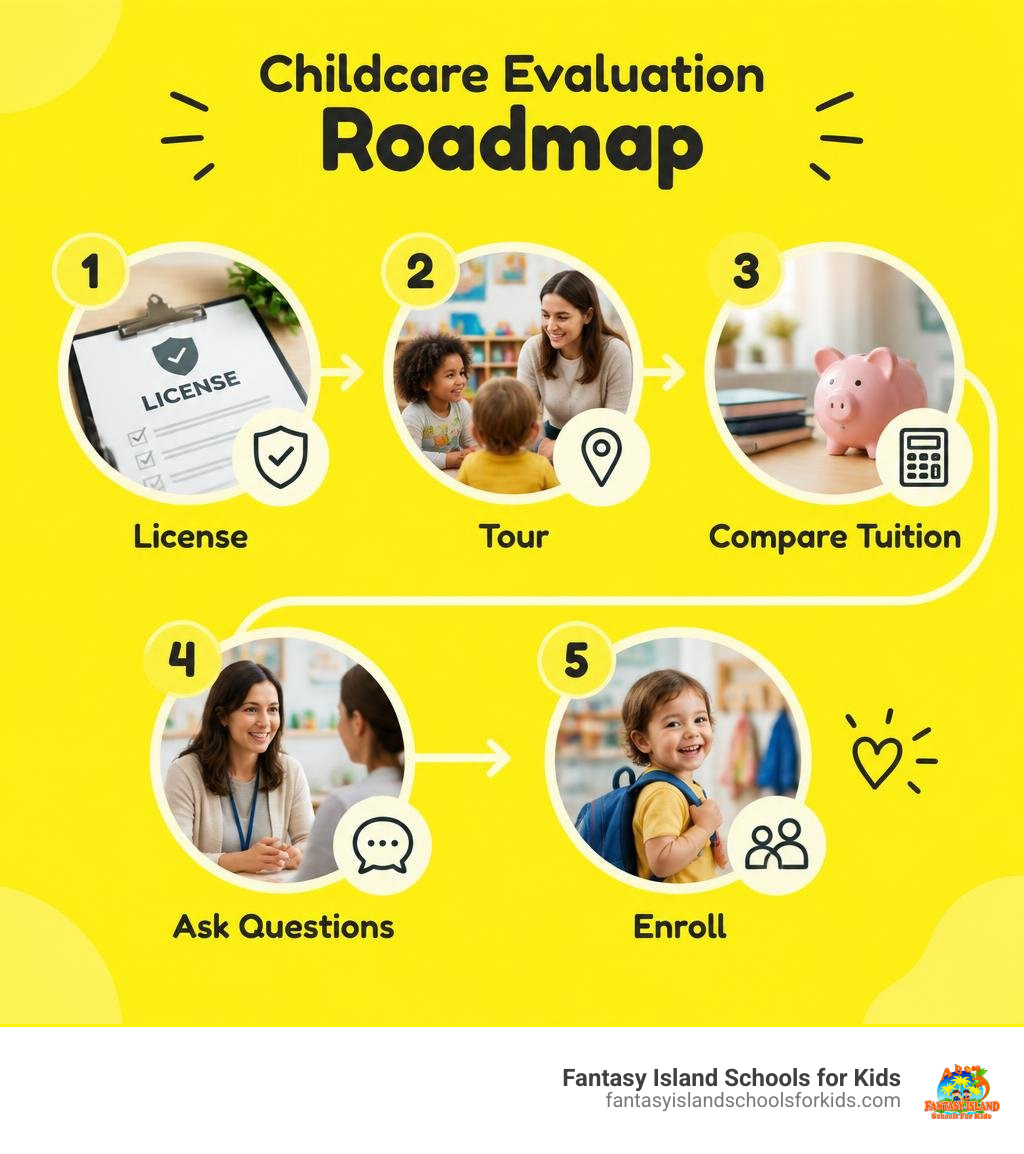
Best childcare near me terminology:
Key Types of Childcare Programs to Consider
Finding the right care setting begins with understanding how different early childhood environments operate. Whether you live in Norwood Park, Edison Park, or Gladstone Park, you will encounter three primary models: center-based early learning centers, home-based family childcare, and specialized preschool or kindergarten programs.
Each setting offers distinct benefits depending on your work schedule, your family’s cultural preferences, and your child’s temperament.
| Childcare Model | Typical Setting | Group Size & Ratios | Key Advantages | Best Suited For |
|---|---|---|---|---|
| Licensed Daycare Center | Dedicated commercial facility | Structured by age group; strictly regulated state staff ratios | Comprehensive curriculum, on-site amenities, peer socialization, coverage reliability | Working parents seeking structured early education and full-day reliability |
| Home-Based Family Childcare | Residential home | Mixed ages; smaller total group size | Homelike atmosphere, consistent single caregiver, often flexible neighborhood hours | Families seeking a smaller, quieter home environment |
| Academic Preschool / Pre-K | Center or school facility | Age-specific classrooms (ages 2–6) | School readiness focus, structured enrichment, language immersion, kindergarten transition | Toddlers and preschoolers preparing for elementary and gifted programs |
Understanding Age Groups and Developmental Focus
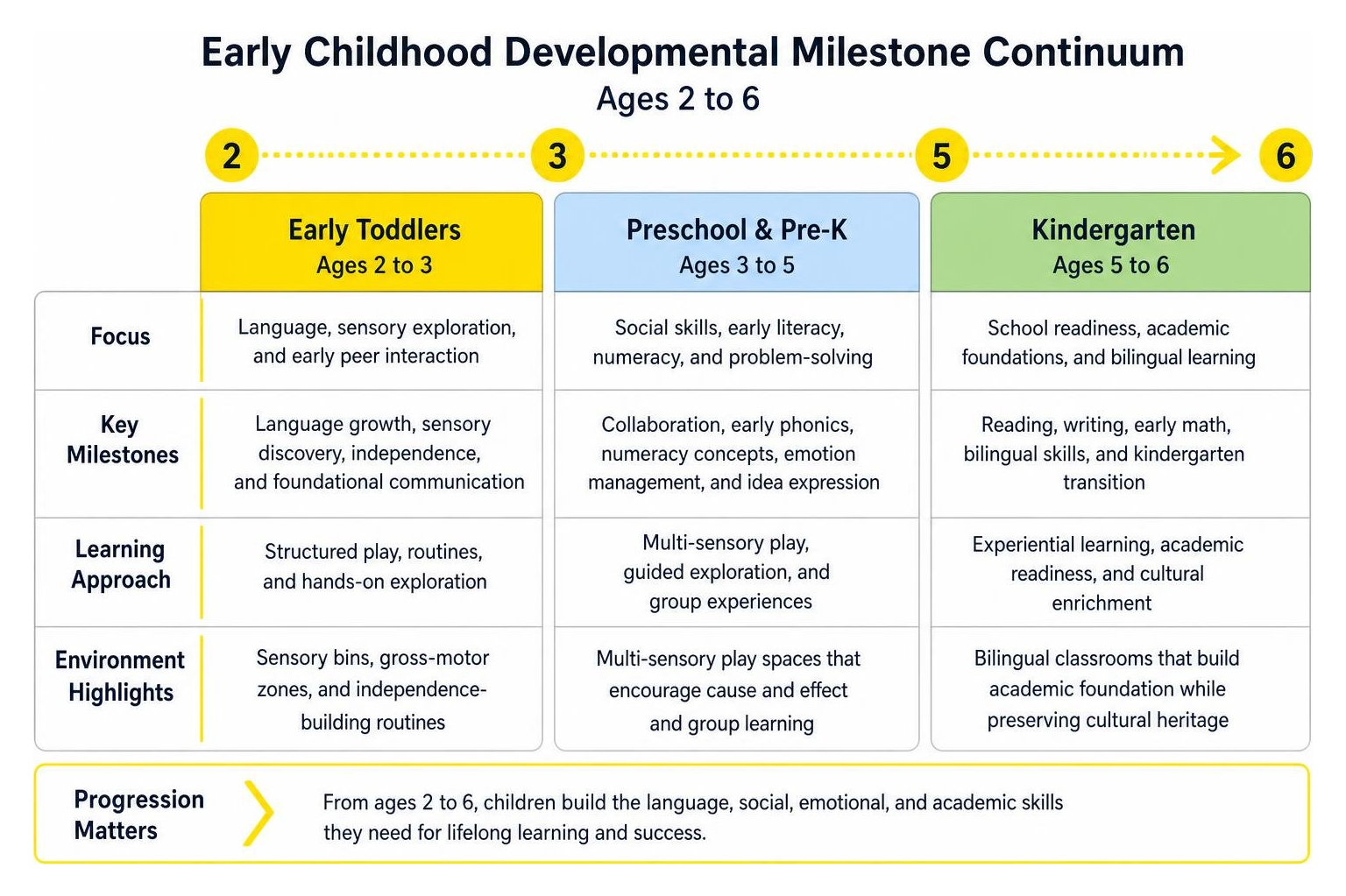
Children move through critical developmental windows between ages 2 and 6. A top-tier early childhood program tailors its physical environment and daily rhythm to match these emerging cognitive, physical, and socio-emotional milestones.
- Early Toddlers (Ages 2 to 3): This stage centers on language explosion, sensory exploration, and early peer interaction. Classrooms should feature dedicated sensory bins, gross-motor zones, and routines that encourage independence. Teachers introduce structured play that builds fine motor coordination and foundational communication. You can discover creative ideas for this stage by exploring 10 proven ways to find toddler classroom activities.
- Preschool & Pre-K (Ages 3 to 5): The focus shifts toward collaborative social skills, early phonics, numeracy concepts, and problem-solving. Children learn to follow multi-step routines, manage emotions, and express ideas. Multi-sensory play spaces allow young learners to experiment with cause and effect, building confidence in a group setting.
- Kindergarten (Ages 5 to 6): Kindergarten bridges early play with formal academic readiness. In our Polish-language kindergarten at 6100 N Milwaukee Ave, children build bilingual reading, writing, and early math skills. Our experiential learning environment gives young learners a solid academic foundation while preserving cultural heritage.
Why Educational Philosophy and Curriculum Matter
An early childhood program is far more than supervised play. The underlying educational framework shapes how your child views learning, collaborates with peers, and tackles new challenges.
A strong, structured framework integrates experiential learning—where children actively explore materials, experiment with art, and participate in guided inquiry. Rather than passive screen time or rigid worksheets, children learn best when hands-on activities are paired with intentional teacher guidance.
At Fantasy Island Schools for Kids, we integrate our proprietary Gifted Enrichment Program alongside focused math tutoring. This framework nurtures critical thinking, logical reasoning, and creative problem-solving early on.
In addition, our students participate in weekly music classes led by a qualified music teacher, exploring rhythm, vocal development, and instrument play. Decades of early childhood research confirm that early music education strengthens phonological awareness and spatial-temporal reasoning.
When evaluating local options, look for a daycare with curriculum that weaves music, language development, and hands-on discovery into every daily schedule.
How to Evaluate the Best Childcare Near Me
Evaluating local childcare requires looking beneath online review scores. While platforms like Winnie aggregate thousands of parent reviews showing high average ratings across the country, nothing replaces a thorough on-site visit and background verification.
Verifying State Licensing, Accreditation, and Safety Records
Every reputable childcare provider in Illinois must hold a valid license issued by the Illinois Department of Children and Family Services (DCFS). A state license verifies that the facility complies with strict baseline standards:
- Mandated Staff-to-Child Ratios: Ensures teachers can give individualized attention and supervise children safely.
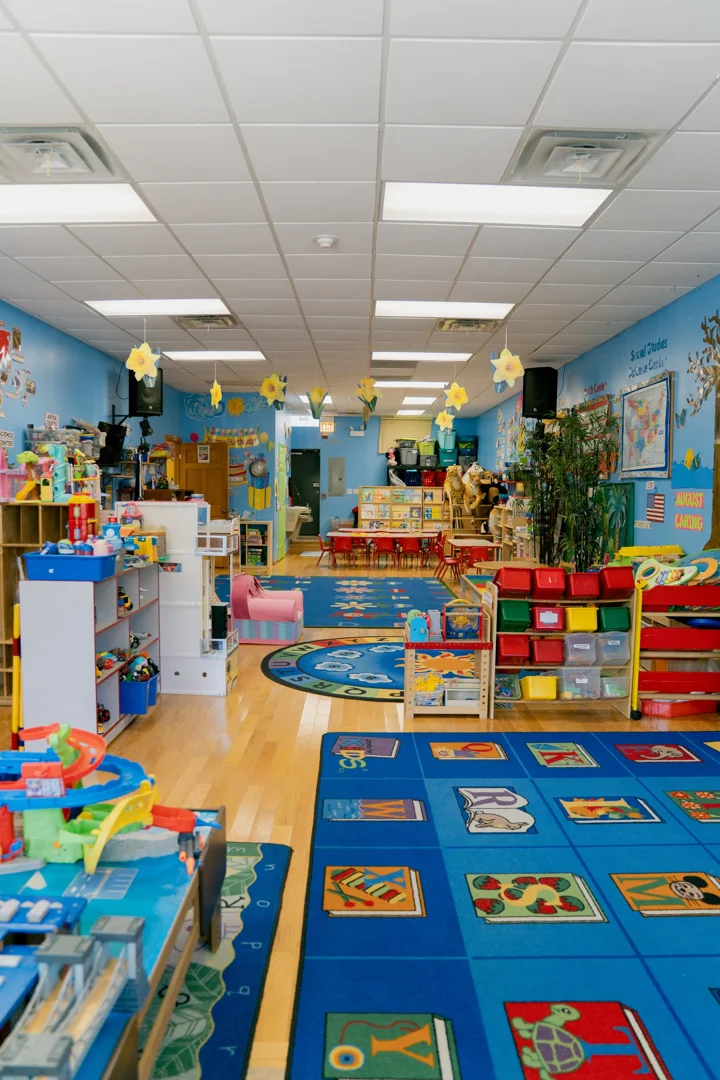
- Physical Safety Standards: Requires secured entry systems, fire safety compliance, hygienic food preparation areas, and sanitary diapering and handwashing stations.
- Background Checks and Certifications: Mandates that all staff members undergo comprehensive criminal background screenings, hold Early Childhood Education credentials, and maintain active First Aid and CPR certifications.
To verify a provider’s compliance and inspect past violation reports, parents can utilize local early learning search tools and state licensing registries.
Look for centers whose staff receive regular professional training in child development and trauma-informed care. At Fantasy Island Schools for Kids, our educators have maintained these rigorous safety standards since our founding in 2009 under the leadership of owner Beata Bielic.
Essential Questions to Ask on a Facility Tour
When you visit centers around Jefferson Park, Portage Park, Sauganash, or Edgebrook, come prepared with a notepad and specific questions. Use this step-by-step guide to choosing the right preschool options to structure your walkthrough:
- Staff Credentials: What certifications do lead teachers hold? How long has the current staff been with the school, and what ongoing training do they complete?
- Health and Nutrition: Are meals prepared on-site, and are they balanced to meet dietary needs? Are hot meals included in tuition or billed as an extra charge?
- Curriculum and Assessment: How do you introduce literacy, math, and second languages? How do teachers track and communicate developmental progress?
- Safety and Supervision: How is building entry secured? What are your protocols for illness, medical emergencies, and severe weather?
- Daily Parent Communication: How do teachers share updates about meals, naps, and learning milestones during the day?
Childcare Costs, Tuition Structures, and Financial Assistance
Childcare tuition represents a significant monthly investment for working families across Chicago’s Northwest Side and surrounding suburbs like Niles, Park Ridge, Skokie, Norridge, and Harwood Heights. Transparent pricing allows families to budget effectively without facing hidden surprise fees.
Navigating Subsidies and Childcare Assistance Programs
High-quality early childhood education should be accessible to all working parents. In Illinois, financial assistance is available for eligible families through state-supported subsidy systems:
- Illinois Child Care Assistance Program (CCAP): Helps working families and parents enrolled in education or training programs cover monthly childcare costs.
- Illinois Action for Children: Manages local eligibility assessments, family support services, and provider reimbursement processing across Cook County.
Fantasy Island Schools for Kids accepts CCAP and Illinois Action for Children subsidies for our full-time and part-time programs. If you need assistance navigating your application, our administrative team can provide guidance on documentation requirements. To learn more about navigating budget-friendly local enrollment, read our practical guide to affordable preschool options in Chicago.
Comparing Tuition and Included Amenities Across Neighborhoods
When comparing childcare costs across Chicago neighborhoods, look closely at what each center’s weekly tuition includes. A lower base rate can quickly become expensive if a center charges separate fees for meals, enrichment programs, supply fees, and extended hours.
At Fantasy Island Schools for Kids, our tuition ranges from $300 to $400 per week, providing an all-inclusive educational value that covers:
- Comprehensive Academic Programming: Full access to our multilingual classroom curriculum and our specialized Gifted Enrichment Program.
- Freshly Prepared On-Site Meals Daily: Nutritious, hot meals and healthy snacks cooked right on the premises every day at no added cost.
- Weekly Music Classes: Specialized music instruction led weekly by a dedicated, qualified music educator.
- Math Tutoring: Targeted small-group instruction building foundational numerical fluency.
- Extended Operating Hours: Reliable care from 7:00 AM to 6:00 PM, Monday through Friday, with flexible full-time and part-time scheduling options.
For a deeper dive into how tuition structures vary across the city, consult our breakdown of navigating full-day preschool options across Chicago neighborhoods.
Frequently Asked Questions About Childcare
How early should I start searching for the best childcare near me?
We recommend beginning your search 6 to 12 months in advance of your planned start date, particularly if you require full-time enrollment for ages 2 to 3. Infant and toddler rooms have lower staff ratios and fill quickly across Chicago. Touring early gives your family time to complete paperwork, submit subsidy applications, and secure your preferred schedule.
What are the main signs of high-quality childcare during an in-person visit?
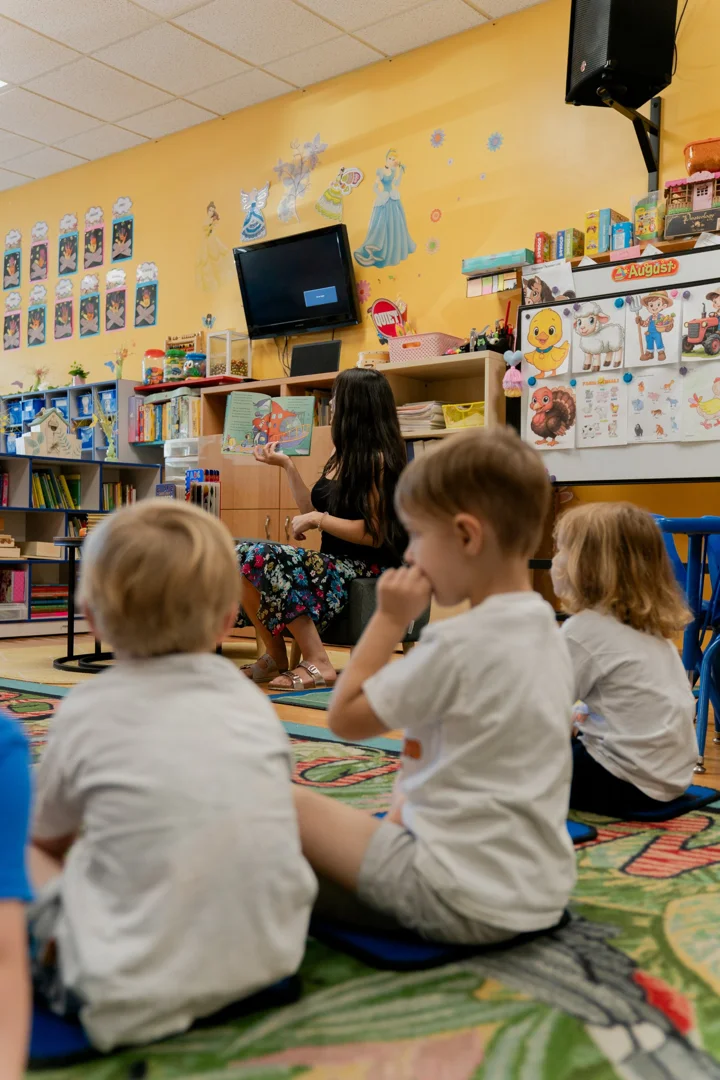
During your tour, look for warm, responsive interactions between educators and children. Teachers should speak at eye level, listen patiently, and maintain an organized, calm classroom environment. Check that facilities are clean, secure entry systems are functioning, and children appear actively engaged in purposeful play and small-group learning.
Does state licensing guarantee high program quality?
State licensing ensures that a facility meets essential baseline safety, space, sanitary, and background-check requirements. However, true educational quality depends on what a school builds on top of that foundation. Look for programs with experienced leadership, degreed early childhood educators, structured enrichment programs, multi-sensory learning spaces, and a clear track record of school readiness.
Conclusion
Choosing the right early learning environment is one of the most meaningful decisions you will make for your child’s foundational growth. When you evaluate safety standards, qualified teaching staff, rich sensory environments, and transparent tuition, you can choose a school where your child will thrive.
Founded in 2009 by Beata Bielic, Fantasy Island Schools for Kids is located at 6100 N Milwaukee Ave, Chicago, IL 60646. We serve families across Chicago’s Northwest Side and neighboring suburbs—including Norwood Park, Edison Park, Gladstone Park, Jefferson Park, Sauganash, Edgebrook, Portage Park, Niles, Park Ridge, Skokie, Norridge, and Harwood Heights.
We offer:
- Full-time and part-time enrollment for children ages 2 to 6 years old (Monday – Friday, 7:00 AM – 6:00 PM).
- Multilingual instruction in Polish and English.
- The Gifted Enrichment Program, math tutoring, and weekly music classes led by a qualified music teacher.
- Freshly cooked on-site meals daily, included in tuition ($300–$400/week).
- CCAP (Illinois Child Care Assistance Program) and Illinois Action for Children acceptance.
We invite you to contact us or visit our preschool programs to schedule an in-person tour and meet our dedicated educators today.
