

Winter Activities Daycare Children Can Enjoy Safely
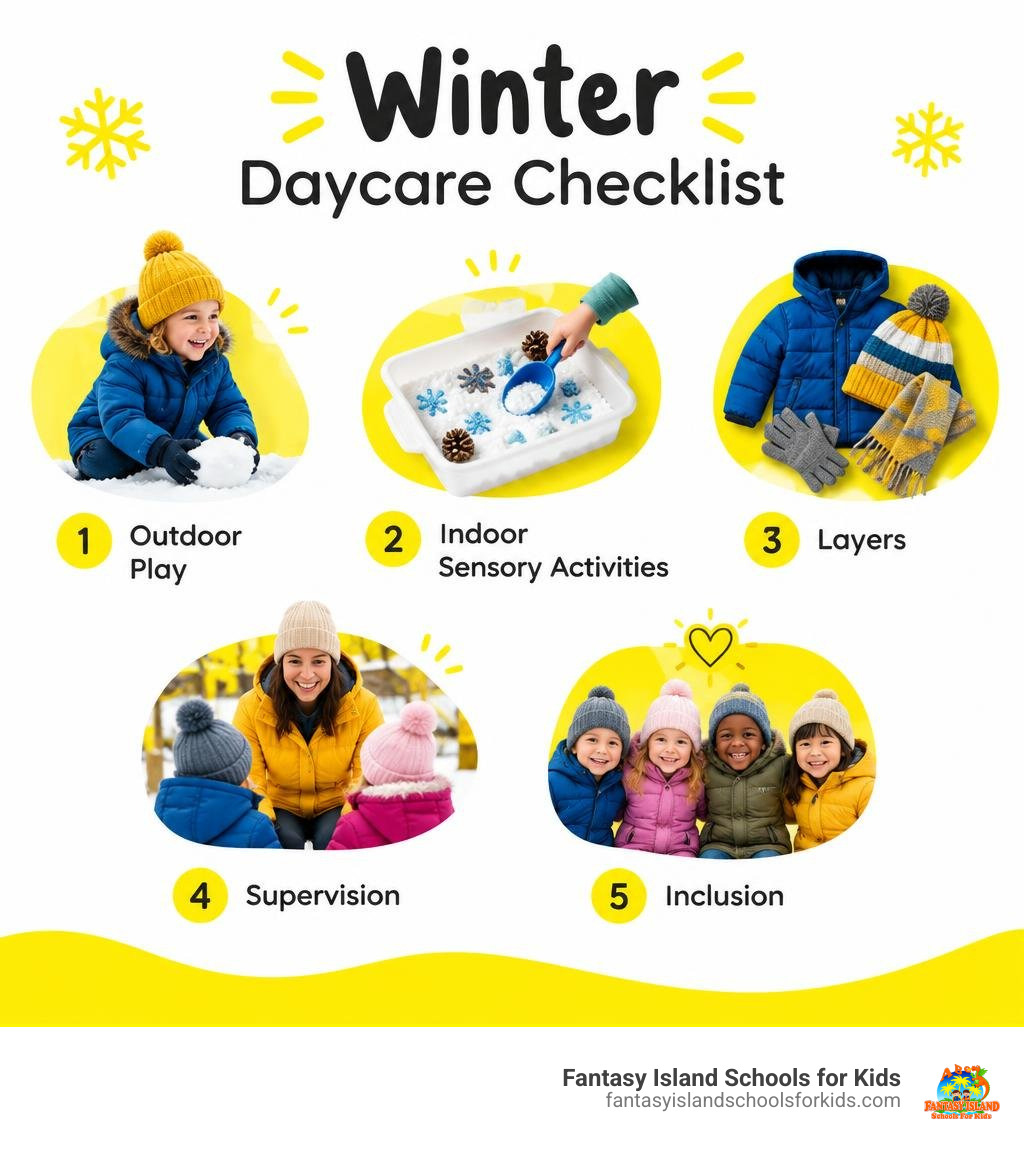
The best winter activities daycare programs combine short, well-supervised outdoor play with warm indoor learning. Try snow painting, a simple winter nature walk, mitten matching, snowflake art, indoor movement games, and sensory bins made with safe materials. Check wind chill, dry gear, and each child’s comfort before heading outside.
For Chicago families, winter plans need flexibility. At Fantasy Island Schools for Kids in Chicago, children ages 2-6 can explore seasonal topics through hands-on learning while staff adjust the day for cold, snowy, or icy weather.
I am Beata Bielic, owner and Executive Director of Fantasy Island Schools for Kids, and I have worked in early childhood education since 2009. Our approach to winter activities daycare centers on safe sensory play, clear routines, and meaningful learning for every child.
Winter activities daycare further reading:
Safe and Engaging Winter Activities Daycare Providers Rely On

When winter arrives in Chicago, early childhood educators face a familiar challenge: how to keep toddlers and preschoolers active, engaged, and safe when the playground is covered in snow. Seasonal changes offer incredible opportunities for hands-on discovery. By thoughtfully blending outdoor snow adventures with dynamic indoor activities, child care centers transform chilly winter months into a season of rich cognitive and physical growth.
Outdoor winter play builds gross motor strength, balance, and spatial awareness in ways indoor spaces cannot fully replicate. Walking through deep snow engages core muscle groups, while navigating snowy terrain helps children master their body coordination. Here are key outdoor activities we love incorporating into cold-weather routines:
- Snow Painting: Fill spray bottles or squeeze bottles with water and non-toxic, washable food coloring. Children use the snow as a giant white canvas to practice fine motor grip, color blending, and creative expression.
- Winter Nature Scavenger Walks: Bundle up for a 15-minute guided stroll around the school grounds to observe frozen puddles, bare deciduous trees, evergreen needles, and bird tracks in fresh snow.
- Snow Castle & Ice Block Sculpting: Using sand buckets, plastic brick molds, and recycled yogurt containers, children build cooperative snow forts and mini igloos, learning early architectural concepts and teamwork.
- Gross Motor Snow Obstacle Courses: Create a low-impact pathway using packed snow tracks for kids to hop, stomp like polar bears, and tiptoe along winding trails.
| Activity Type | Primary Developmental Benefits | Target Skills & Engagement |
|---|---|---|
| Outdoor Snow Play | Gross motor conditioning, vestibular stimulation, sensory resilience | Core strength, balance, cold tolerance, spatial navigation |
| Indoor Sensory Bins | Fine motor precision, tactile processing, creative problem-solving | Pinch grip, bilateral coordination, self-regulation |
| Winter STEM Projects | Critical thinking, hypothesis testing, early scientific inquiry | Observation, cause-and-effect reasoning, measurement |
| Movement & Music | Cardiovascular health, rhythm processing, emotional expression | Aerobic endurance, bilateral movement, language skills |
Sensory-Rich Indoor Winter Activities Daycare Providers Organize on Freezing Days
When sub-zero wind chills make outdoor playground time unsafe, children need creative indoor alternatives to channel their natural energy. Our large multi-sensory play spaces allow us to facilitate immersive sensory activities that satisfy physical needs without stepping foot into freezing temperatures.
Designing sensory-rich learning environments helps young learners regulate their emotions while exploring different textures:
- Taste-Safe Baking Soda Snow Dough: Mix baking soda with small amounts of water or white hair conditioner to create moldable, cool-to-the-touch indoor “snow.” Children can sculpt miniature snowmen right at the activity table using buttons, cut-up pipe cleaners, and tiny carrot tips.
- Mitten Matching & Math Sorting: Collect colorful pairs of patterned mittens and have children sort them by size, color, or stripe patterns. This doubles as one of our favorite engaging toddler math activities, combining tactile sorting with early counting and pattern recognition.
- Paper Plate “Ice Skating”: Place paper plates under each child’s feet on a carpeted classroom floor. Put on classical waltzes or upbeat winter tunes and let children glide, slide, and balance across the room. This fun gross motor game strengthens leg muscles and develops balance in a safe environment.
- Winter Storytime Forts: Drape white sheets over tables to build classroom “glacier caves.” Inside, children gather with cozy blankets and flashlights to read winter books together, developing seasonal vocabulary in a calming setting.
Creative STEM Experiments and Winter-Themed Early Learning Projects
Winter provides a natural laboratory for early scientific inquiry. Through our structured Gifted Enrichment Program, we encourage children to ask questions, test hypotheses, and explore the physical properties of water, ice, and temperature changes.
- Ice Melting & Salt Dissolution Labs: Freeze small plastic animal figurines inside large ice blocks. Provide children with pipettes of warm water, salt shakers, and magnifying glasses so they can observe how salinity and heat accelerate melting.
- Salt Crystal Snowflake Art: Using watercolor paper, children paint designs with liquid glue, sprinkle coarse salt over the glue, and drop liquid watercolors onto the salt. The paint travels along the salt crystals through capillary action, creating shimmering, vibrant snowflakes.
- Snowflake Symmetry Studies: Fold paper coffee filters and make small geometric snips. Unfolding them reveals unique symmetrical patterns, allowing educators to introduce concepts of geometry and natural symmetry. These creative preschool enrichment projects provide advanced cognitive stimulation for curious minds.
- Daily Thermometer Tracking: Hang an oversized outdoor thermometer right outside the classroom window. Each morning, children log the temperature, discuss whether water outside is a liquid or solid, and decide what gear is needed for the day. For families looking for weekend inspiration, discovering local Chicagoland winter recreation ideas can extend these learning adventures outside the classroom.
Inclusive Winter Activities Daycare Classrooms Adapt for All Abilities
Every child deserves full access to seasonal fun, regardless of mobility limitations or sensory sensitivities. Adaptive teaching techniques ensure that children with diverse physical and neurological needs can participate comfortably alongside their peers.
Using intentional strategies from our structured toddler classroom activities, teachers adapt cold-weather lessons for every developmental stage:
- Elevated Tabletop Snow Trays: For children using wheelchairs or those with limited mobility, bring fresh, clean outdoor snow inside in shallow plastic basins placed at wheelchair-accessible table heights. Children can dig, scoop, and build without having to navigate uneven, icy ground.
- Mess-Free “No-Freeze” Ice Bags: For toddlers or children with tactile sensitivities who dislike cold or wet textures, seal crushed ice, blue food coloring, glitter, and small winter figurines inside heavy-duty double-zipper storage bags. Children squish, press, and explore temperature changes through the plastic barrier without getting wet hands.
- Seated Adaptive Winter Music & Movement: During our weekly music classes led by a qualified music teacher, children participate in seated rhythmic movements. We wave sheer white scarves to mimic falling snow, tap rhythm sticks to simulate dripping icicles, and sing seasonal songs together.
Cold-Weather Safety, Supervision, and Winter Gear Management

Safe winter play requires proactive safety protocols, structured supervision, and efficient winter gear management. At Fantasy Island Schools for Kids, all teachers hold Early Childhood Education credentials, maintain First Aid and CPR certifications, and complete ongoing training in health, safety, and trauma-informed care.
Temperature Guidelines and Safe Outdoor Supervision Protocols
Outdoor play is a vital part of healthy early childhood development, but extreme cold requires strict boundaries. Daycare centers follow clear weather criteria to decide when outdoor play is safe and when gross motor activities must remain indoors.
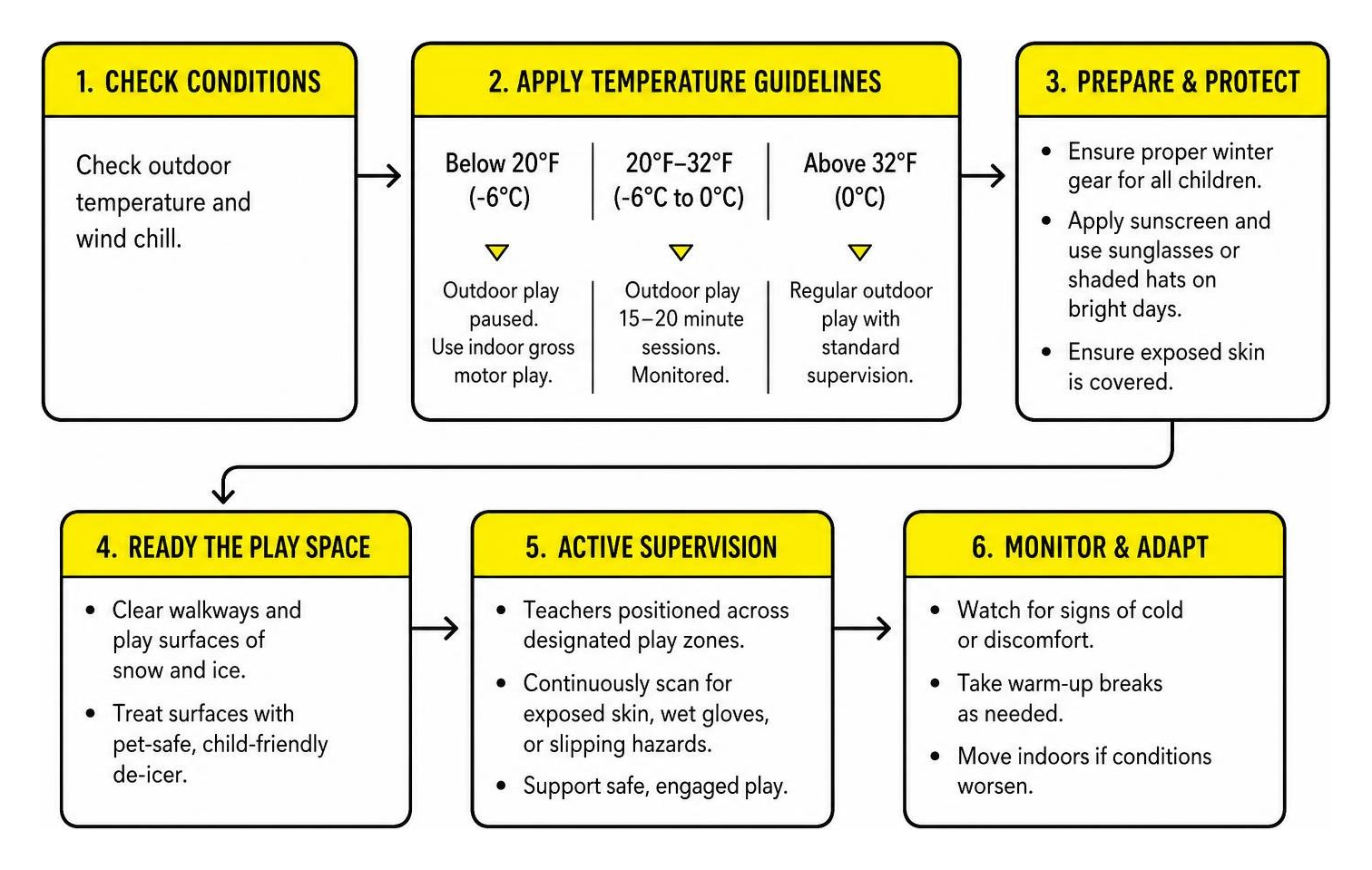
- The 20-Degree Wind Chill Rule: If the outdoor ambient temperature or wind chill dips below 20°F (-6°C), outdoor play is paused in favor of indoor gross motor play in our multi-sensory room.
- Shortened Play Increments: When conditions are between 20°F and 32°F, outdoor recess is kept to monitored 15- to 20-minute sessions to prevent exposure fatigue and keep little fingers warm.
- Active Zone Supervision: Teachers position themselves across designated play zones, continuously scanning for exposed skin, wet gloves, or slipping hazards.
- Surface Safety: Playground walkways and play surfaces are cleared of black ice and treated with pet-safe, child-friendly de-icer before children step outside.
- Sun Protection & Eye Safety: Snow reflects up to 80% of ultraviolet radiation. On bright winter mornings, sunglasses or shaded winter hats protect young eyes from intense snow glare.
Managing Winter Gear, Layering, and Independent Dressing Routines
Getting a classroom of two- to five-year-olds into winter gear can feel like dressing a group of cheerful octopuses! Turning the dressing routine into an empowering self-help milestone builds confidence and fine motor independence.
- The Preschool “Coat Flip” Trick: Children place the hood of their open coat at their toes with the lining facing up, slip both arms straight into the sleeves, and flip the coat up over their heads in one smooth motion.
- Dedicated Mitten Drying Stations: Wet gear leads to chilled fingers. Daycares should maintain ventilated drying racks and clearly labeled cubbies so wet gloves and snow pants dry thoroughly between morning and afternoon sessions.
- Pre-Labeled Layering Systems: We encourage families from neighboring areas like Norwood Park, Edison Park, and Niles to label all outerwear clearly. A solid 3-layer system works best: a moisture-wicking base layer, an insulating fleece middle layer, and a waterproof, wind-resistant outer shell.
- Extra Clothing Backups: Every child’s cubby should hold two complete changes of indoor clothing, including extra socks and pants, in case melted snow seeps past boot cuffs.
Developmental and Cognitive Benefits of Seasonal Daycare Activities
Winter programming is far more than just a way to pass the time until spring. Seasonal activities offer distinct neurological, social, and physical benefits that support the whole child.
- Gross Motor Resilience: Walking through snow resistance exercises large muscle groups, strengthening the ankles, hips, and core, while improving cardiovascular stamina.
- Enhanced Sensory Processing: Touching cool ice, hearing the crunch of packed snow underfoot, and seeing frosty breath in the air stimulates all sensory pathways, supporting complex neural connections.
- Seasonal Vocabulary Expansion: Winter themes are a natural way to build descriptive language. Children learn words like frost, icicle, and blizzard, and in our Friday Polish classes they can also learn śnieg (snow), lód (ice), and bałwan (snowman).
- Scientific Curiosity: Experiencing seasonal cycles in real time fosters a deeper connection with nature, encouraging early scientific thinking and environmental awareness.
- Emotional Resilience & Cooperation: Successfully managing winter gear and collaborating on large snow projects teaches perseverance, patience, and team problem-solving.
Frequently Asked Questions About Winter Activities in Early Childcare
What temperature is too cold for daycare children to play outside?
Most licensed early childhood centers follow established pediatric guidelines: when the temperature or wind chill falls below 20°F (-6°C), outdoor play is replaced with indoor physical activities. When temperatures range between 20°F and 32°F, outdoor play is safe for healthy children, provided they wear dry, waterproof outerwear and outdoor sessions are kept to 15–20 minutes.
What are the best budget-friendly winter activities for toddlers?
Some of the most engaging winter activities use simple items you already have on hand. Filling shallow bins with water, food coloring, and winter toys creates sensory bins that cost pennies. Painting on snow with spray bottles, creating paper plate skating rinks on carpeted floors, and crafting coffee-filter snowflakes give children hours of creative fun with minimal expense.
How can daycare staff help children who dislike wearing winter gear?
Young children often feel restricted by bulky winter clothing. Teachers help ease this frustration through positive redirection, social stories, and playful routines. Turning dressing into a step-by-step game, letting children choose between two warm hats, and introducing the “coat flip” trick gives toddlers a sense of autonomy and turns gear transitions into an enjoyable routine.
Conclusion
Winter is a magical season for early learning when approached with intentionality, safety, and creative curriculum design. By balancing brisk, well-supervised outdoor snow play with warm, multi-sensory indoor discovery, early childhood educators help children build physical strength, critical thinking skills, and self-confidence all winter long.
At Fantasy Island Schools for Kids, we have provided high-quality early education since 2009. Serving families across Chicago’s Northwest Side and nearby communities—including Norwood Park, Edison Park, Gladstone Park, Jefferson Park, Sauganash, Edgebrook, Portage Park, Niles, Park Ridge, Skokie, Norridge, and Harwood Heights—our center provides an enriching environment where children ages 2 to 6 thrive year-round.
Our programs stand out through our signature Gifted Enrichment Program, Polish and Ukrainian language support, weekly music classes taught by a qualified music teacher, a large multi-sensory play space, and freshly cooked meals prepared on-site daily at no extra cost.
Tuition is approximately $300 to $400 per week with both full-time and part-time enrollment options available. We proudly accept CCAP (Illinois Child Care Assistance Program) and Illinois Action for Children to ensure high-quality early education remains accessible to all families.
Discover how our nurturing community can support your child’s growth this season. Learn more about our Chicago Northwest Side preschool programs or visit us at 6100 N Milwaukee Ave, Chicago, IL 60646 to schedule your private tour today.