

What Reggio Emilia in Chicago Means for Your Child
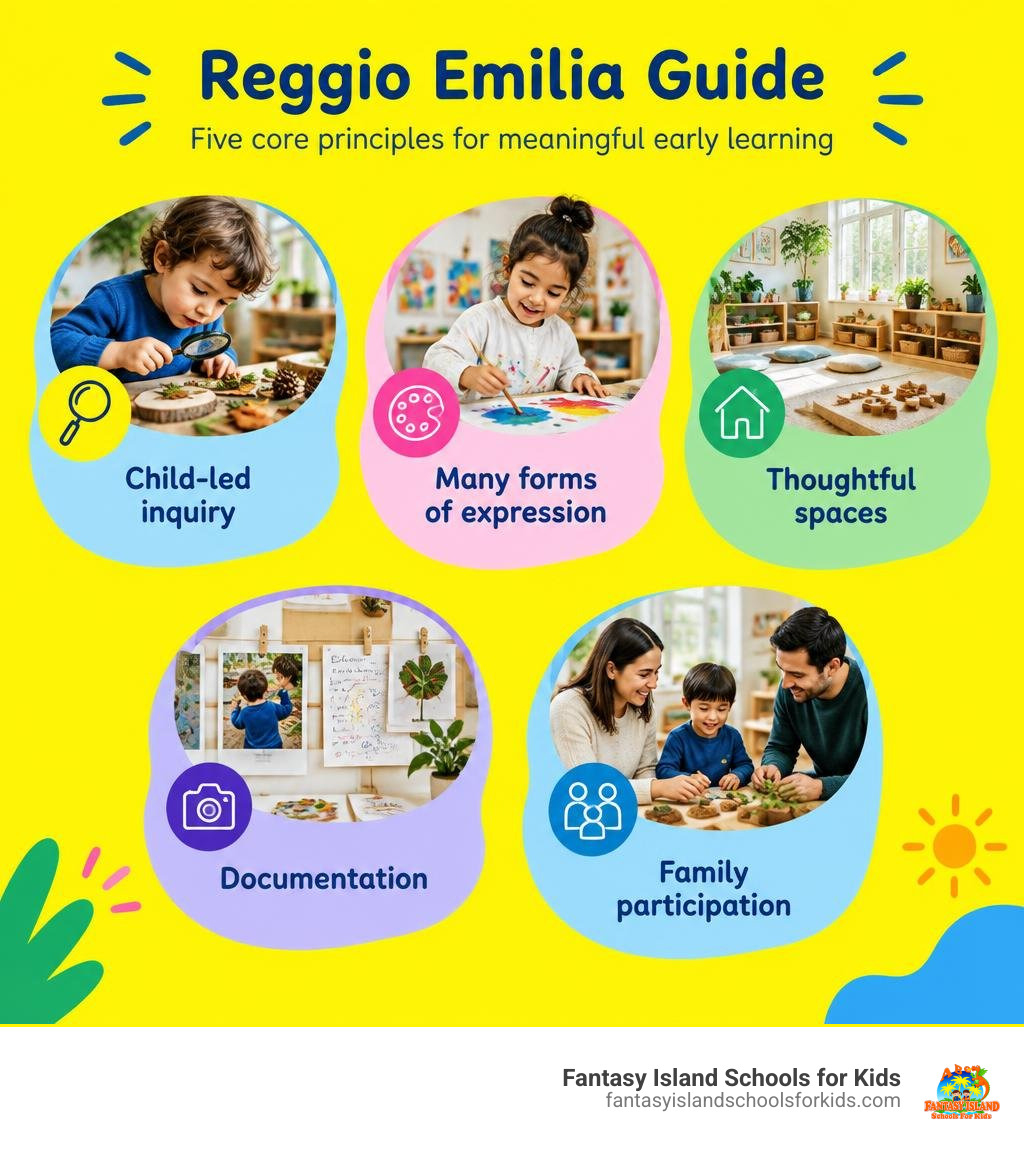
Reggio Emilia in Chicago is an approach to early learning, not a set lesson plan. Children explore their questions, share ideas through art, talk, movement, and play, and learn alongside teachers and families. When you tour a preschool classroom, look for open-ended materials, projects shaped by children’s interests, and photos or notes that show how children learned, not just what they made.
Schools can draw on these ideas in different ways. This guide will help you recognize the core principles and ask questions that matter for your child.
Origins and Philosophy of the Reggio Emilia Approach
The Reggio Emilia philosophy began in the northern Italian town of Reggio Emilia following World War II. Led by visionary educator Loris Malaguzzi alongside local parents, the community sought to build schools from the literal rubble of wartime destruction. They believed that education should foster critical thinking, democratic collaboration, and deep respect for every child’s innate potential. Rather than accepting traditional authoritarian schooling models of the era, the community united around the conviction that early childhood education represents the strongest foundation for a free, democratic society.
Malaguzzi viewed children not as empty vessels waiting to be filled with facts, but as capable, competent researchers endowed with immense curiosity, creativity, and rights. The historical roots of municipal infant centers established a standard where early learning was treated as a vital civic investment. Instead of top-down instruction where a teacher dictates every activity, educators practice intentional listening, allowing emergent questions from children to guide collaborative inquiry. In this model, education is understood as an ongoing, reciprocal dialogue between child, educator, family, and environment.
Core Tenets of Reggio Emilia Chicago Early Childhood Programs
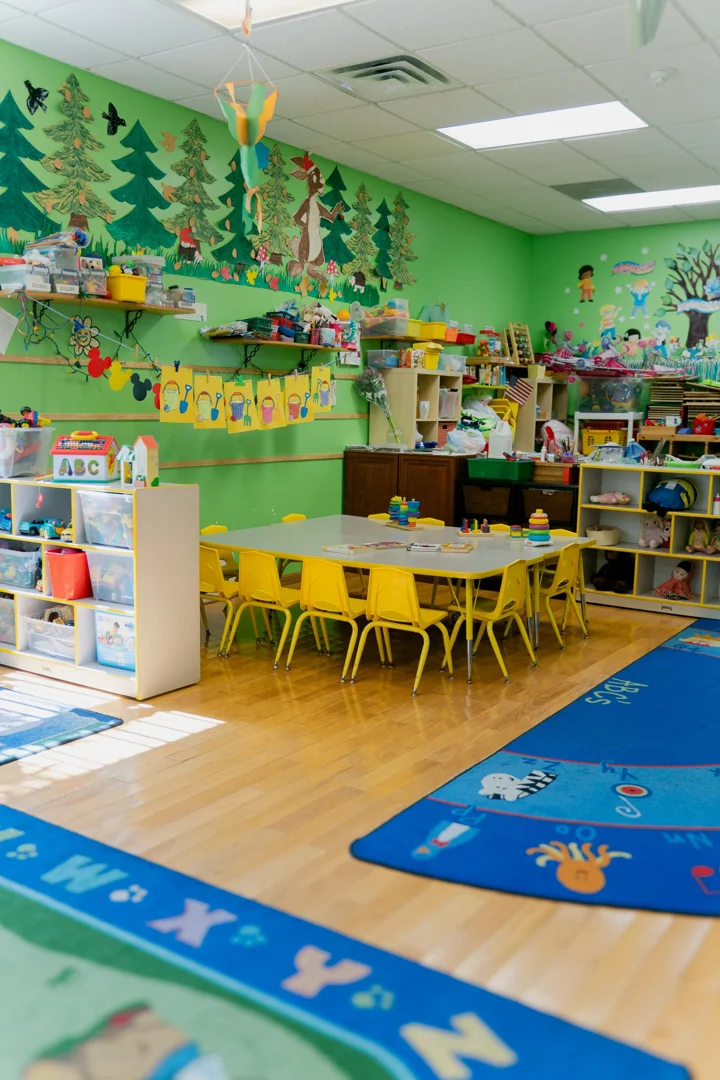
When exploring Reggio Emilia in Chicago, you will notice that programs do not use standardized, off-the-shelf workbooks or rigid daily scripts. Instead, learning unfolds through progettazione—a flexible, responsive process of project design where educators observe children’s interests, hypothesize potential learning paths, and co-construct discoveries alongside them. A study into shadows, water flow, or architecture might evolve over several weeks or months, giving children ample time to formulate hypotheses, test their ideas, and refine their conclusions.
Globally, the Reggio Children International Network now unites educators across 34 countries, having launched its first invitational meeting in Reggio Emilia on July 6–7, 2006, with delegates from 11 countries. In North America, ongoing teacher development is enriched by professional resources supported by NAREA and Reggio Children, with NAREA investing over $1,500,000 in collaborative resources and contributing more than $350,000 to Fondazione Reggio Children.
In modern classrooms, these global ideas take root through play-based learning approaches that emphasize equity, democratic participation, and respect for every child’s unique developmental timeline. Educators observe where children linger, what questions arise during group conversations, and how different materials spark curiosity.
The Hundred Languages and Expressive Arts
Central to the philosophy is the concept of the “hundred languages of children.” Coined by Malaguzzi, this metaphor expresses the idea that young learners communicate, think, and construct meaning in countless ways—not just through spoken or written words, but through drawing, sculpture, music, movement, dramatic play, and building. Traditional schooling often emphasizes verbal and mathematical skills to the exclusion of other modalities, but the Reggio philosophy recognizes that symbolic representation across multiple media strengthens overall cognitive development.
A cornerstone of Reggio-inspired spaces is the atelier (art studio), guided by an atelierista (an educator with arts training). Children interact with diverse media within multi-sensory learning spaces, using clay, wire, paint, and natural loose parts to give tangible form to complex theories about their world. For instance, after observing birds nesting outside a window, children might sketch their observations with charcoal, sculpt nests with clay, and compose stories about the birds’ daily routines.
How Reggio Emilia in Chicago Compares to Traditional Curricula
Understanding the differences between emergent models and conventional early learning helps families evaluate which environment aligns best with their child’s needs.
| Feature | Reggio Emilia-Inspired Approach | Traditional Early Childhood Model |
|---|---|---|
| Curriculum Structure | Emergent (progettazione), driven by child curiosity | Scripted, thematic units predetermined by teachers |
| Role of the Teacher | Co-learner, researcher, and active listener | Primary instructor directing classroom activities |
| View of the Child | Competent researcher with individual agency | Student learning foundational skills sequentially |
| Assessment & Work | Pedagogical documentation showing learning processes | Worksheets, standardized checklists, and finished crafts |
| Learning Materials | Open-ended, natural, and multi-sensory items | Commercially produced, single-purpose plastic toys |
When families compare different approaches, exploring experiential learning benefits often reveals how hands-on investigation fosters deeper cognitive retention and sustained engagement. Children who explore concepts through direct manipulation develop stronger problem-solving stamina and a genuine enthusiasm for learning.
Classroom Design, Family Co-Participation, and Community Culture
In Reggio-inspired classrooms, the environment is celebrated as the “third teacher.” Spaces are designed with natural light, living plants, warm wood tones, and mirrors that reflect light and movement. Open shelving displays materials neatly in wicker baskets or glass jars, inviting independent exploration and self-selected inquiry.
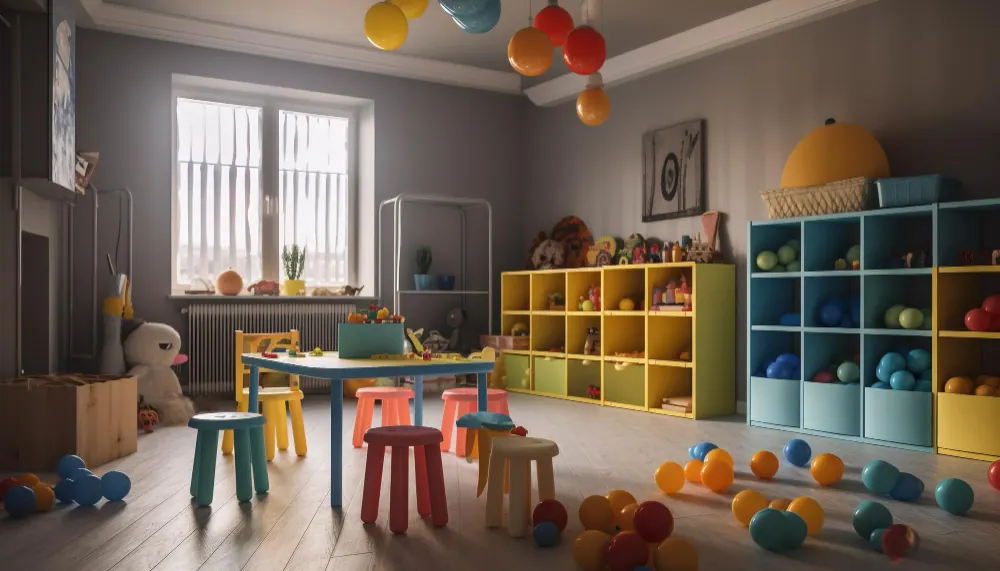
This physical organization promotes autonomy, aesthetic appreciation, and social connection. When evaluating early learning settings, families can observe how physical layouts balance open exploration with physical safety, acoustic comfort, and organized access to inviting materials.
Listening, Collaborative Research, and Teacher Reflection
Teachers in Reggio-inspired settings view themselves as ongoing researchers. Rather than administering rote tests or relying on fill-in-the-blank assessments, educators capture pedagogical documentation using photographs, video recordings, transcripts of children’s dialogues, and student sketches.
During team meetings, teachers analyze this documentation to evaluate cognitive development, refine project directions, and deepen daily engagement. They examine how a child approached a building challenge, what vocabulary emerged during social play, and where misconceptions might require gentle scaffolding. This high degree of intentionality ensures that every child receives individualized support while contributing to the shared classroom community.
Family Engagement as a Democratic Pillar
Family co-participation is an essential pillar rather than an afterthought. Parents are recognized as a child’s first teachers and active partners in the school community. Reggio-inspired centers invite families to contribute cultural stories, participate in project development, and attend reflective documentation evenings where classroom discoveries are shared and celebrated together. This collaborative bridge between home and school reinforces a child’s sense of belonging and community identity.
Navigating Early Childhood Education Options in Chicago
Chicago families navigating early education encounter a rich variety of philosophies across Northwest Side neighborhoods from Gladstone Park to Sauganash. Reggio-inspired and experiential programs adapt the original Italian principles to urban life, balancing state licensing standards from the Illinois Department of Human Services with child-directed inquiry.
Whether you are evaluating full-day care near Portage Park, searching for a quality preschool setting, or exploring options across neighboring communities, understanding how philosophies translate to daily practice helps you find the right fit for your family.
Evaluating Reggio Emilia Chicago Classrooms During Tours
When visiting early learning programs, use this checklist to assess Reggio-inspired and inquiry-based elements:
- Visible Process Documentation: Look for bulletin boards featuring photos, children’s authentic quotes, and project evolution rather than identical, pre-cut art crafts.
- Natural, Open-Ended Materials: Check for blocks, fabric, natural stones, wood pieces, and clay available at child height.
- Thoughtful Lighting and Layout: Notice whether the room feels calm, organized, and filled with natural light rather than cluttered with high-contrast, overstimulating commercial posters.
- Respectful Teacher Interactions: Observe whether teachers sit at eye level, listen actively without interrupting, and ask open-ended questions like “What do you notice?” or “What do you think will happen next?”
For a complete set of questions to bring along, refer to our guide on questions to ask during a preschool tour.
Balancing Child-Led Inquiry with Kindergarten Readiness
A common question among parents is whether child-led inquiry prepares children for structured elementary classrooms. Research in early childhood development shows that open-ended inquiry strengthens executive function, sustained attention, and abstract reasoning. Children develop self-regulation by planning multi-step projects, managing classroom tools responsibly, and working through disagreements with peers during collaborative building.
For children showing rapid developmental milestones, hands-on, inquiry-driven enrichment provides advanced challenges without resorting to repetitive drill sheets. When children are encouraged to investigate complex themes deeply, their foundational literacy, mathematical reasoning, and scientific thinking advance naturally within meaningful contexts.
Frequently Asked Questions About Reggio Emilia in Chicago
What is the Reggio Emilia approach to early childhood education?
The Reggio Emilia approach is a student-centered, experiential educational philosophy founded by Loris Malaguzzi in post-WWII Italy. It emphasizes self-directed learning, expressive arts through the “hundred languages of children,” pedagogical documentation by educators, and an aesthetically thoughtful environment functioning as the “third teacher.”
How can parents evaluate whether a Reggio Emilia-inspired classroom fits their child?
Look at how teachers interact with students and whether children have autonomy to choose materials and investigate ideas. If your child thrives when exploring hands-on materials, asking deep questions, and expressing ideas through diverse creative media, an inquiry-driven, Reggio-inspired environment provides an ideal setting.
How do Reggio Emilia principles support cognitive development and kindergarten readiness?
By engaging in long-term project investigations, children naturally develop early literacy, mathematical reasoning, and scientific inquiry within meaningful contexts. Children learn to communicate ideas, negotiate with peers, and solve complex problems independently—foundational capabilities required for a smooth transition into public or private kindergarten classrooms.
Conclusion
Every child deserves an early childhood environment that respects their natural curiosity, nurtures their creative voice, and fosters a lifelong love for discovery. Whether a program is formally Reggio Emilia-inspired or pairs child-centered experiential learning with enriched cognitive development, the goal is always to cultivate confident, capable thinkers.
At Fantasy Island Schools for Kids in Chicago’s Norwood Park neighborhood, we draw upon experiential, multi-sensory teaching practices that honor each child’s innate potential. We invite you to schedule a tour to see our welcoming classrooms, dedicated educators, and joyful learning community in action.