

How to Compare Childcare for 4-Year-Olds
Start with your family’s schedule. A half-day preschool may work if you have care for the rest of the day. If you need longer hours, compare full-day programs or ask whether a shorter program offers before- and after-school care. Then tour your top choices and check safety practices, teacher qualifications, play-based learning, meals, and the full cost of care.
For families on Chicago’s Northwest Side, the daily fit matters as much as the curriculum. Ask what your child will do each day, how teachers handle hard moments, and whether pickup times work for you.
I’m Beata Bielic, owner of Fantasy Island Schools for Kids, where I’ve worked in early education since 2009. My experience with childcare for 4 year olds shapes this guide to the questions worth asking before you enroll.
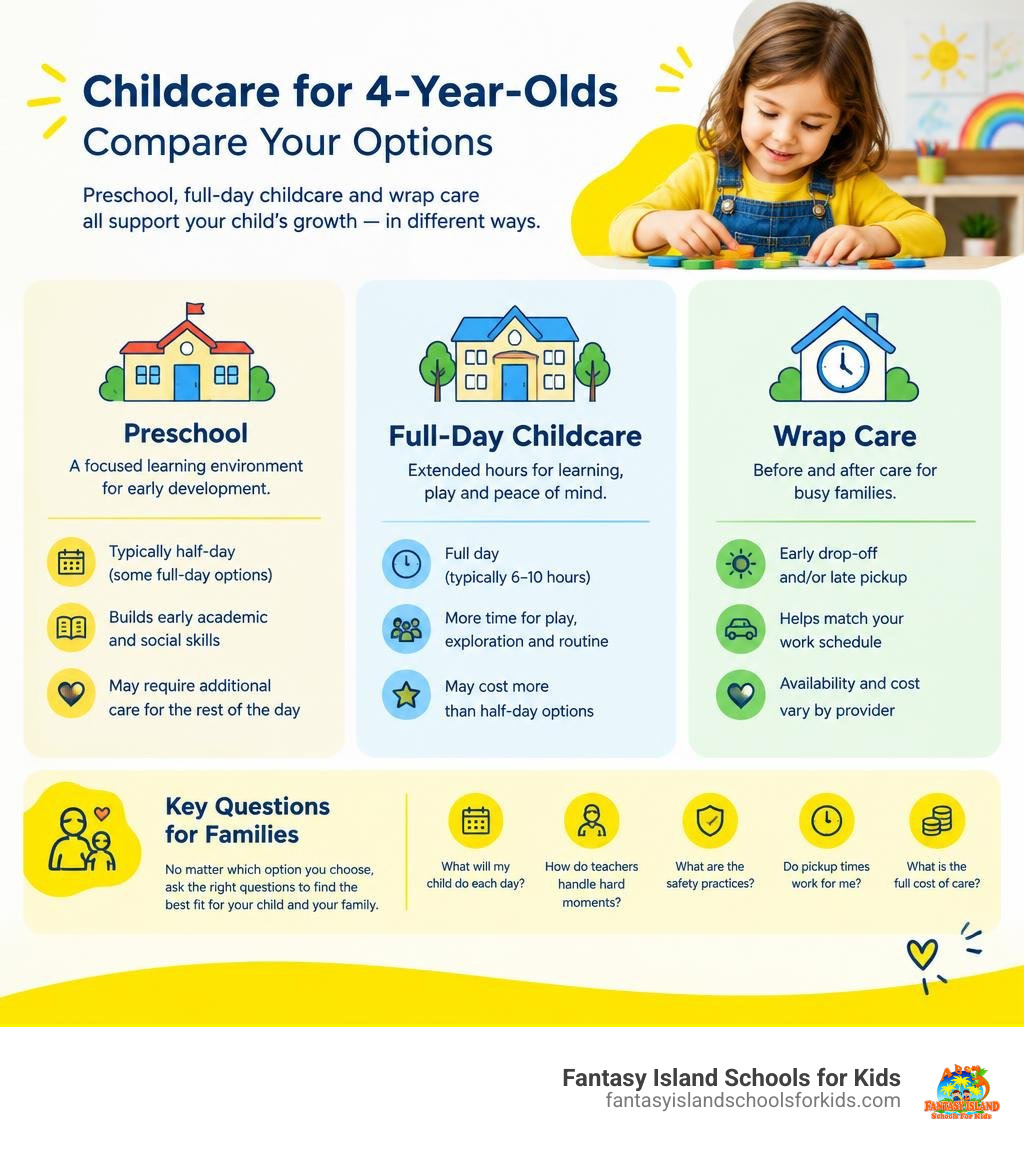
Types of Early Learning and Care Settings
Every family balances different priorities: work schedules, commutes, budgets, and educational philosophies. When evaluating the landscape of early childhood education, you will encounter several distinct models. Families often begin their search by using resources like the Search For Schools and Colleges – Department of Education directory to locate options nearby.
| Program Type | Daily Schedule | Key Benefits | Typical Considerations |
|---|---|---|---|
| Full-Day Early Learning Centers | 7:00 AM – 6:00 PM | Comprehensive care, structured curriculum, meals provided | Higher total weekly cost, though often inclusive of extras |
| Half-Day Preschools | 8:30 AM – 11:30 AM or 12:30 PM – 3:30 PM | Focused academic socialization, lower base tuition | Requires supplemental midday care for working parents |
| Public 4K Programs | School-day hours (approx. 8:30 AM – 3:00 PM) | Free or low-cost base tuition through school districts | Fixed calendar schedules; requires separate wrap care |
| In-Home Daycares | Flexible, often 7:30 AM – 5:00 PM | Homelike setting, smaller mixed-age groups | Variable curriculum structure, single-provider dependency |
Center-Based Programs vs. In-Home Settings
Center-based early learning environments are specifically built around developmental group dynamics. Licensed centers provide age-divided classrooms where 4-year-olds interact daily with peers working through similar developmental stages.
In a licensed center, dedicated staff hold formal Early Childhood Education (ECE) credentials. Facilities are designed with child-sized amenities, secure access controls, and dedicated gross motor spaces. In contrast, in-home settings offer a cozy, mixed-age environment that suits some younger children, but 4-year-olds frequently benefit from the broader peer socialization, diverse learning stations, and classroom routines that center-based programs offer.
District 4K and Wrap Care Models
Many local school districts offer four-year-old kindergarten (4K) initiatives. While district-linked 4K programs provide foundational academic exposure, their operating hours often mimic traditional school schedules—running either half-days or concluding by mid-afternoon.
For dual-income households across neighborhoods like Jefferson Park, Portage Park, and Norwood Park, navigating early dismissals can be tricky. This has led many parents to seek full-day private centers or dedicated wrap-care arrangements that offer consistent 7:00 AM to 6:00 PM coverage, ensuring continuous learning and structured care without midday transportation stress.
Key Factors When Evaluating Childcare for 4 Year Olds
Finding the right program involves looking beyond colorful wall decor to observe how teachers interact with children, how routines are managed, and how safe the environment feels.
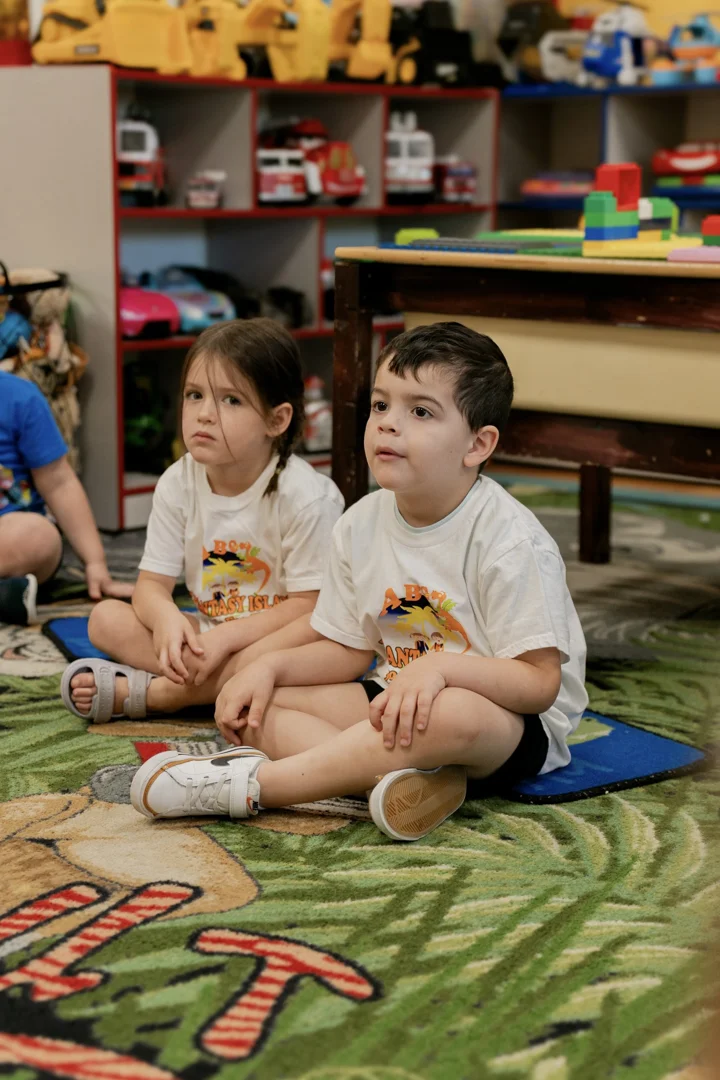
When touring centers, look closely at:
- Teacher Interactions: Are educators speaking to children at eye level with positive reinforcement?
- Health and Safety: Are entryways electronically secured, surfaces sanitized, and emergency plans clear?
- Nutritional Offerings: Are balanced, freshly prepared meals served daily on-site, or must parents pack lunches every morning?
- Drop-Off Routines: How does staff partner with families on how to manage separation anxiety during morning drop-offs?
Core Curriculum Options in Childcare for 4 Year Olds
Four-year-olds learn best by doing. High-quality early childhood programs balance structured lessons with intentional play. Understanding play-based learning benefits helps parents see that hands-on exploration directly builds foundational cognitive pathways.
When exploring a structured curriculum in early daycare, look for programs that weave early literacy, STEM exploration, and artistic expression into daily projects. At Fantasy Island Schools for Kids, we integrate our proprietary Gifted Enrichment Program alongside weekly music classes led by a qualified music teacher, giving children opportunities to explore rhythm, sound, math concepts, and scientific inquiry through multi-sensory learning spaces.
Social, Emotional, and Cognitive Growth Benchmarks
At age four, children make immense strides in self-regulation, empathy, and collaborative play. Quality classrooms provide the structure needed to nurture these skills.
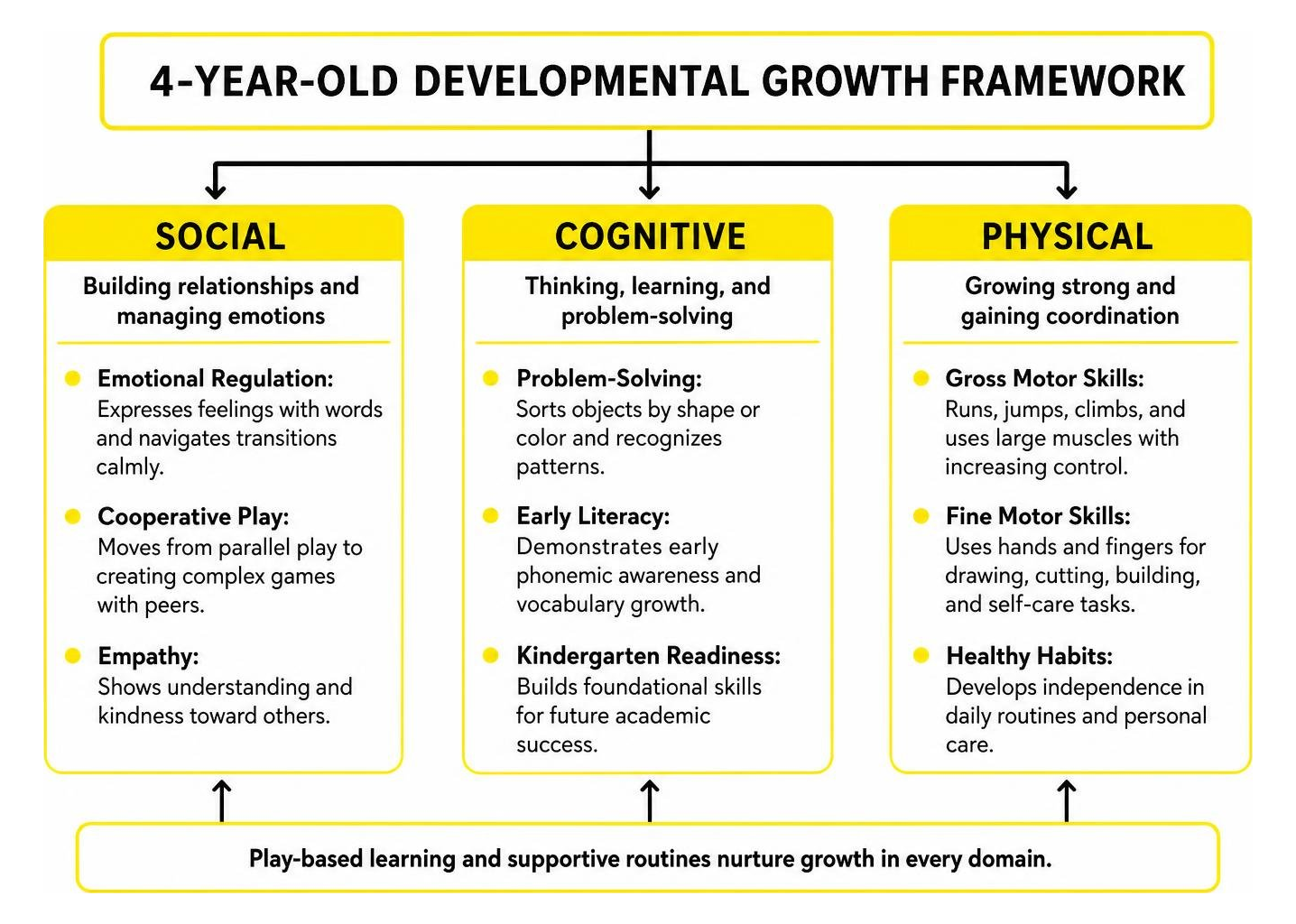
Key developmental milestones to watch for during this year include:
- Emotional Regulation: Learning to express feelings with words and navigate transitions calmly.
- Cooperative Play: Moving from parallel play to creating complex games with peers, as outlined in our guide on social-emotional milestones.
- Cognitive Problem-Solving: Sorting objects by shape or color, recognizing patterns, and demonstrating early phonemic awareness—which represent key signs of kindergarten readiness.
- Bilingual and Multilingual Advantages: Exposure to languages like Polish and English enhances executive brain function, mental flexibility, and cultural empathy.
Navigating Logistics, Tuition, and Enrollment
Evaluating tuition requires understanding what is included in the base fee versus what is charged as an add-on.

Essential Tour Checklist
When you visit a potential center, bring this checklist to evaluate how the program operates:
- What is the teacher-to-child ratio in the 4-year-old classroom?
- Are on-site freshly cooked meals and snacks included in tuition, or do parents supply them?
- What enrichment programs (such as specialized STEM, music, or language lessons) are built into the weekly routine?
- How do teachers communicate daily milestones and updates to families?
- What are the center’s protocols for discipline, conflict resolution, and positive guidance?
Budgeting and Financial Aid for Childcare for 4 Year Olds
Preschool tuition across Chicago and nearby suburbs typically ranges from $300 to $400 per week for full-time care. When comparing programs, consider the value of all-inclusive pricing. Many facilities charge separate fees for meals, music classes, or enrichment modules.
Families should also inquire about state subsidy programs. High-quality centers regularly partner with state assistance initiatives, accepting CCAP (Illinois Child Care Assistance Program) and Illinois Action for Children to ensure that quality early education remains accessible. Contacting Illinois Action for Children directly can help determine your family’s eligibility.
State Licensing and Staff Qualifications
Your child’s safety depends on strict adherence to state standards. Always verify that a center is fully licensed by the Illinois Department of Children and Family Services (DCFS).
In addition to state licensing, ask about:
- Staff Credentials: Do lead teachers hold formal Early Childhood Education certifications?
- Health Training: Are all classroom staff certified in Pediatric First Aid and CPR?
- Trauma-Informed Care: Have educators completed professional training in trauma-informed care and positive guidance strategies that prioritize redirection over punitive discipline?
Frequently Asked Questions About Pre-K and Childcare
Does a 4-year-old need to be fully potty-trained before starting?
While most 4-year-old preschool programs encourage daytime bathroom independence, quality centers recognize that every child develops at their own pace. Dedicated educators provide supportive reminders, help children navigate bathroom routines confidently, and handle occasional accidents with warmth, discretion, and positive encouragement.
How do play-based programs prepare children for kindergarten academics?
Play-based learning is far from unstructured free time; it is intentional and goal-oriented. When children measure water in sensory bins, they learn early volume concepts. Building complex block towers develops spatial awareness and geometry skills. Singing rhyming songs in music class establishes phonemic awareness, laying the groundwork for early reading without unnecessary academic stress.
What safety and health standards should parents look for on a tour?
Look for secure keycard or keypad entry doors, visitor check-in logs, clean and organized classrooms, clear allergy management plans, and dedicated indoor and outdoor gross-motor play spaces. Inquire about daily sanitization protocols, air filtration, and emergency response procedures to ensure complete peace of mind.
Conclusion: Choosing the Best Early Education Path
Selecting the right learning environment for your 4-year-old sets the tone for their entire educational journey. By prioritizing safety, teacher credentials, social-emotional development, and enriching daily experiences, you provide your child with a strong foundation for lifelong learning.
At Fantasy Island Schools for Kids, we have served families across Chicago’s Northwest Side and surrounding communities—including Norwood Park, Edison Park, Gladstone Park, Jefferson Park, Sauganash, Edgebrook, Portage Park, Niles, Park Ridge, Skokie, Norridge, and Harwood Heights—since 2009. Founded and owned by Beata Bielic, our center at 6100 N Milwaukee Ave offers full-time and part-time enrollment for children ages 2 to 6, operating Monday through Friday from 7:00 AM to 6:00 PM.
Our tuition of approximately $300 to $400 per week includes our Gifted Enrichment Program, weekly music classes led by a qualified music teacher, and on-site freshly cooked meals every day. We proudly accept CCAP (Illinois Child Care Assistance Program) and Illinois Action for Children. To learn more about our bilingual Polish-English programming and warm classroom community, explore our guide to choosing a top-rated daycare and preschool near Niles or contact us to schedule your personal tour.