

The Signs of Kindergarten Readiness to Watch For
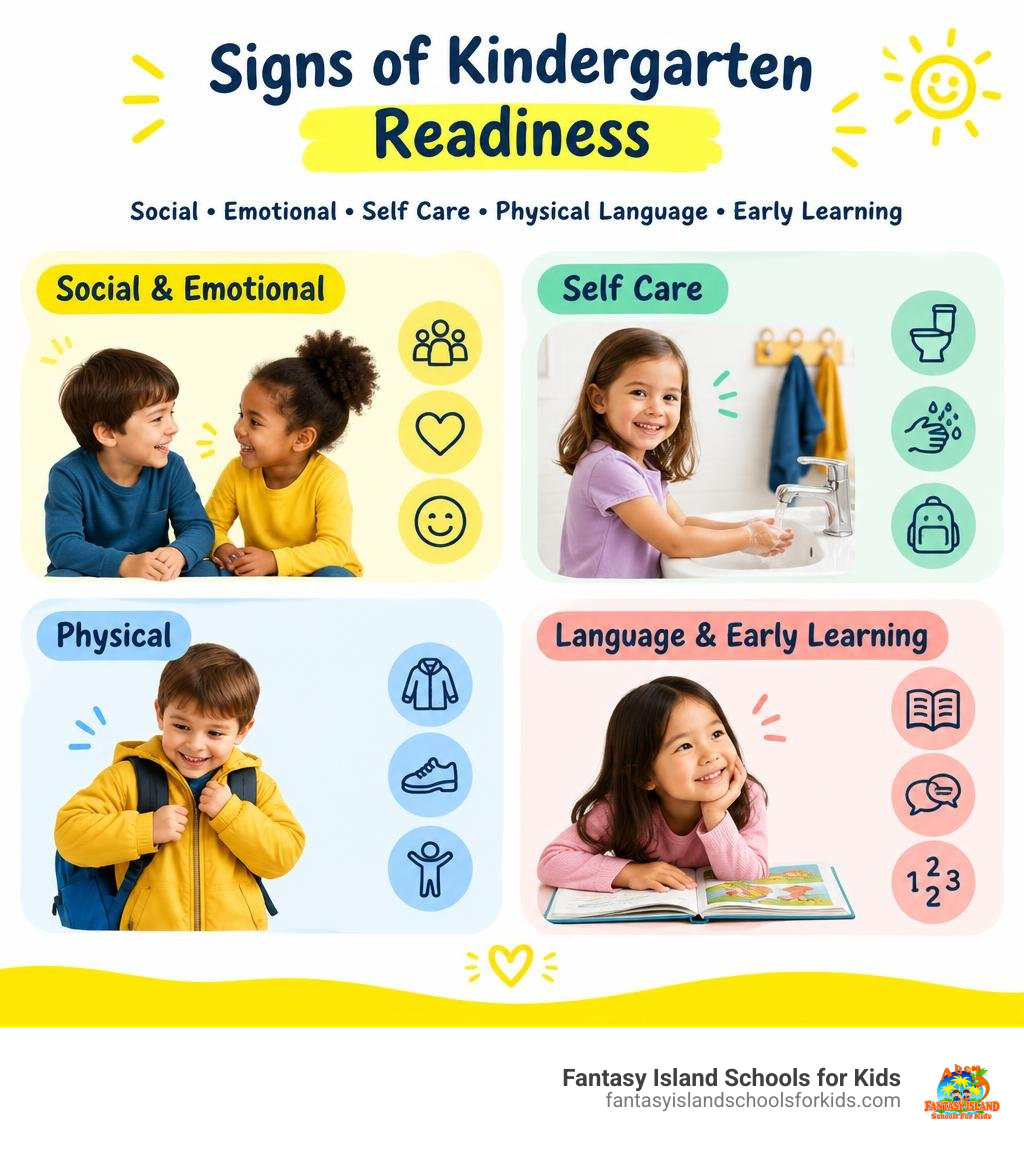
The most important signs of kindergarten readiness are not just knowing letters or counting. Your child is likely preparing well for kindergarten when they can:
- Separate from you with growing comfort, follow simple directions, and ask an adult for help.
- Take turns, share, manage big feelings with support, and participate in group activities.
- Use the bathroom, wash hands, handle a coat or backpack, and try everyday tasks independently.
- Listen to stories, communicate needs clearly, recognize their name or some letters, and count or sort objects through play.
These skills develop at different speeds. About two-thirds of U.S. children ages 3 to 5 are considered on track for kindergarten, but readiness is a whole-child picture: social, emotional, physical, language, and early learning skills all matter. For Chicago families, regular preschool routines, peer play, and small chances to practice independence can make the transition feel much more manageable.
I’m Beata Bielic, owner and Executive Director of Fantasy Island Schools for Kids in Chicago, where I have worked in early childhood education since 2009. Through our multilingual daycare, preschool, Pre-K, and Polish-language kindergarten programs, I help families recognize signs of kindergarten readiness and build these skills through hands-on, supportive learning.
Signs of kindergarten readiness basics:
Essential Social and Behavioral Signs of Kindergarten Readiness
When parents ask us what elementary teachers look for on the first day, they are often surprised to learn that behavioral and social benchmarks take priority over flashcards. Kindergarten classrooms are vibrant, cooperative ecosystems where twenty or more children must collaborate, share physical spaces, and navigate group instructions.
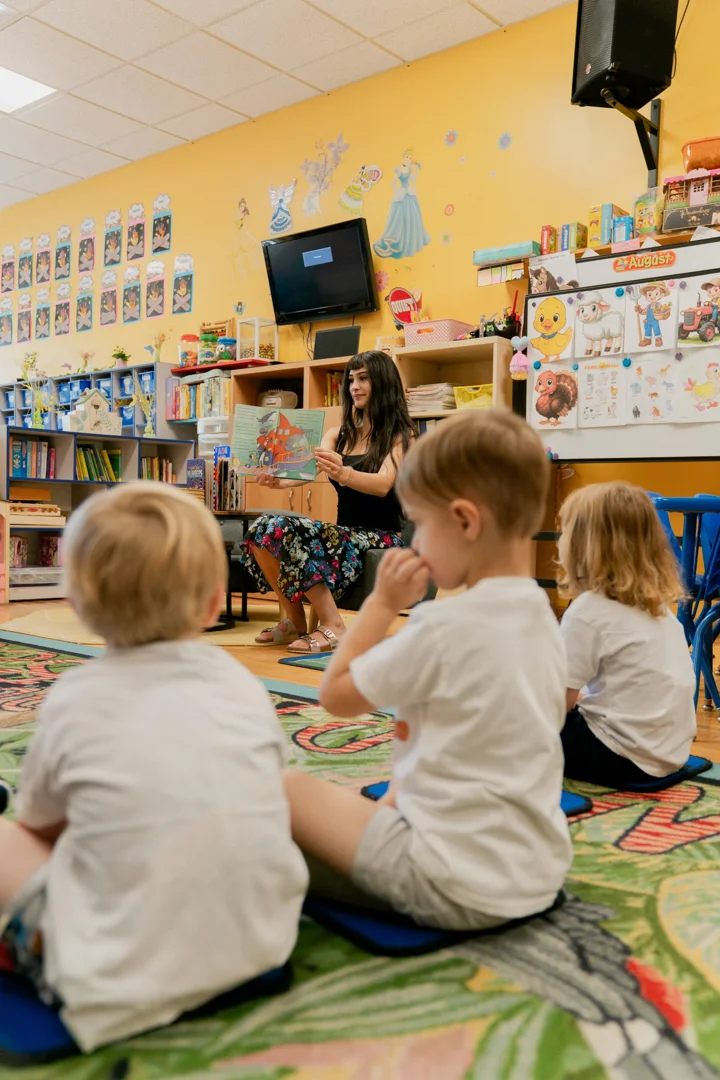
A child who knows the alphabet but cannot comfortably request help or manage strong emotions will face unnecessary hurdles. That is why observing key developmental indicators for school readiness provides the clearest picture of how comfortably your learner will transition into structured schooling.
Emotional Maturity and Social Signs of Kindergarten Readiness
Emotional maturity forms the cornerstone of early educational success. In our classrooms at Fantasy Island Schools for Kids, we witness daily how self-confidence and self-advocacy empower children to explore new challenges without debilitating anxiety.
According to the Child Mind Institute’s kindergarten readiness evaluation, true readiness centers on emotional independence, separation comfort, and early conflict resolution skills.
Key social-emotional indicators include:
- Comfortable Caregiver Separation: Your child can say goodbye to you at drop-off with minimal distress and settle into classroom activities with trusted educators.
- Expressing Needs and Feelings: Rather than melting down when overwhelmed, they use words to express emotions, say “I need help,” or communicate basic discomfort.
- Peer Cooperation and Empathy: They notice when a classmate is sad, engage in cooperative pretend play, and begin to grasp the concept of fair sharing.
- Emotional Resilience: When a block tower falls or they do not get the red crayon first, they recover with brief guidance rather than prolonged frustration.
Classroom Behavior, Sharing, and Following Rules
Kindergarten requires sustained attention, respect for personal space, and the ability to operate within established community norms. Experiencing daily classroom routines in early education gives children practical exposure to structured group dynamics.
- Following Multi-Step Directions: Understanding sequences such as, “Put your drawing in your cubby, wash your hands, and come sit on the rug.”
- Active Listening and Impulse Control: Keeping hands to oneself, waiting for an educator to finish speaking before responding, and resisting the urge to grab toys directly from peers.
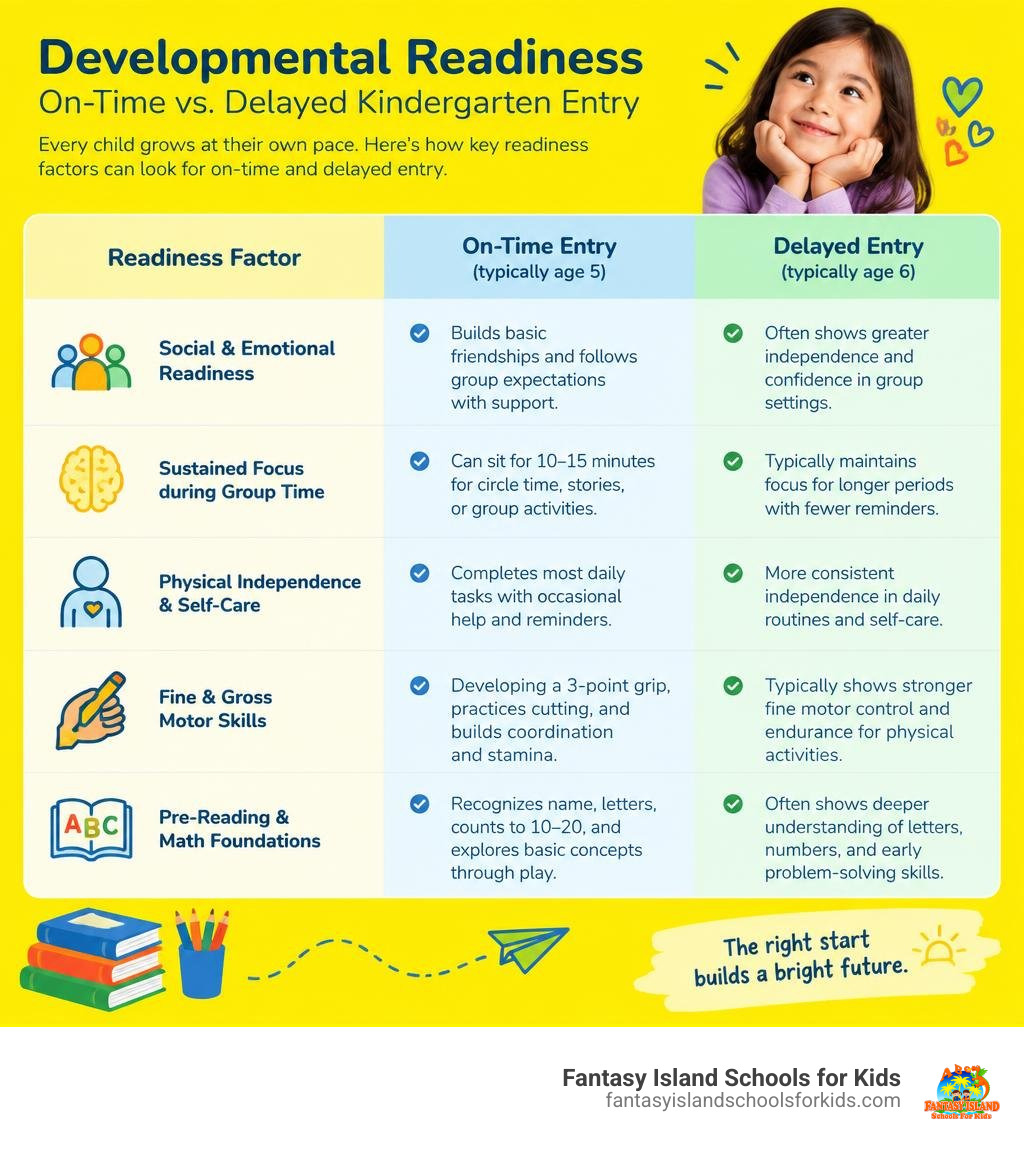
- Sustained Focus during Group Time: Sitting comfortably through a 10- to 15-minute circle time story, music activity, or group discussion.
Key Physical, Self-Care, and Pre-Academic Milestones
Beyond social interactions, practical independence in daily living tasks and emerging motor control are vital benchmarks.

Physical Independence and Self-Care Signs of Kindergarten Readiness
Kindergarten teachers manage dozens of individual needs throughout a standard school day. When children arrive equipped with basic self-care habits, they feel capable and confident in their environment.
- Independent Bathroom Habits: Using the restroom completely unassisted, wiping properly, adjusting clothing, and washing hands with soap and water.
- Managing Outerwear and Personal Belongings: Putting on and zipping up jackets, hanging their backpack on a hook, and opening their own lunchboxes or snack containers.
- Fine Motor Grip and Dexterity: Holding a pencil or crayon using a functional 3-point tripod grip rather than a fist, and manipulating safety scissors to cut across paper lines.
- Gross Motor Coordination and Physical Stamina: Running, hopping, climbing playground equipment, and maintaining physical stamina throughout a full-day schedule without extreme fatigue.
Foundational Pre-Reading and Math Milestones
Pre-academic skills are important stepping stones, but they should be introduced through engaging, hands-on exploration rather than repetitive drill sheets. When programs succeed at balancing structured learning and playful exploration, children retain early concepts naturally.
- Pre-Reading and Literacy: Recognizing their own written first name, identifying several uppercase and lowercase letters (especially those in their name), understanding that books read from left to right and top to bottom, recognizing simple rhyming words, and retelling a favorite story in simple sentences.
- Early Mathematical Thinking: Verbally counting to 20, recognizing written numbers from 1 to 10, sorting classroom objects by attributes (color, size, or shape), and understanding comparative concepts like more, less, bigger, and smaller.
Evaluating Readiness: Age, Screenings, and the Redshirting Decision
Determining the exact right moment for your child to start kindergarten can feel overwhelming. Many public and private schools host brief readiness screenings in late winter or early spring. These screenings are not competitive exams; rather, they serve as diagnostic tools to help educators structure classroom supports.
The American Academy of Pediatrics guidance on school readiness notes that readiness is a multifaceted continuum. Age requirements offer an administrative baseline, but individual developmental maturity varies.
Redshirting Considerations and Classroom Age Dynamics
“Redshirting”—the practice of delaying a child’s kindergarten entrance by one year for those with late-spring or summer birthdays—is a frequent topic of debate among families in our Chicago communities.
Research provides nuanced insights into this choice:
- Youngest in Class Trends: Studies indicate that children who are among the youngest in their cohort, particularly boys, are more frequently evaluated for attention and behavioral differences simply because natural developmental immaturity can be mistaken for clinical concerns.
- Academic Equalization: While the youngest children may show minor initial academic gaps during the first months of kindergarten, multiple longitudinal studies demonstrate that these performance differences disappear entirely by the third or fourth grade.
- Adolescent Risks for Older Students: Research also shows that children who are noticeably old for their grade level may face a higher risk of behavioral disengagement when they reach middle school and adolescence.
Unless a child exhibits marked developmental delays across several developmental domains, pediatrician and educator consensus encourages starting kindergarten when age-eligible, provided proper classroom supports are in place.
The Role of Quality Preschool and Professional Screenings
A child’s early educational setting directly shapes their readiness trajectory. In 2024, national early childhood data revealed that 13 states met five or fewer of NIEER’s 10 quality benchmarks, with only five states nationwide meeting all ten standards.
High-quality early childhood environments prioritize low student-to-teacher ratios, degreed educators, and the critical benefits of play-based early learning. At Fantasy Island Schools for Kids, all of our teachers hold Early Childhood Education credentials, maintain First Aid/CPR certifications, and participate in ongoing training in trauma-informed care and child development.

Practical Ways to Prepare Your Child at Home for Kindergarten
You do not need an elaborate home classroom to prepare your learner. Everyday family routines offer the most impactful opportunities to nurture independence and confidence.
- Read Actively Every Day: Read stories together daily. Pause to ask open-ended questions like, “Why do you think the puppy is hiding?” or “What do you think will happen next?”
- Practice Everyday Independence: Allow your child to put on their shoes, zip their winter coat, and clear their plate after meals. Resist the urge to rush in and do these tasks for them.
- Foster Multi-Step Direction Games: Play fun games like “Simon Says” or assign simple multi-step home chores: “Please pick up your crayons, place them in the bin, and wash your hands for dinner.”
- Label Emotions Constructively: Help your child identify feelings by naming them: “I see you are feeling frustrated because the puzzle piece doesn’t fit. Let’s take a deep breath together and try turning it.”
- Balance Screen Time with Hands-On Sensory Play: Replace passive digital media with open-ended materials such as modeling clay, building blocks, water play, and drawing crayons to build wrist strength and fine motor control.
Frequently Asked Questions About Kindergarten Readiness
What should parents do if they suspect developmental delays or special needs?
If you notice consistent challenges with speech clarity, sensory processing, fine motor control, or social interactions, consult your pediatrician and discuss your observations with your child’s preschool teachers. In Illinois, families can request a free developmental screening through their local public school district under Child Find laws, regardless of whether their child is currently enrolled in public school. Early intervention, speech therapy, occupational therapy, and Individualized Education Programs (IEPs) provide tailored support that ensures every child enters school with the resources they need to thrive.
What is the kindergarten age requirement in Illinois?
Under Illinois state guidelines, a child must be five years old on or before September 1 of the school year to enroll in kindergarten. Knowing state kindergarten attendance guidelines and age deadlines helps families plan their preschool timelines and kindergarten registration dates smoothly.
How does multilingual exposure influence a child’s kindergarten readiness?
Bilingual and multilingual exposure provides profound cognitive advantages for young learners. Children exposed to multiple languages develop heightened executive functioning skills, greater cognitive flexibility, and stronger problem-solving abilities. While dual-language learners may occasionally mix vocabulary across languages during early stages, their overall conceptual understanding and communicative adaptability prepare them exceptionally well for academic rigor.
Supporting Your Child’s Journey to Kindergarten
Recognizing the key milestones of school preparedness is an ongoing journey of observing, encouraging, and celebrating your child’s unique growth. Every learner develops on their own individual timeline, and readiness is about nurturing a joyful, confident attitude toward discovering the world.
At Fantasy Island Schools for Kids, we have had the privilege of guiding Northwest Chicago families through these foundational early years since 2009. From our location at 6100 N Milwaukee Ave, we serve families throughout Norwood Park, Edison Park, Gladstone Park, Jefferson Park, Sauganash, Edgebrook, Portage Park, Niles, Park Ridge, Skokie, Norridge, and Harwood Heights.
Our programs are specifically designed to cultivate the whole child through:
- Multilingual Immersion: Rich daily instruction in both English and Polish, plus our specialized Polish-language kindergarten program.
- Gifted Enrichment Program: Advanced experiential learning that has enabled many of our graduates to enter prestigious gifted elementary programs across Chicago.
- Weekly Music Classes: Structured music education led by a qualified music teacher to strengthen auditory discrimination and language development.
- Multi-Sensory Play Spaces: Expansive, engaging facilities that build gross motor strength and sensory self-regulation.
- Freshly Cooked On-Site Meals: Nutritious, daily scratch-cooked meals included in our tuition at no additional cost.
Operating Monday through Friday from 7 AM to 6 PM, we offer flexible full-time and part-time enrollment for children ages 2 to 6 with affordable weekly tuition ($300–$400/week) that includes all educational programming, enrichment, and meals. We also proudly accept CCAP (Illinois Child Care Assistance Program) and Illinois Action for Children.
Explore how our multilingual preschool and early childhood programs can support your child’s transition to school, or contact us to schedule a private tour.
