

First Week of Preschool Tips for a Calmer Start
The most useful first week of preschool tips are simple: visit the preschool classroom if you can, practice the morning routine, and pack labeled spare clothes and a comfort item if the school allows one. At drop-off, give your child a short, familiar goodbye, tell them when you will return in words they understand, and let the teacher take over.
Tears, tiredness, or a need for extra closeness at home can be part of adjusting to a new place. Keep talking with your child’s teacher so you know how the day goes after goodbye, not just at the door.
I’m Beata Bielic, founder of Fantasy Island Schools for Kids, and I have more than 17 years of experience in early childhood education. I’m sharing these first week of preschool tips to help you prepare for both the big feelings and the small steps toward belonging.
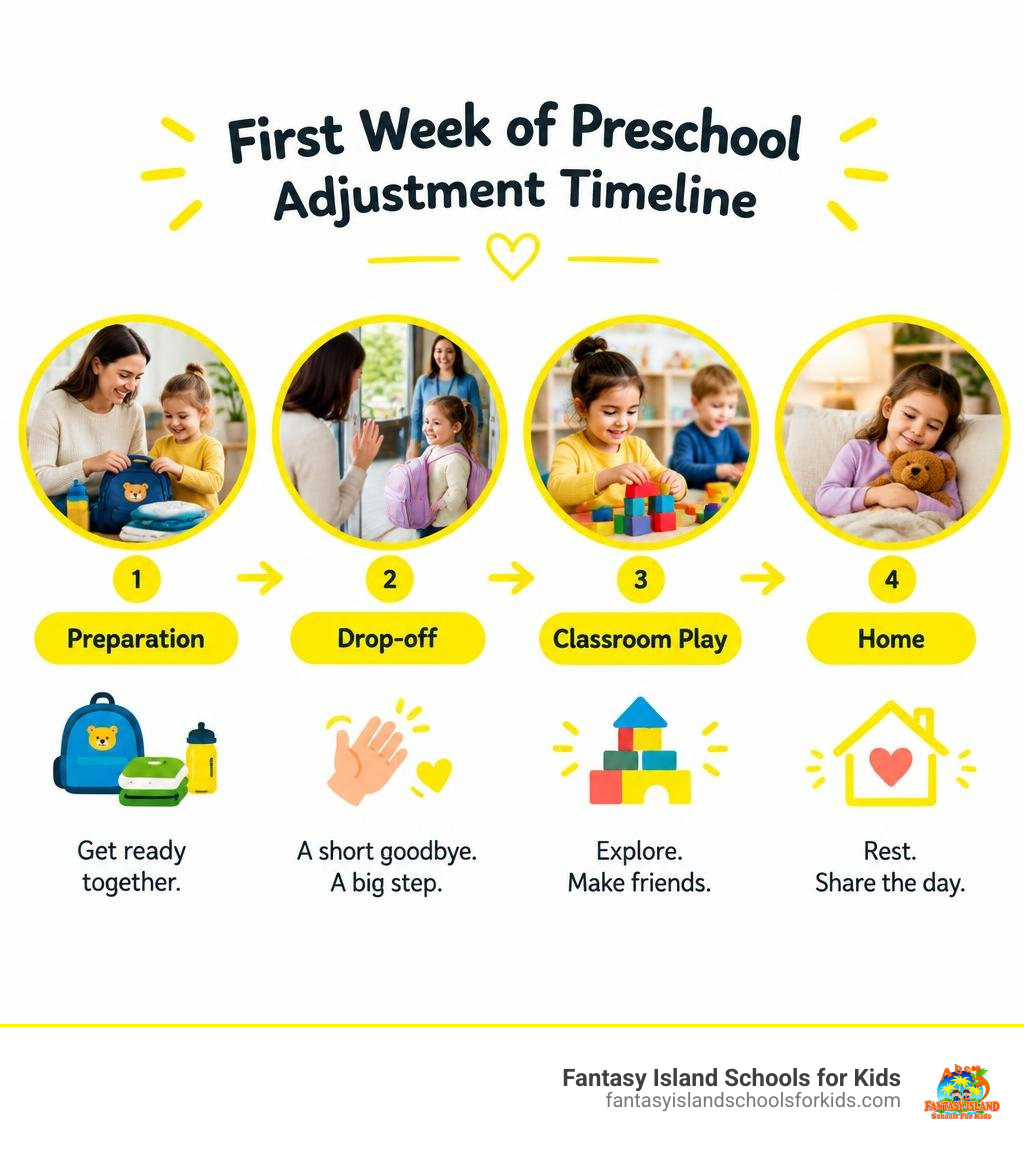
1. Preparing Before Day One: Emotional Readiness and Packing Essentials
Entering a classroom for the very first time represents a profound developmental leap. For three- and four-year-olds, transitioning from home to a structured group setting involves navigating new sensory inputs, adapting to unfamiliar adults, and learning to share physical spaces with peers. When enrolling your child in a nurturing preschool program, practical groundwork laid weeks ahead eases this transition significantly.
Familiarity builds security. Whenever possible, drive or walk past the school building before the term begins. Point out the playground, the front doors, and the windows so the physical location becomes recognizable. Participating in an orientation session or arranging a brief classroom visit allows your child to explore learning zones, locate the cubbies, and meet their lead teacher in a relaxed setting without the pressure of an immediate farewell.
Emotional Preparation and Predictable Home Routines
Predictability at home forms the anchor young children need during periods of change. Begin adjusting sleep schedules two to three weeks before the first day. Moving bedtime earlier in fifteen-minute increments ensures your child wakes refreshed and prevents morning rush-induced stress.
Engaging in pretend school play at home provides a playful way to rehearse the daily schedule. Take turns being the teacher and student, practice circle time songs, and role-play hanging up a backpack. As outlined in UNICEF preschool preparation strategies, playful rehearsal demystifies unfamiliar expectations and validates emerging emotions. Reading storybooks about the first day gives children relatable characters who experience and overcome similar nervous feelings.
Practicing self-help skills also builds quiet confidence. Encourage your child to practice pulling up their pants independently, washing hands with soap, opening their lunchbox containers, and slipping on shoes. Reviewing these essential preschool readiness skills before the term begins empowers children to navigate classroom self-care routines with autonomy.
What to Pack: The First Day Backpack Checklist
Packing appropriately eliminates logistical headaches for teachers and provides immediate comfort to your child. Choose a child-sized backpack that your preschooler can open and close on their own. Clearly label every personal belonging with permanent marker or durable waterproof labels.
| Item Category | What to Pack (Essential) | What to Leave at Home |
|---|---|---|
| Clothing | Two full sets of weather-appropriate clothes (underwear, socks, shirts, pants) in a labeled zip-top bag | Hard-to-fasten belts, complicated overalls, or dress shoes |
| Footwear | Comfortable, closed-toe sneakers with velcro fasteners | Open-toed sandals, flip-flops, or complicated lace-up shoes |
| Emotional Comfort | One small comfort item (soft lovey or blanket for rest time) and a family photo | Bulky stuffed animals, expensive toys, or noisy electronic devices |
| Hydration & Protection | A leak-proof, labeled water bottle and seasonal outerwear (jacket, hat) | Glass containers, unmanageable backpacks, or personal toys that cause sharing conflicts |
Having a complete change of clothes tucked into their cubby ensures accidental spills or bathroom misses are handled smoothly without embarrassment. A laminated family photograph placed inside the backpack pocket also serves as a tangible reminder that home is always waiting at the end of the day.
2. Practical First Week of Preschool Tips for Stress-Free Drop-Offs
Morning drop-off is often the most emotionally charged moment of the day for both parents and children. It is entirely typical for a child to protest, cling to a parent’s leg, or shed tears at the classroom threshold. In fact, most children cry at drop-off during the first week or two, yet the vast majority settle down within minutes once their parent departs.
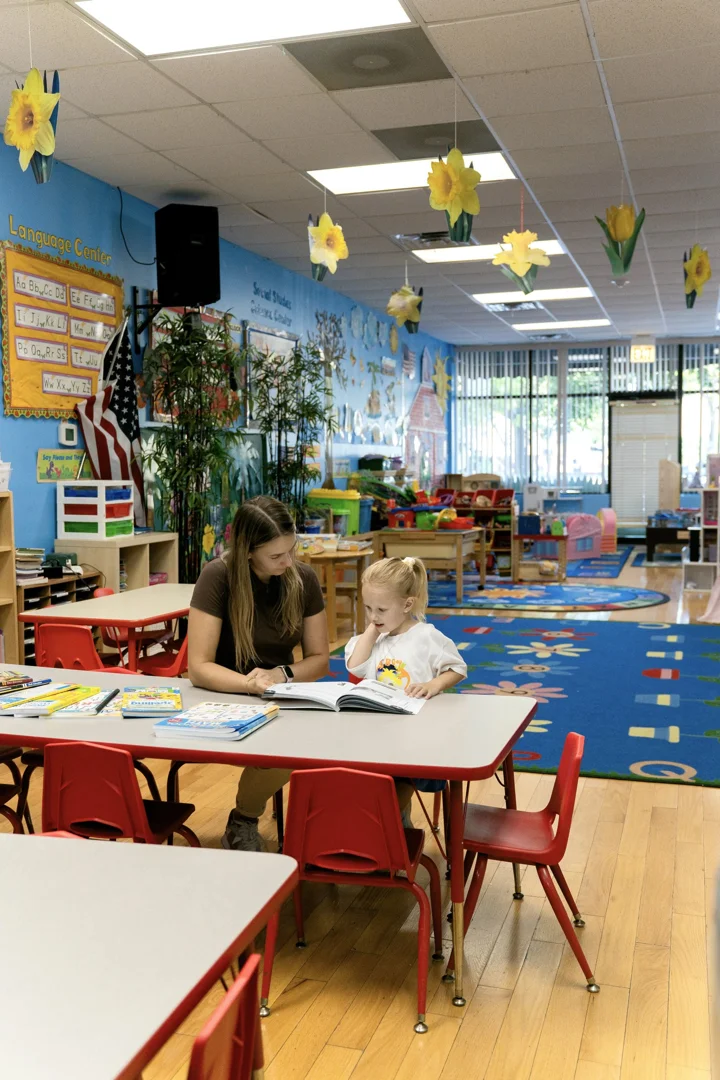
Children are perceptive emotional barometers. They take their emotional cues directly from your facial expressions, posture, and tone of voice. If you project hesitation, guilt, or anxiety, your child interprets the environment as potentially unsafe. Approach the classroom door with calm confidence, warm posture, and an upbeat disposition. Partnering with the classroom educators creates a unified front that signals to your child: You are safe here, and I trust these teachers to take care of you.
First Week of Preschool Tips for Creating a Comforting Goodbye Ritual
A structured goodbye ritual removes ambiguity and short-circuits prolonged negotiations at the door. When drop-offs drag out, anxiety tends to escalate because the child perceives the separation as negotiable. Establishing a consistent, three-step routine provides emotional clarity and security.
- Offer a Warm Physical Connection: Share a signature goodbye gesture, such as two big hugs, a high-five, or a silly secret handshake.
- State a Clear, Time-Anchored Reassurance: State your return using concrete, child-friendly milestones rather than clock hours. Say, “I will see you right after afternoon snack time,” or “I am coming back right after outdoor play.”
- Hand Off and Exit Promptly: Physically hand your child to the teacher, offer a final wave, and walk away confidently without turning back.
Consulting Parents.com advice on managing first-day separation anxiety reinforces that brief, predictable routines substantially reduce distress. For additional step-by-step techniques, exploring targeted separation anxiety strategies can help you maintain your composure during tearful goodbyes.
Why You Should Never Sneak Away During Morning Drop-Off
When a child is momentarily distracted by a sensory table or a colorful puzzle, it can be tempting for a parent to slip out quietly to avoid triggering tears. However, early childhood educators strongly advise against this practice.
As highlighted in NAEYC guidance on starting preschool, sneaking away damages the child’s trust. When a child looks up and discovers their parent has vanished without warning, it generates hypervigilance. Rather than engaging freely in classroom activities, the child may spend the rest of the day anxiously watching the door, terrified that the educator or caregiver might disappear again unexpectedly. An honest, explicit goodbye—even one accompanied by brief tears—establishes secure attachment and healthy emotional boundaries.
3. Inside the Classroom: Routines, Welcome Activities, and Building Friendships
Preschool classrooms are carefully engineered environments designed to foster belonging, emotional regulation, and early socialization. The first week is not about academic drills or structured worksheets; it is about orienting children to community living.
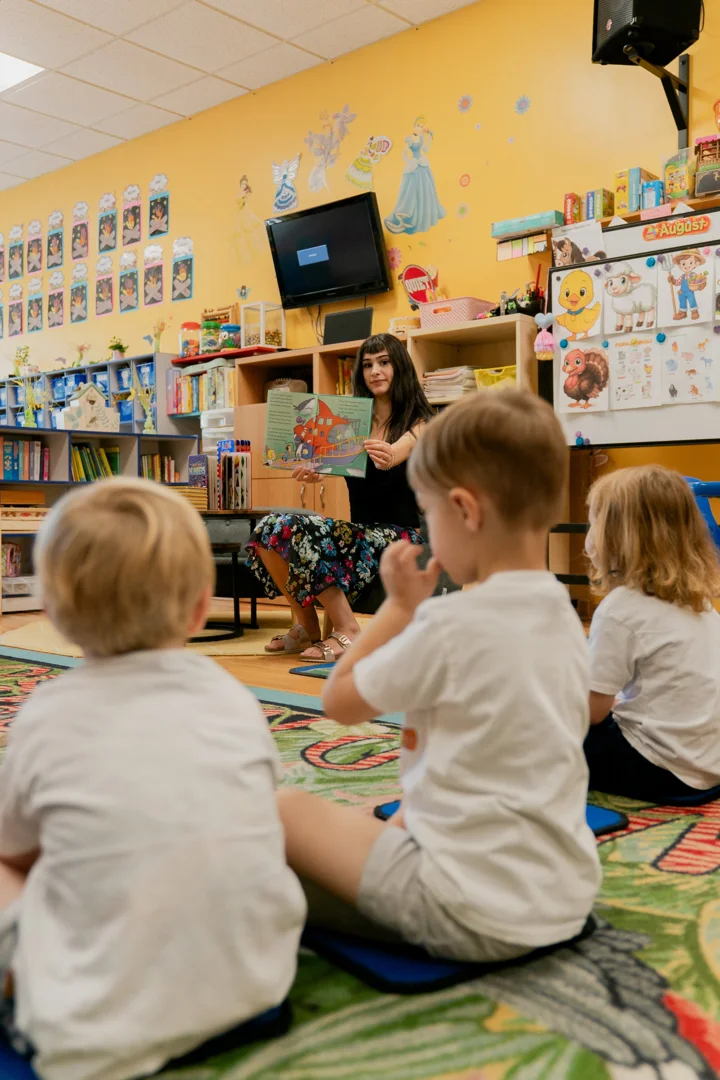
Educators structure the first days with low-material, high-connection activities designed for short attention spans. Because preschoolers’ sustained attention typically runs between three to five minutes per year of age (roughly 9 to 15 minutes for a three-year-old), group activities are intentionally brief, interactive, and interspersed with movement.
First Week of Preschool Tips for Supporting Classroom Routines and Friendships
During the initial weeks, teachers prioritize procedures over formal academic subjects. Children learn the rhythm of the day: where to store lunchboxes, how to wash hands using visual hygiene guides, how to walk in a line, and how to tidy up center materials.
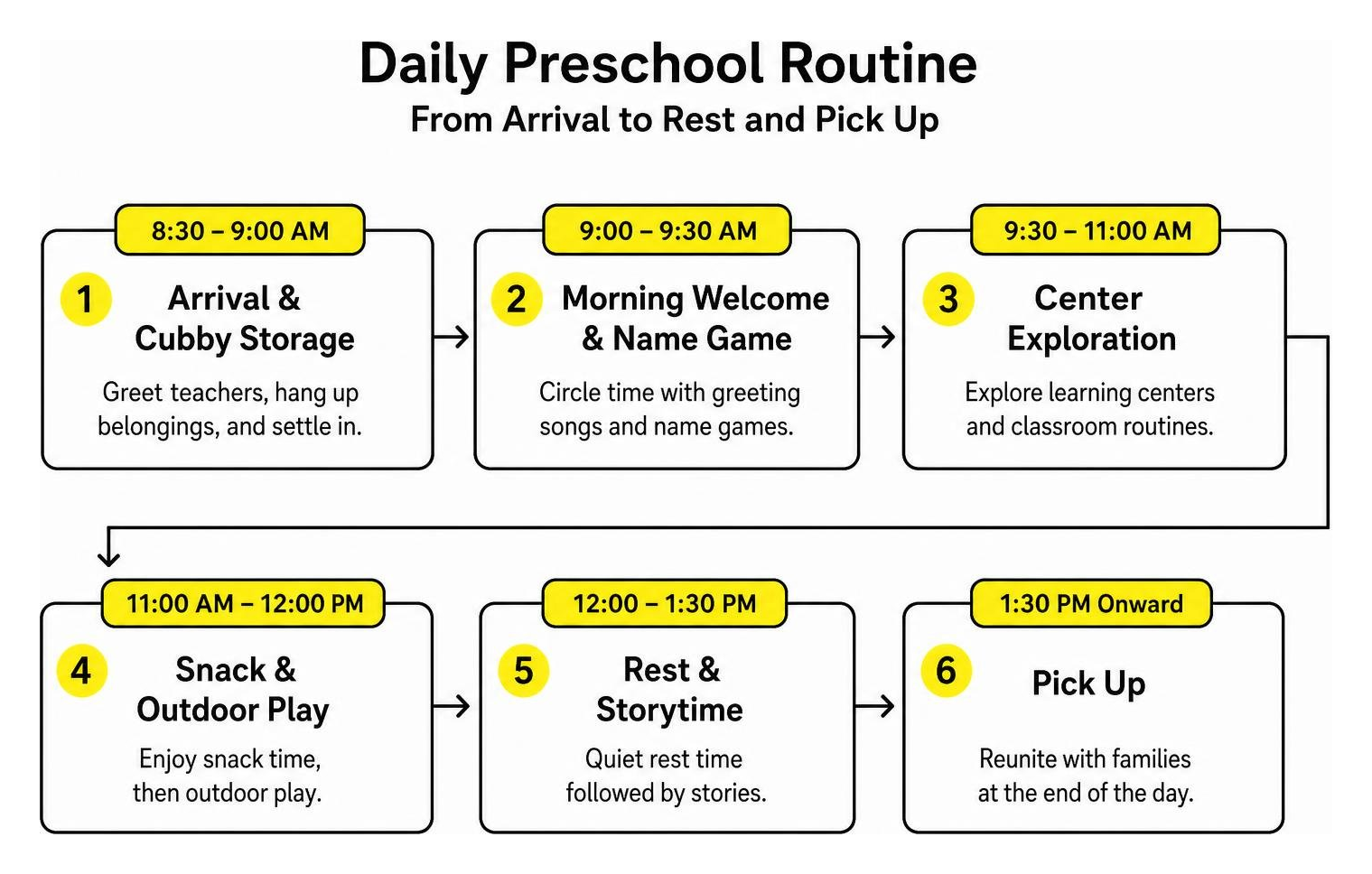
Teachers introduce low-stress collaborative games that foster early peer connections:
- Name-Recognition Games: Rolling a ball across the circle while singing greeting songs helps children learn classmates’ names.
- Visual Scavenger Hunts: Exploring classroom learning zones (art studio, block center, reading nook) familiarizes children with where materials live.
- Co-Creating Classroom Agreements: Establishing three or four simple visual rules (e.g., Gentle Hands, Walking Feet, Listening Ears) empowers children to take ownership of their shared room.
- Shared Art Projects: Creating collaborative handprint murals or sticker charts builds community cohesion and a shared sense of pride.
How Teachers Ease Separation Anxiety and Welcome New Students
Experienced early childhood educators employ intentional strategies to help upset children regulate their nervous systems. Classrooms feature a dedicated calm-down corner equipped with soft cushions, sensory bottles, weighted stuffed animals, and visual feeling charts.
When a child experiences distress, teachers validate their emotions using clear, empathetic language: “You are missing Mommy right now. It is okay to feel sad. She is coming back after afternoon snack. Let’s sit together and look at your family picture.” Teachers also utilize visual sand timers, allowing children to see time pass tangibly before transitioning to a new activity.
4. Understanding Adjustment: Week One Milestones, Communication, and Red Flags
Adjusting to preschool is a physiological and emotional process that unfolds over several weeks. It is helpful to remember that for most children, hard drop-offs last one to three weeks. In some cases, a complete and successful transition into school can take longer, especially if there are family vacations, weekend disruptions, or seasonal illness breaks. Many experienced early childhood educators observe that it can take several weeks for a child to feel fully settled and confident without a parent present.
Normal First-Week Behaviors vs. When to Seek Extra Support
Parents should expect to see certain behavioral shifts during week one. Recognizing what falls within normal adjustment patterns prevents unnecessary panic.
Typical Adjustment Behaviors:
- After-School Restraint Collapse: Meltdowns, crying spells, or temper tantrums immediately upon arriving home due to holding together their behavior all day.
- Increased Physical Fatigue: Falling asleep during the drive home or requesting earlier bedtimes as their brain processes new stimuli.
- Temporary Developmental Regression: Mild accidents in fully potty-trained children, baby talk, or clinginess during evening routines.
- The “Week Two Slide”: Protesting drop-off during week two or three after realizing preschool is an ongoing routine rather than a one-time novelty.
When to Seek Extra Support:
- Continuous, inconsolable crying that lasts the entire school day without easing after two to three weeks.
- Complete refusal to eat, drink fluids, or use the restroom across several weeks.
- Severe, persistent sleep disturbances, nightmares, or extreme withdrawal from peers and family members.
- Unaddressed speech, motor, or sensory challenges. As early childhood trends reflect, many young children require early intervention support, such as speech therapy or sensory regulation strategies, due to developmental disruptions. Prompt communication with your pediatrician and educators ensures timely screening and assistance.
Maintaining Effective Two-Way Home-to-School Communication
A strong home-to-school partnership provides a safety net for your child. Check your child’s daily communication folder or classroom app every evening for notes regarding appetite, nap length, and social milestones.
When picking up your child, avoid broad, overwhelming inquiries like, “What did you do all day?” Preschoolers often find this question difficult to answer. Instead, ask concrete, open-ended questions grounded in their daily routine:
- “Who did you sit next to during snack time today?”
- “What was your favorite song during morning circle?”
- “Did you build with blocks or paint at the easel today?”
Frequently Asked Questions About the First Week of Preschool
How long does separation anxiety usually last during the first week of preschool?
For most children, sharp drop-off distress lasts between one and three weeks. While morning crying usually subsides within five to ten minutes after the parent exits, intermittent teary drop-offs may resurface on Mondays or following school holidays. A complete transition can naturally take up to ten weeks.
What should I do if my child clings to me and cries at drop-off?
Acknowledge their feelings with calm reassurance (“I know it’s hard to say goodbye, but you are safe, and I will be back after nap”), give your designated goodbye hug, hand them directly to the educator, and exit promptly. Lingering prolongs the negotiation and increases anxiety.
Why do preschool teachers focus on routines instead of academics during the first week?
Mastering foundational procedures—such as hand-washing, navigating centers, listening during group transitions, and emotional self-regulation—creates the psychological safety required for higher-level academic learning. Once routines become second nature, children are primed to absorb early literacy, math, and STEM concepts.
Conclusion: Setting the Foundation for a Joyful Preschool Journey
The first week of preschool marks a remarkable milestone in your family’s life. By maintaining consistent home routines, packing practical essentials, keeping drop-offs loving yet brief, and partnering openly with your child’s teachers, you transform first-week nervousness into confidence and independence.
At Fantasy Island Schools for Kids, founded in 2009 by Beata Bielic, we specialize in guiding children ages 2–6 through every developmental stage with small class sizes, ECE-certified teachers, and a rich experiential curriculum. Serving families across Chicago’s Northwest Side (including Norwood Park, Edison Park, Gladstone Park, and Jefferson Park) as well as nearby suburbs like Niles and Park Ridge, our English-language program also offers supportive Polish and Ukrainian language assistance to ensure every child feels welcomed.
Ready to see how our warm classrooms and individualized approach support your child’s first school milestone? Schedule a tour with us today to visit our classrooms and meet our dedicated teaching staff.